
Medication Review Risk Calculator
Medication Risk Assessment
How many medications do you take regularly? This tool helps you understand your risk of medication interactions and side effects.
Your Medication Review Recommendation
Next Steps
Every year, millions of Americans take medications they don’t need, at the wrong dose, or alongside something that makes them sick. And most of them have no idea. That’s not because they’re careless-it’s because the system doesn’t make it easy to catch these problems. A simple annual medication review with a pharmacist can change that. It’s not a fancy procedure. No needles. No scans. Just a 30-minute chat where a pharmacist looks at every pill, patch, and supplement you’re taking-and tells you what’s working, what’s not, and what might be hurting you.
Why Your Doctor Might Not Catch This
Your doctor sees you for 10 to 15 minutes. They’re focused on your blood pressure, your diabetes, your joint pain. They write prescriptions, check labs, and move on. But they don’t have time to ask: Are you taking that old painkiller your aunt gave you? What about the turmeric capsule you started last year? Did you forget to tell them about the sleep aid you bought online? That’s where pharmacists come in. They’re trained to see the full picture. While doctors focus on diagnosis, pharmacists focus on the drugs. They know how every ingredient interacts. They know which side effects are common, which are dangerous, and which are mistaken for aging. A 2023 study found that nearly half of adults over 65 take four or more long-term medications. That’s called polypharmacy-and it’s the #1 reason for preventable hospital visits in older adults.What Happens During an Annual Medication Review
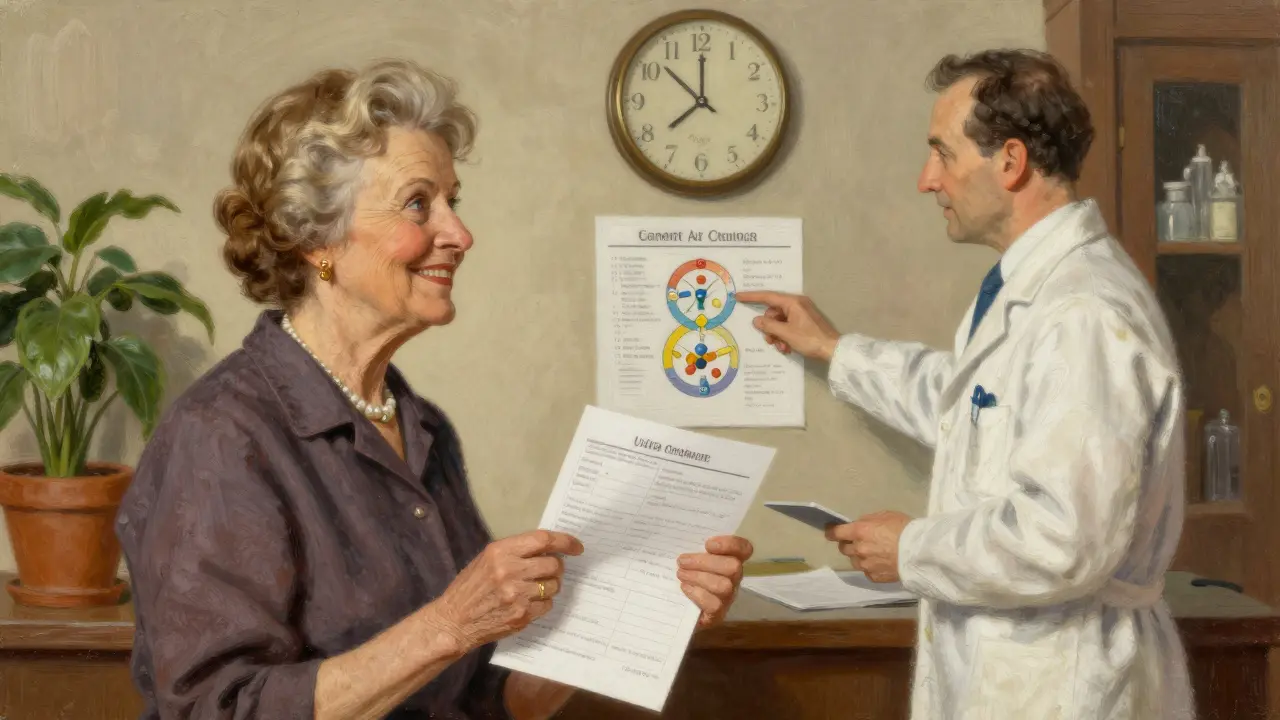
It’s not complicated. Here’s what actually happens:- You bring everything you take: prescriptions, over-the-counter pills, vitamins, herbal supplements, even eye drops or patches. Don’t leave anything out. If you’re not sure if it counts, bring it anyway.
- The pharmacist asks you: Why are you taking this? Do you notice any changes after you take it? Do you ever skip doses because it’s too expensive or confusing?
- They check for duplicates-yes, people often take two different pills for the same thing without realizing it.
- They look for dangerous combinations. For example, mixing a blood thinner with certain NSAIDs can cause internal bleeding. Or combining sleep aids with antihistamines can make you dizzy and increase fall risk.
- They ask: Is this still necessary? Maybe your cholesterol improved. Maybe your pain is gone. Maybe you’ve been taking that anxiety pill for 8 years and haven’t talked about it since.
One woman in Ohio came in thinking she was just getting older. She felt tired all the time, had trouble remembering things, and was constantly dizzy. Her pharmacist found she was taking three different medications that all caused drowsiness. One was prescribed. One was bought over the counter for “a little help sleeping.” The third was a supplement her daughter recommended. All three were making her symptoms worse. After cutting two and adjusting the third, her energy returned in three weeks.
Who Benefits the Most
This isn’t just for seniors. But if you fit any of these categories, you’re a prime candidate:- You take five or more medications regularly
- You’ve been hospitalized for a reaction or side effect
- You take meds for diabetes, heart disease, kidney problems, or depression
- You’ve noticed new symptoms-brain fog, nausea, muscle pain, rashes-that started after you began a new drug
- You’ve changed pharmacies or doctors recently
- You’re on Medicare Part D (it’s required for eligible beneficiaries)
Even if you think you’re doing fine, the numbers don’t lie. Only about half of people take their medications exactly as prescribed. And that number drops every year. Why? Because it’s hard. Too many pills. Confusing schedules. Side effects that scare you. Cost. A pharmacist can help you simplify it.
What You’ll Get Out of It
This isn’t just about stopping pills. It’s about making your regimen safer, simpler, and more effective. Here’s what patients commonly walk away with:- A list of medications you actually need-and ones you can safely stop
- Clear instructions on when and how to take each one
- Alternatives if a drug is too expensive or causes bad side effects
- Tools to stay organized: blister packs, refill reminders, medication apps
- A plan to talk to your doctor about changes
One man in Florida had been on five blood pressure meds for years. His pharmacist found he was taking two drugs from the same class-doubling his risk of low potassium and kidney issues. One was discontinued. His blood pressure stayed controlled. His lab results improved. And his monthly pill count dropped from 28 to 18.
How to Prepare
This is the easiest part. Just do these three things:- Collect every medication you take. Put them all in a bag-prescriptions, OTC, vitamins, supplements, even the ones you only use once in a while.
- Write down when and why you take each one. Don’t guess. If you don’t know, write “I’m not sure.”
- Write down any side effects you’ve noticed: dizziness, dry mouth, stomach upset, sleep changes, mood swings.
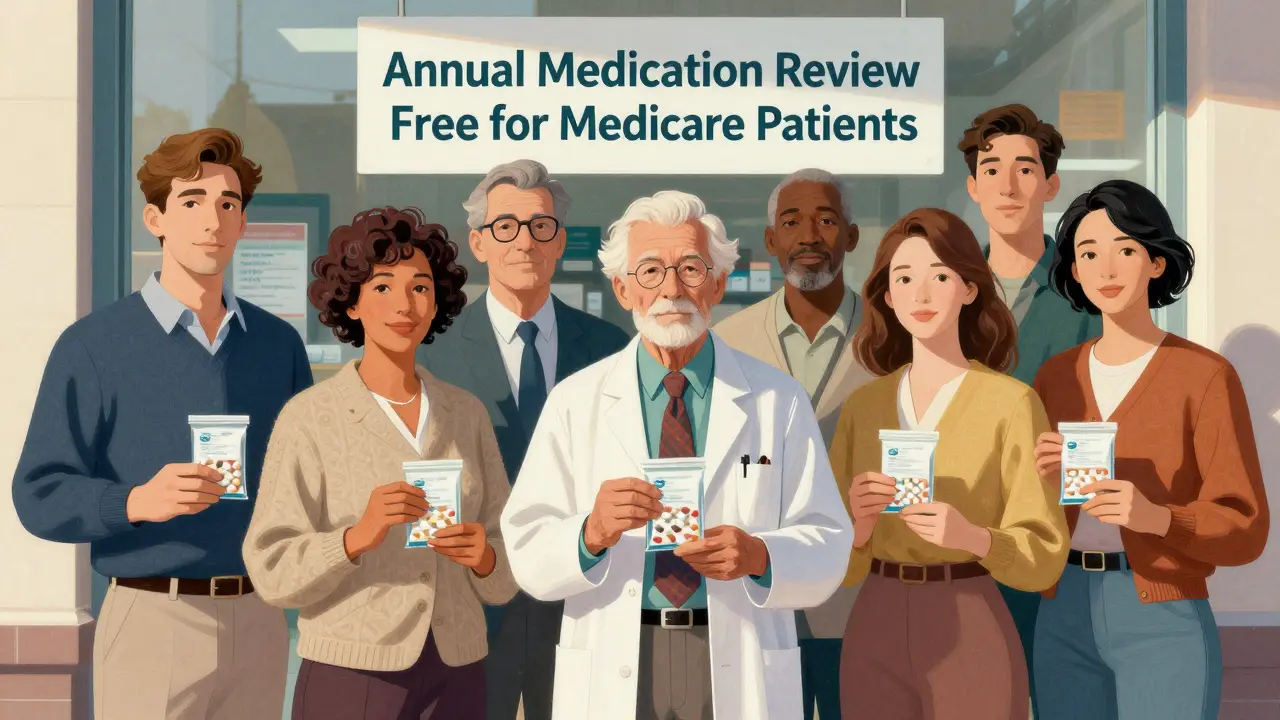
Most pharmacies offer this service for free if you’re on Medicare Part D. If you’re not, many commercial insurers now cover it too. Call your pharmacy and ask: Do you offer annual medication reviews? If they say no, ask if they can refer you to one that does.
What Doesn’t Work
Not every review is created equal. Some pharmacists just go through the motions. The best ones:- Ask open-ended questions
- Listen more than they talk
- Don’t pressure you to stop meds
- Give you written notes
- Follow up
If the pharmacist just looks at your list, says “Looks good,” and sends you on your way-that’s not a real review. A real review includes a conversation. You should leave feeling heard, not just checked off.
Why This Matters Now
By 2030, all baby boomers will be over 65. That’s 75 million people-most of them on multiple medications. The cost of medication-related hospitalizations? Over $177 billion a year. That’s not just money. It’s lost time, lost independence, lost quality of life.Pharmacists are the most accessible healthcare professionals in the country. There’s one within five miles of 90% of Americans. And they’re trained to catch what others miss. This isn’t a luxury. It’s a safety net.
Medication errors are the third leading cause of death in the U.S.-after heart disease and cancer. Most of them are preventable. And the easiest way to prevent them? A 30-minute chat with your pharmacist once a year.
What Comes Next
Technology is helping. Some pharmacies now use AI tools to flag risky combinations before you even walk in. Telehealth reviews are becoming more common. Electronic records are slowly connecting pharmacies and doctors.But the most powerful tool is still you-showing up, bringing your meds, and asking the hard questions. You’re the only one who knows how you feel. The pharmacist just gives you the tools to understand why.
Don’t wait until you’re in the ER because of a drug interaction. Don’t assume your symptoms are just part of getting older. Schedule your review. Bring your bag of pills. Talk. It could save your life.



Jodi Harding
January 17 2026My grandma took six pills a day and thought her foggy brain was just aging. Turned out three were useless, one was counteracting her blood pressure med, and the fourth was making her dizzy. Pharmacist caught it in 20 minutes. She’s walking again.