
When you pick up a prescription, you might see a label that says "montelukast" instead of "Singulair" and assume it’s just another generic. But not all generics are the same. There’s a big difference between an authorized generic and a traditional generic-and it can affect what’s actually in your pill.
What Is an Authorized Generic?
An authorized generic is the exact same drug as the brand-name version, just without the brand name on the label. It’s made by the same company that makes the original, using the same ingredients, same factory, same process. The only difference? The packaging. No fancy logo, no colorful design. Just the active ingredient and the dosage.The FDA defines it clearly: an authorized generic is an approved brand-name drug sold without the brand name. It’s not a copy. It’s the real thing, repackaged. For example, if you’re taking the brand-name version of Lipitor (atorvastatin), the authorized generic is made by Pfizer, in the same facility, with the same inactive ingredients like fillers and dyes. It’s identical down to the last particle.
Because it’s produced under the original brand’s New Drug Application (NDA), it doesn’t need separate FDA approval. The manufacturer just has to notify the FDA they’re selling it under a different label. That’s why authorized generics can hit the market even before the brand’s patent expires. Some companies use this strategy to compete with upcoming generic rivals-launching their own version before anyone else can.
What Is a Traditional Generic?
Traditional generics, sometimes called “typical generics,” are made by different companies. They contain the same active ingredient, strength, and dosage form as the brand, but the inactive ingredients can be different. That means the color, shape, flavor, or filler might change. For most drugs, this doesn’t matter. But for some, it can.To get FDA approval, traditional generics must prove they’re bioequivalent. That means they deliver the same amount of active ingredient into your bloodstream at the same rate as the brand. The process uses an Abbreviated New Drug Application (ANDA), which skips full safety trials because the brand already proved it’s safe. That’s why traditional generics are cheaper-they don’t need to repeat expensive clinical studies.
But here’s the catch: bioequivalence doesn’t guarantee identical performance in every case. For drugs with a narrow therapeutic index-like warfarin, levothyroxine, or certain seizure medications-tiny differences in how the body absorbs the drug can lead to real clinical effects. That’s why some patients report feeling different when switching between brands and traditional generics.
Key Differences at a Glance
| Feature | Authorized Generic | Traditional Generic |
|---|---|---|
| Manufacturer | Same as brand-name drug | Separate company |
| Active Ingredients | Identical | Identical |
| Inactive Ingredients | Identical | May differ |
| Regulatory Path | Under brand’s NDA | ANDA approval required |
| Appears in FDA Orange Book? | No | Yes |
| Can launch before patent expires? | Yes | No |
| Therapeutic equivalence | Identical to brand | Bioequivalent (but may vary slightly) |
Why It Matters for Patients
Most people don’t know the difference. You might think “generic” means “same as brand,” and for many drugs, it does. But when you’re managing a chronic condition-like asthma, epilepsy, or thyroid disease-consistency matters.Patients on Singulair (montelukast) often report better symptom control with the authorized generic than with traditional versions. Why? Because the inactive ingredients in the traditional version can affect how the drug dissolves in the gut. For someone with severe asthma, that small delay can mean more breathing trouble.
Pharmacists see this too. On pharmacy forums, many report patients complaining about side effects or reduced effectiveness after switching from one generic to another. Often, the switch wasn’t intentional-it was automatic, based on insurance formularies or cost-saving rules.
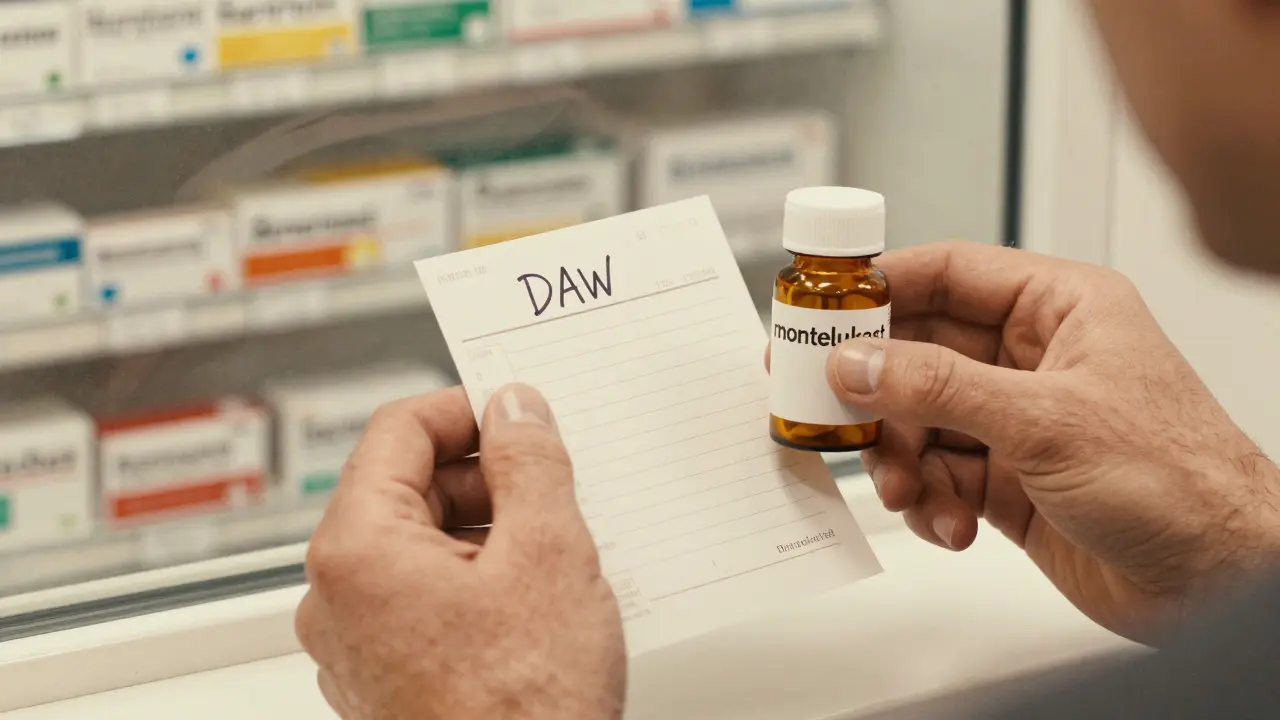
Here’s the good news: if you want to stay on the exact same formulation, you can. Ask your doctor to write “DAW” (Dispense As Written) or “do not substitute” on your prescription. That tells the pharmacy to give you exactly what’s written-no switching.
How to Tell Which One You’re Getting
It’s not easy. Authorized generics aren’t listed in the FDA’s Orange Book, which is what pharmacists use to check therapeutic equivalence. So even your pharmacist might not know unless they check the manufacturer’s name on the bottle.Look for the manufacturer. If it’s Pfizer, AbbVie, or another big brand company, it’s likely an authorized generic. If it’s Teva, Mylan, or Sandoz, it’s probably a traditional generic. Some pharmacies label it clearly. Others don’t. You might need to ask.
The FDA publishes a quarterly list of authorized generics, but it’s not always easy to find. If you’re on a critical medication, call your pharmacy and ask: “Is this an authorized generic?” Don’t assume.
Cost and Insurance Coverage
Authorized generics are often cheaper than the brand, but not always cheaper than traditional generics. Sometimes they’re priced the same as the traditional version. Insurance companies may prefer one over the other based on contracts with manufacturers.Some plans cover authorized generics at the same tier as traditional generics. Others treat them like the brand and charge higher copays. If you’re paying out of pocket, check prices at different pharmacies. Sometimes the authorized generic is the cheapest option-even more than the traditional version.
Don’t just go by the label. Compare the price per pill. Use tools like GoodRx or SingleCare to see what’s actually cheapest. Sometimes the brand name is cheaper than you think-especially if you have a coupon.
What Experts Say
Dr. Aaron Kesselheim from Harvard Medical School points out that authorized generics offer “greater price transparency” without sacrificing quality. He says patients who’ve switched from brand to authorized generic rarely report issues-because it’s the same drug.The FDA is clear: authorized generics are not traditional generics. They’re a separate category. And while traditional generics are safe and effective for most people, the FDA acknowledges that for certain drugs, even small formulation differences can matter.
Industry analysts note that authorized generics are mostly used for oral solid drugs-pills and capsules. They’re less common for inhalers, injectables, or complex formulations, where bioequivalence is harder to prove. That’s why traditional generics still dominate the market.
What You Should Do
If you’re on a medication that’s critical to your health, here’s what to do:- Ask your pharmacist: “Is this an authorized generic?”
- Check the manufacturer name on the bottle.
- Keep a record of which version you’re taking-brand, authorized generic, or traditional generic.
- If you notice changes in how you feel after switching, tell your doctor. Don’t ignore it.
- If consistency matters to you, ask for a “DAW” prescription.
You don’t have to pay more for the brand. But you also don’t have to guess what’s in your pill. Knowing the difference gives you control.
Common Misconceptions
Myth: All generics are the same.
Truth: Authorized generics are identical to the brand. Traditional generics are bioequivalent-but not identical.
Myth: Authorized generics are just branded generics.
Truth: Branded generics are traditional generics with a made-up name (like “Apo-Atorvastatin”). Authorized generics have no name at all-just the chemical name.
Myth: The FDA approves authorized generics separately.
Truth: They don’t. The brand already got approval. The manufacturer just notifies the FDA they’re selling it under a different label.
Are authorized generics safer than traditional generics?
Authorized generics are not inherently safer-they’re identical to the brand-name drug. But because they contain the exact same ingredients, including inactive ones, they eliminate the risk of formulation-related differences that can sometimes occur with traditional generics. For drugs where small changes affect absorption-like thyroid meds or seizure drugs-authorized generics offer more predictable results.
Can I switch between authorized and traditional generics?
You can, but it’s not always advisable. For most people, switching between generics won’t cause issues. But if you’re on a narrow therapeutic index drug, frequent switches can lead to instability in your condition. If you’ve found a version that works well for you, stick with it. Ask your doctor to specify which version you should receive.
Why don’t pharmacies always tell me which generic I’m getting?
Many pharmacies don’t track or label authorized generics clearly because they’re not listed in the FDA’s Orange Book. Pharmacists rely on that database to verify equivalence, and since authorized generics aren’t there, they may not know unless they check the manufacturer. It’s up to you to ask.
Do authorized generics cost more than traditional generics?
Not usually. Authorized generics are often priced close to traditional generics, and sometimes even lower. But because they’re made by the brand company, some insurers treat them like the brand and charge higher copays. Always compare prices using tools like GoodRx-sometimes the brand name is cheaper than you expect.
How do I know if my drug has an authorized generic?
Check the FDA’s quarterly list of authorized generics online, or ask your pharmacist directly. You can also look up the manufacturer-if it’s the same company that makes the brand name (like Pfizer for Lipitor), it’s likely an authorized generic. If it’s Teva, Mylan, or another generic maker, it’s traditional.
Final Thought
Generic drugs saved the U.S. healthcare system hundreds of billions of dollars. But not all generics are created equal. Authorized generics give you the brand’s reliability without the brand’s price. Traditional generics offer affordability-but sometimes at the cost of consistency.If you’re managing a serious health condition, don’t just accept whatever’s cheapest. Know what you’re taking. Ask questions. Demand clarity. Your health depends on it.




Tony Du bled
December 22 2025Been on montelukast for years. Switched to the generic and my asthma got worse. Didn't realize it wasn't the authorized version until I checked the bottle. Now I ask every time. Small thing, huge difference.