You grab a new prescription from the pharmacy counter. The pharmacist hands you a small, folded paper packet tucked inside the bag. It looks like fine print, but it holds your lifeline if things go wrong. This is the Medication Guide, an FDA-mandated document that provides critical safety information for certain medications. Most people toss it aside or skim it once. But if you know where to look, this single sheet of paper tells you exactly what an overdose looks like for your specific drug and, crucially, whether there is an antidote available to reverse it.
Understanding these documents isn't just about reading; it's about decoding regulatory language into actionable safety steps. When seconds count during an emergency, knowing that your medication has a specific reversal agent-or that time is the only factor-can change the outcome entirely. Let’s break down how to navigate these guides effectively so you aren't left guessing in a crisis.
Identifying the Critical Sections
The first step is recognizing that not every medication comes with a Medication Guide. The Food and Drug Administration (FDA) requires them only for drugs that pose significant risks, such as those causing birth defects, severe allergic reactions, or habit-forming potential. If your prescription includes one, it means the manufacturer has identified specific dangers that warrant extra patient education.
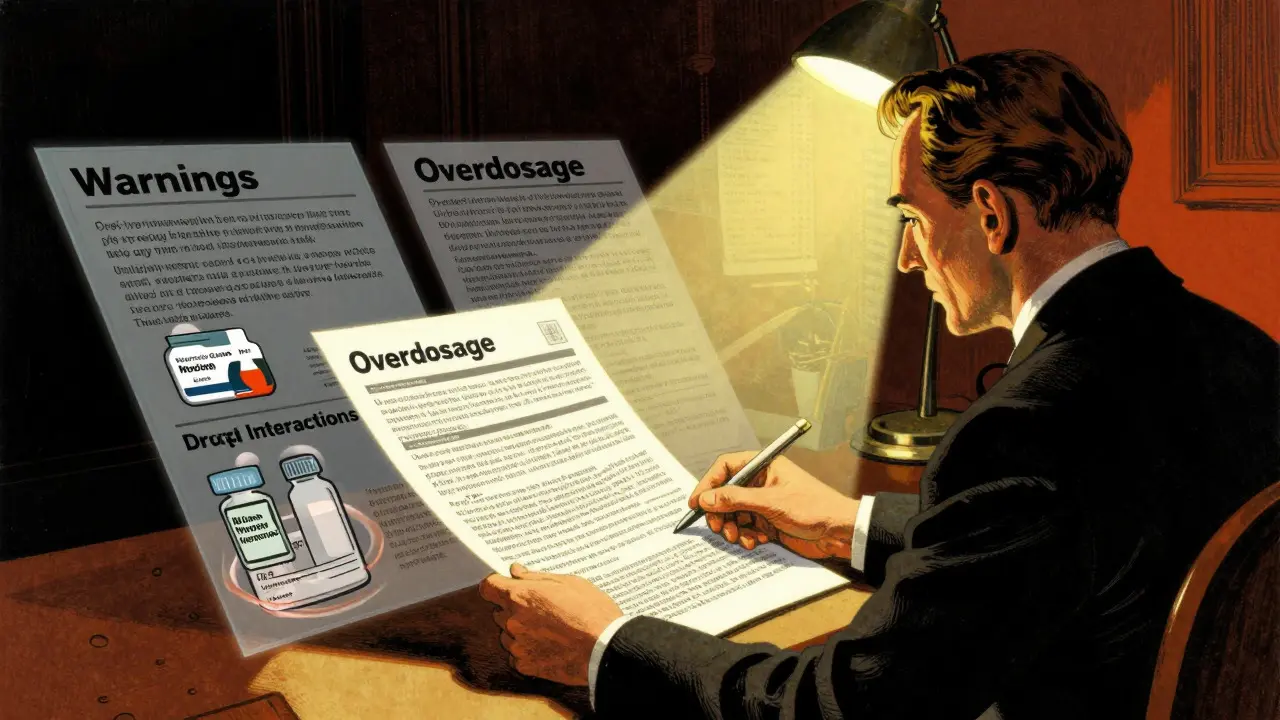
Once you have the guide in hand, don't read it linearly from top to bottom like a novel. Instead, scan for three specific headers that contain the data you need for overdose preparedness:
- "Warnings and Precautions": This section often lists signs of toxicity before a full-blown overdose occurs. Look for phrases like "symptoms of excess" or "toxicity."
- "Overdosage": Some guides explicitly include this header. It details the clinical effects of taking too much of the drug.
- "Drug Interactions": Often, an "overdose" isn't about taking too many pills at once, but mixing two drugs that amplify each other's effects. This section highlights dangerous combinations.
If you can't find these exact words, look for synonyms. Manufacturers sometimes use terms like "Adverse Reactions" or "Symptoms of Overdose." The key is to locate the part of the text that describes what happens when the body receives more than it can process.
Decoding Overdose Symptoms
General advice tells you to watch for "trouble breathing" or "unconsciousness." While true for many cases, medication guides provide specific symptoms unique to the drug class. For example, an opioid guide will mention pinpoint pupils and respiratory depression. A benzodiazepine guide might emphasize extreme drowsiness and confusion without the same degree of breathing suppression. An acetaminophen guide warns that early symptoms may be mild nausea or vomiting, which can deceptively disappear before liver damage sets in days later.
Pay close attention to the timeline described in the guide. Some overdoses are immediate crises requiring instant intervention. Others are delayed threats. If the guide mentions "latent period" or "delayed onset," you know that even if the person seems okay initially, they still need medical evaluation. This distinction helps you decide whether to call poison control immediately or monitor closely while preparing to go to the hospital.
Finding Information on Antidotes
This is the most overlooked part of the Medication Guide. Does your drug have a specific antidote? The guide might not always say "antidote" directly. Instead, look for sections titled "Treatment of Overdosage" or "Management." Here, the manufacturer will outline the standard medical response.
If a specific reversal agent exists, it is usually named here. For instance:
- Opioids: The guide will reference Naloxone (Narcan), an opioid antagonist that rapidly reverses respiratory depression.
- Benzodiazepines: You might see a mention of Flumazenil, a benzodiazepine receptor antagonist. However, note that guides often warn against its routine use due to seizure risks in chronic users.
- Acetaminophen: The treatment section will specify N-acetylcysteine (NAC), which prevents liver failure if administered within a specific window.
If the guide states "no specific antidote is known" or recommends "supportive care only," this is vital information. It means there is no magic bullet to reverse the effects. Treatment relies on keeping the patient alive through breathing support and monitoring until the drug metabolizes naturally. Knowing this beforehand prepares you to focus on CPR and airway management rather than waiting for a specific drug to work.
Understanding Dosage Limits and Units
To recognize an overdose, you must know the therapeutic limit. The Medication Guide, along with the prescription label, defines the maximum daily dose. Pay attention to units. Is the dose measured in milligrams (mg), micrograms (mcg), or international units (IU)? Confusing these is a common cause of accidental overdose, especially with potent drugs like insulin or thyroid medication.
Create a simple mental checklist based on the guide's dosing instructions:
- What is the maximum number of tablets/capsules allowed in 24 hours?
- Is there a "loading dose" vs. a "maintenance dose" difference?
- Does kidney or liver function affect the safe limit? (Many guides state reduced doses for patients with organ impairment.)
If someone takes more than the maximum stated in the guide, assume an overdose has occurred. Do not wait for symptoms to appear. Call Poison Control (1-800-222-1222 in the US) or 911 immediately, having the Medication Guide ready to quote the active ingredient and strength.
The Role of Boxed Warnings
At the very top of the prescribing information (which accompanies the Medication Guide), you may see a black box. This is the strongest warning the FDA allows. While the Medication Guide is written for patients, the boxed warning is for healthcare providers, but the concepts overlap. If a drug carries a boxed warning for "fatal overdose" or "severe hepatotoxicity," treat any deviation from the prescribed dose as a critical emergency.
These warnings often highlight populations at higher risk. For example, children, elderly patients, or those with sleep apnea may overdose at lower doses than healthy adults. The Medication Guide should reflect these nuances. If you are caring for someone in a high-risk group, keep the guide accessible and share the specific overdose signs with family members or caregivers.
Practical Steps for Emergency Preparedness
Reading the guide is passive; acting on it is active. Once you've extracted the key information-symptoms, timeline, and antidote availability-take these practical steps:
| Action Step | Details |
|---|---|
| Save the Guide | Keep the physical Medication Guide with the medication bottle. Digital copies can fail if power goes out. |
| Identify the Antidote | If an antidote like Naloxone exists, ask your pharmacist if you should keep a supply at home. |
| Note Specific Signs | Write down the 3-5 specific overdose symptoms listed in the guide on a card in your wallet or fridge. |
| Check Interactions | List all other meds you take. Cross-reference with the "Drug Interactions" section to avoid accidental toxic combos. |
Finally, remember that Medication Guides are updated. Regulations change, and new safety data emerges. If you refill your prescription, check if the guide looks different. A new version might include updated overdose protocols or newly discovered antidotes. Staying current ensures your safety plan remains effective.
Does every medication come with a Medication Guide?
No. The FDA requires Medication Guides only for drugs with significant public health concerns, such as those that are habit-forming, cause serious side effects, or require specific usage instructions to prevent harm. Most over-the-counter pain relievers or basic antibiotics do not include them.
Where can I find the antidote information in the guide?
Look for sections titled "Overdosage," "Treatment of Overdosage," or "Management." These sections describe the medical response to taking too much of the drug. If a specific antidote exists, it will be named here. If not, it will likely state that treatment is supportive.
What should I do if the guide says "no specific antidote"?
This means there is no drug to instantly reverse the effects. In an overdose scenario, focus on supportive care: ensure the person is breathing, keep them conscious if possible, and seek immediate emergency medical attention. Time becomes the critical factor as the body must metabolize the drug naturally.
Can mixing medications cause an overdose even if individual doses are correct?
Yes. The "Drug Interactions" section of the Medication Guide is crucial for this. Some drugs amplify each other's effects. For example, taking a sedative with alcohol can lead to respiratory depression similar to an overdose, even if the pill dose was normal. Always check this section for dangerous combinations.
How often are Medication Guides updated?
They are updated whenever the FDA approves new safety information. This can happen due to new clinical trials or post-market surveillance reports. Always check the date on the guide when you receive a new prescription refill to ensure you have the latest overdose and antidote information.