
Half of all people taking medication for chronic conditions like high blood pressure, diabetes, or asthma miss doses regularly. Not because they don’t care - but because life gets busy. Forgetting a pill here, skipping one because you’re traveling, or getting confused by a complex schedule adds up. The result? Worse health, more hospital visits, and higher costs. The good news? You don’t need fancy gadgets or expensive systems to fix this. Your phone already has the tools.
Why Your Phone Is the Best Medication Timer
Forget those plastic pill boxes with alarms you have to set by hand. Or the electronic boxes that cost $50 a month and only tell you when you opened the lid. Your smartphone is smarter, cheaper, and always with you. By 2023, 97% of U.S. adults owned one. That’s not a coincidence - it’s the perfect tool for medication reminders. Apps like Medisafe, MyTherapy, and Round Health don’t just buzz when it’s time to take a pill. They track what you’ve taken, warn you about dangerous drug interactions, and even sync with your pharmacy to remind you when refills are due. A 2025 review of 14 clinical trials found that people using these apps improved their adherence by an average of 0.57 points on the Morisky scale - a meaningful jump that translates to fewer missed doses and better outcomes.What Makes a Good Medication App?
Not all apps are built the same. The best ones share a few key features:- Customizable reminders - Set different times for each pill, with snooze options and repeat schedules (daily, weekly, as needed).
- Digital medication log - See a clear history of what you took and when. No more guessing if you already took your morning dose.
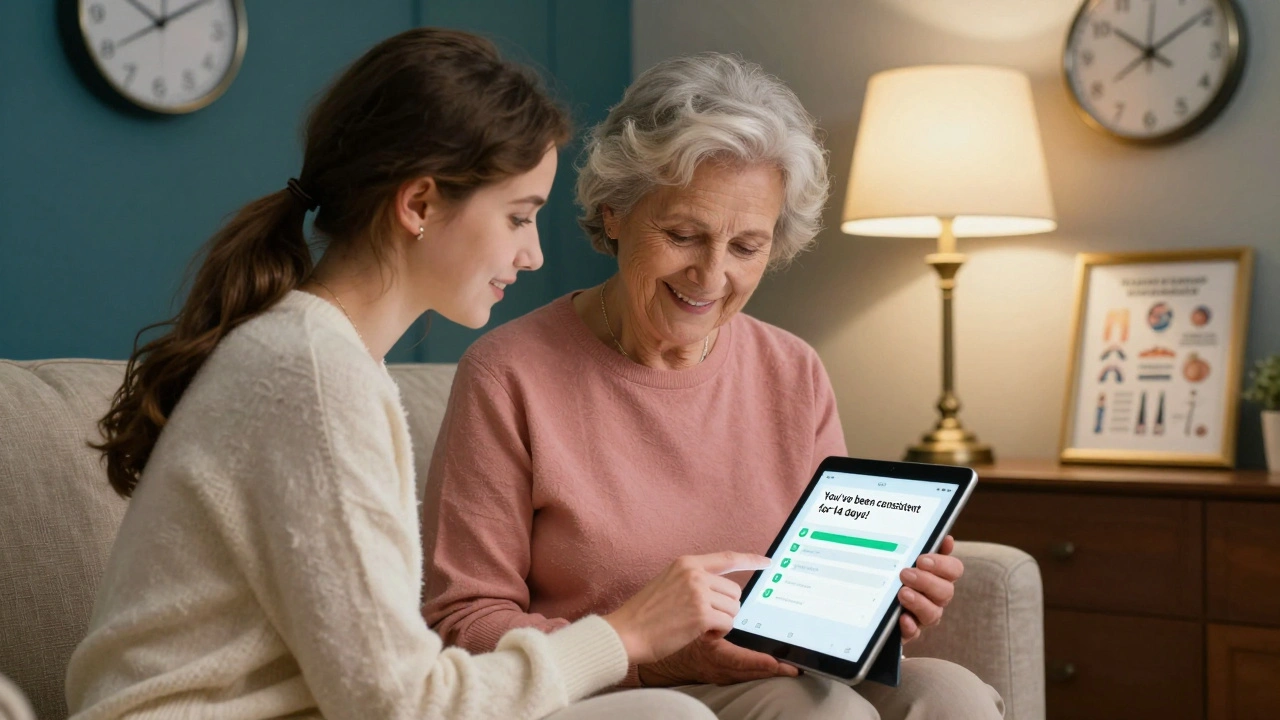
- Progress dashboard - Visual graphs show your adherence streaks. Seeing a 14-day streak can be a powerful motivator.
- Medication interaction checker - Alerts you if a new prescription might clash with something you’re already taking.
- Family or caregiver access - Let a loved one get notifications if you miss a dose. Especially helpful for older adults or those with memory issues.
Apps like Medisafe and MyTherapy include all of these. In fact, 92% of top-rated apps have customizable reminders, and 87% include dashboards that show your progress over time. These aren’t just nice-to-haves - they’re what make the difference between a tool you use for a week and one that changes your health.
How Much Do These Apps Cost?
Here’s the best part: most of them are free. You can download Medisafe, MyTherapy, or PillPack’s reminder tool at no cost. They make money through partnerships with pharmacies or insurers, not by charging you. Premium versions - like Medisafe Premium at $4.99/month - add extra features like 24/7 chat support, advanced analytics, and priority syncing. But for most people, the free version works just fine. Compare that to electronic pill boxes like MedMinder or Hero, which cost $30-$50 per month just to rent. And they don’t even give you insights into your habits.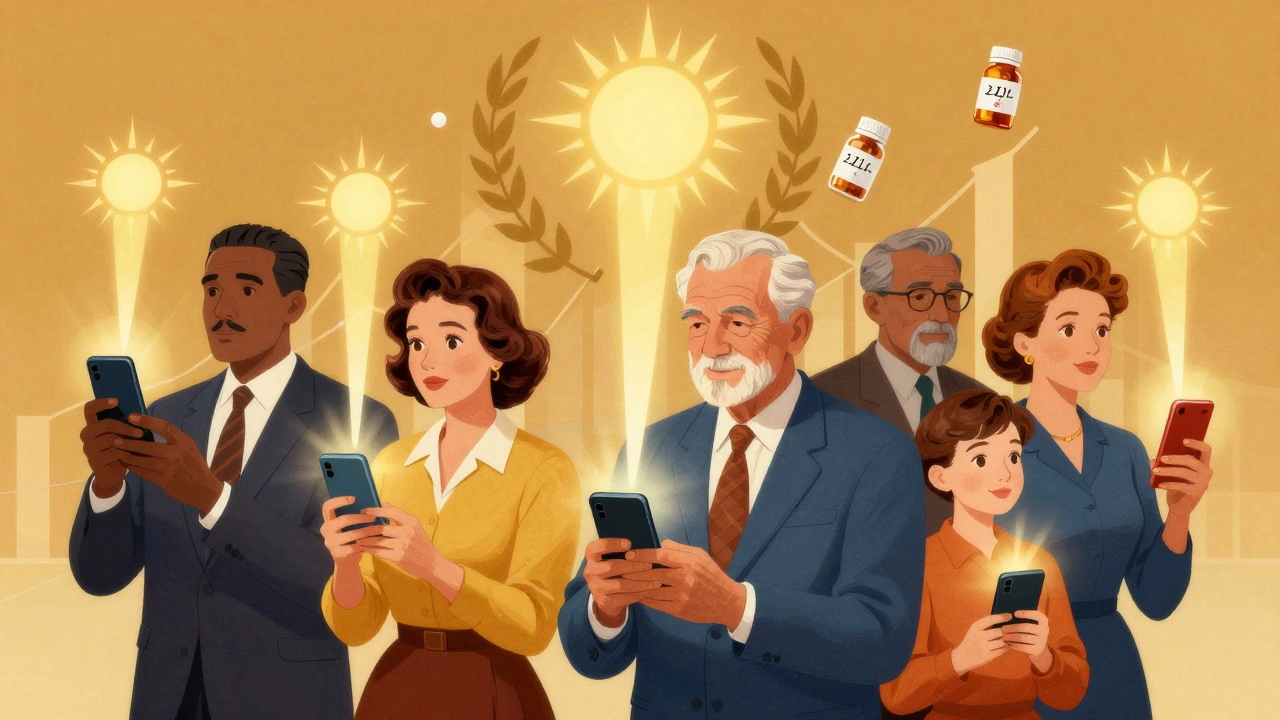
Who Benefits the Most?
These apps work best for people managing multiple medications - especially those with chronic conditions. Studies show the biggest gains are in:- Diabetes - Users saw HbA1c levels drop from 8.2 to 6.9 after six months of consistent use.
- High blood pressure - Adherence improved by 22.7% compared to traditional pill organizers.
- HIV treatment - Where missing even one dose can lead to drug resistance, apps help maintain the 95%+ adherence needed.
They also help younger adults and people with low self-confidence about managing their meds. One study found that users with lower medication self-efficacy stayed more engaged with the app than those who were already confident. Why? Because the app gave them structure and feedback - something they didn’t have before.
But they’re not a magic fix. If you have severe cognitive decline, dementia, or no access to a smartphone, apps won’t help. In those cases, a family member or caregiver setting up a physical reminder system might be better.
Setting It Up: No Tech Skills Needed
You don’t need to be a tech expert. Most people get started in under 20 minutes.- Download a free app like Medisafe or MyTherapy from the App Store or Google Play.
- Enter your medications: name, dose, time, and frequency. Most apps let you scan the barcode on your pill bottle to auto-fill details.
- Set your reminders. Choose a sound you’ll hear - not just a vibration. Test it.
- Enable cloud backup so you don’t lose your data if you switch phones.
- Optional: Add a trusted contact who can get alerts if you miss a dose.
Older adults may take a bit longer - around 40 minutes on average - but most find it worth the effort. If you’re unsure, ask a pharmacist or a family member to help you set it up once. After that, you’re on your own.
Pitfalls to Avoid
Even great tools can fail if used wrong. Here’s what goes wrong - and how to fix it:- Notification fatigue - Too many alerts, too often. Solution: Use your phone’s Focus Mode (iOS) or Do Not Disturb (Android) to silence non-medication alerts during work or sleep.
- Forgetting to log doses - The app can’t track what you didn’t log. Make it a habit: tap "taken" right after you swallow the pill.
- Ignoring warnings - If the app says your new antibiotic might interact with your blood thinner, don’t ignore it. Talk to your doctor.
- Stopping after a month - Studies show adherence drops 35-40% after three months without extra support. Keep using it. Turn on weekly summary emails or push notifications that say, "You’ve been on track for 21 days - keep going!"
Privacy and Security
Your health data is sensitive. Most top apps use end-to-end encryption and comply with HIPAA. But only 64% of apps clearly state their security practices. Stick to apps from established companies like Medisafe, MyTherapy, or Round Health. Avoid random apps with no reviews or unclear privacy policies. Look for mentions of HIPAA, encryption, and biometric login (fingerprint or face ID). If an app asks for access to your contacts or location for no clear reason, skip it.The Bigger Picture
Medication non-adherence costs the U.S. healthcare system $300 billion every year. That’s not just money - it’s preventable hospital stays, complications, and lost quality of life. Apps are part of a larger shift. In 2024, 42% of Medicare Advantage plans started covering these apps as a supplemental benefit. Sixty-seven of the Fortune 100 companies now offer them to employees as part of wellness programs. The FDA even cleared the first prescription digital therapeutic for high blood pressure in March 2024. And it’s getting smarter. Medisafe’s "Adherence Coach," launched in early 2024, uses AI to predict when you’re likely to miss a dose - and nudges you before it happens. Google is testing voice-activated medication assistants. Pfizer is piloting blockchain systems to verify adherence in clinical trials. This isn’t just a trend. It’s the future of chronic disease management.What’s Next?
If you’re taking three or more medications regularly, try one of these apps today. Pick one. Set it up. Give it two weeks. See how your routine changes. You might not notice a difference right away - but after a month, you’ll start to feel more in control. And if you’re helping someone else - a parent, a partner, a friend - set it up for them. A simple reminder on their phone could be the difference between a stable health condition and a trip to the ER. You don’t need to be perfect. You just need to be consistent. And your phone? It’s already there. All you have to do is turn it into your medicine coach.Do medication adherence apps really work?
Yes. A 2025 review of 14 clinical trials found that people using these apps improved their adherence by an average of 0.57 points on the Morisky scale - a statistically significant improvement. Users with diabetes, high blood pressure, and HIV saw the strongest results, with some reducing their HbA1c levels by over 1 point. The effect size is larger than most traditional methods like pill organizers or paper reminders.
Are these apps free to use?
Most top-rated apps like Medisafe, MyTherapy, and Round Health are free to download and use. They make money through partnerships with pharmacies or insurers. Premium versions cost around $5/month and add features like 24/7 support or advanced analytics, but they’re not necessary for most people.
Can older adults use these apps?
Yes, but they may need a little more help setting up. On average, adults over 65 take about 40 minutes to get started, compared to 18 minutes for younger users. Apps with large buttons, clear text, and voice-guided setup help. Many users in their 70s and 80s report that once set up, the reminders make taking medication much easier - especially when family members can get alerts if a dose is missed.
What if I miss a dose and the app doesn’t remind me?
Apps rely on your phone being on, charged, and not in Do Not Disturb mode. If you miss a dose, check your settings: make sure notifications are enabled, the app has permission to run in the background, and your phone’s battery optimization isn’t killing it. You can also set multiple reminders - for example, one at 8 a.m. and another at 9 a.m. - to give yourself a buffer.
Do these apps work for people without smartphones?
No - they require a smartphone with internet access. For people without smartphones or with very low digital literacy, alternatives like simple alarm clocks, pill boxes with visual indicators, or caregiver reminders are better options. Some pharmacies offer free phone-based reminder services, but these are less effective than apps.
Can I share my medication data with my doctor?
Some apps, like Medisafe, let you export your adherence report as a PDF or share it directly with your healthcare provider through secure messaging. This helps your doctor see exactly how often you’re taking your meds - not just what you say you’re doing. Ask your doctor if they accept digital adherence reports - many now do, especially in value-based care programs.
Are these apps safe and private?
The top apps (Medisafe, MyTherapy, etc.) use HIPAA-compliant security, end-to-end encryption, and biometric login. But not all apps are safe. Avoid ones with poor reviews, unclear privacy policies, or that ask for unnecessary permissions like access to your contacts or location. Stick to apps with 4+ star ratings and thousands of reviews.
How long do I need to use the app to see results?
Most users start seeing better adherence within two weeks. But the real health benefits - like lower blood pressure or improved HbA1c - take longer. Studies show the strongest results after three to six months of consistent use. The key is sticking with it. Even if you miss a day, just get back on track. The app is there to help you build a habit, not to judge you.





Chase Brittingham
December 2 2025I’ve been using Medisafe for my dad’s meds since last year. He’s 78, hates tech, but now asks me every morning if the app buzzed. No more panicked calls at 11 a.m. wondering if he took his blood pressure pill. It’s not magic, but it’s the closest thing we’ve found to peace of mind.