
When your prescription costs more than your grocery bill, you’re not alone. In 2023, 12.7 million Americans relied on direct help from drug manufacturers just to fill their meds. These aren’t charity handouts - they’re structured programs built into the system, and knowing how they work can save you hundreds or even thousands a year.
What Are Prescription Assistance Programs?
Prescription assistance programs are direct support systems run by pharmaceutical companies. They come in two main forms: copay assistance programs and Patient Assistance Programs (PAPs). Both help you pay for brand-name drugs, but they target different people and work in very different ways.Copay assistance programs are for people who have insurance but still struggle with out-of-pocket costs like copays or coinsurance. These usually come as cards or coupons you present at the pharmacy. The manufacturer pays the difference between what your insurance covers and what you owe - sometimes cutting your cost by 50% to 100%.
PAPs are for people without insurance, or those with insurance that doesn’t cover their meds. If you qualify based on income, you can get your medication for free or at a steep discount. These programs often require paperwork - tax returns, proof of residency, doctor verification - but they’re designed for people who otherwise couldn’t afford treatment.
Who Gets Help and How Much?
Not everyone qualifies. Copay assistance is mostly for those with private insurance. If you’re on Medicaid or Medicare, you’re often excluded. In fact, 78% of state Medicaid programs ban copay assistance because they argue it pushes patients toward pricier brand-name drugs instead of cheaper generics.PAPs are more flexible, but still have strict rules. Most require your income to be between 200% and 400% of the Federal Poverty Level. For a family of four in 2023, that meant earning between $30,000 and $60,000 a year. Some programs allow you to have Medicare, but only if you’re not getting Part D drug coverage - and even then, it’s complicated.
What do you actually save? It depends on the drug. For example, one asthma inhaler program lets you pay as little as $15 per prescription, with a maximum savings of $90 per fill. Other specialty drugs - like those for rheumatoid arthritis or cancer - can drop from $5,000 a month to $0 with a PAP. Some copay cards cap at $25,000 per year, while others limit you to $200 per month. Always check the fine print.
Why Copay Assistance Isn’t Always a Win
Here’s the catch: copay assistance can make your overall healthcare costs worse. Insurance companies use something called a copay accumulator - a policy that doesn’t let manufacturer discounts count toward your deductible or out-of-pocket maximum. So even if your copay card cuts your monthly payment to $10, you’re still paying full price toward your deductible.This means you stay stuck in the coverage gap longer. Once you hit your out-of-pocket limit, your insurance kicks in fully. But if your copay assistance doesn’t count, you might pay $7,000 out of pocket instead of $3,000. And that’s not just your problem - it’s your insurer’s too. That’s why 22 states have passed laws restricting these programs, and more are considering it.
There’s another issue: these programs encourage brand-name use. A 2022 study in JAMA Internal Medicine found copay assistance pushed patients toward expensive drugs even when generics were available. That added $1.4 billion to U.S. drug spending that year. Critics say it’s a Band-Aid on a broken system - helping individuals while keeping drug prices high.
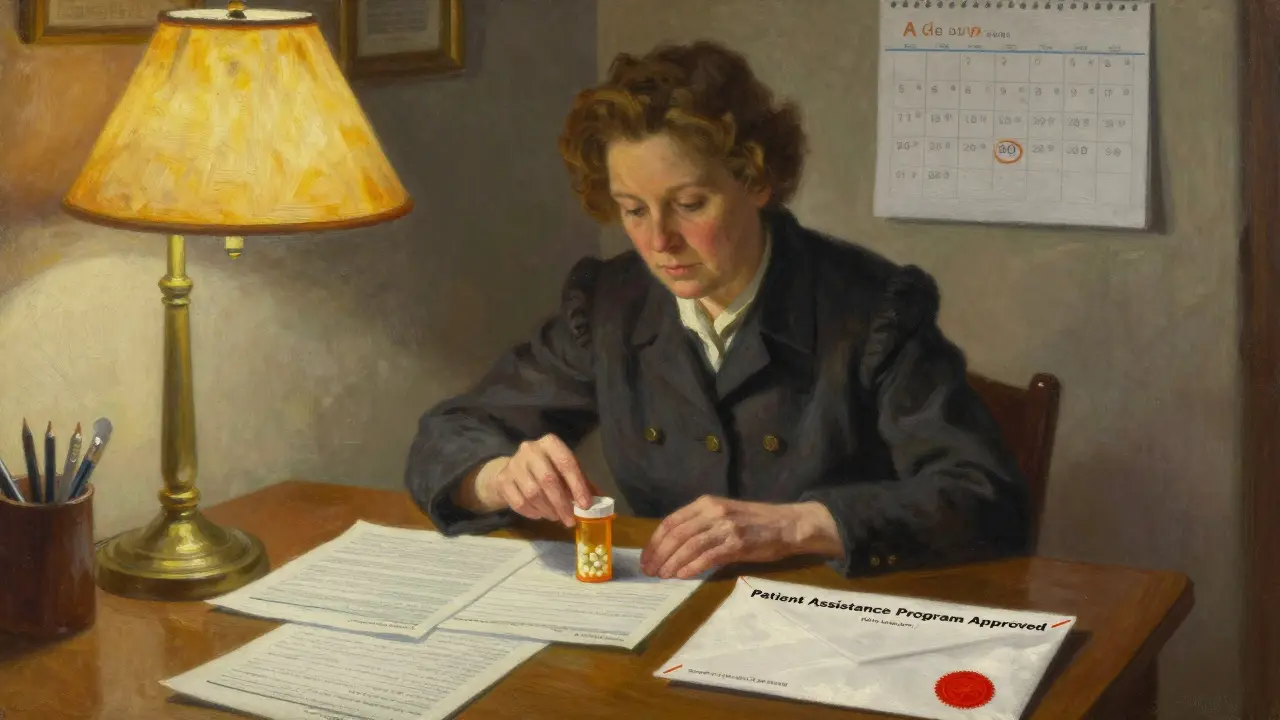
How to Apply for a Patient Assistance Program (PAP)
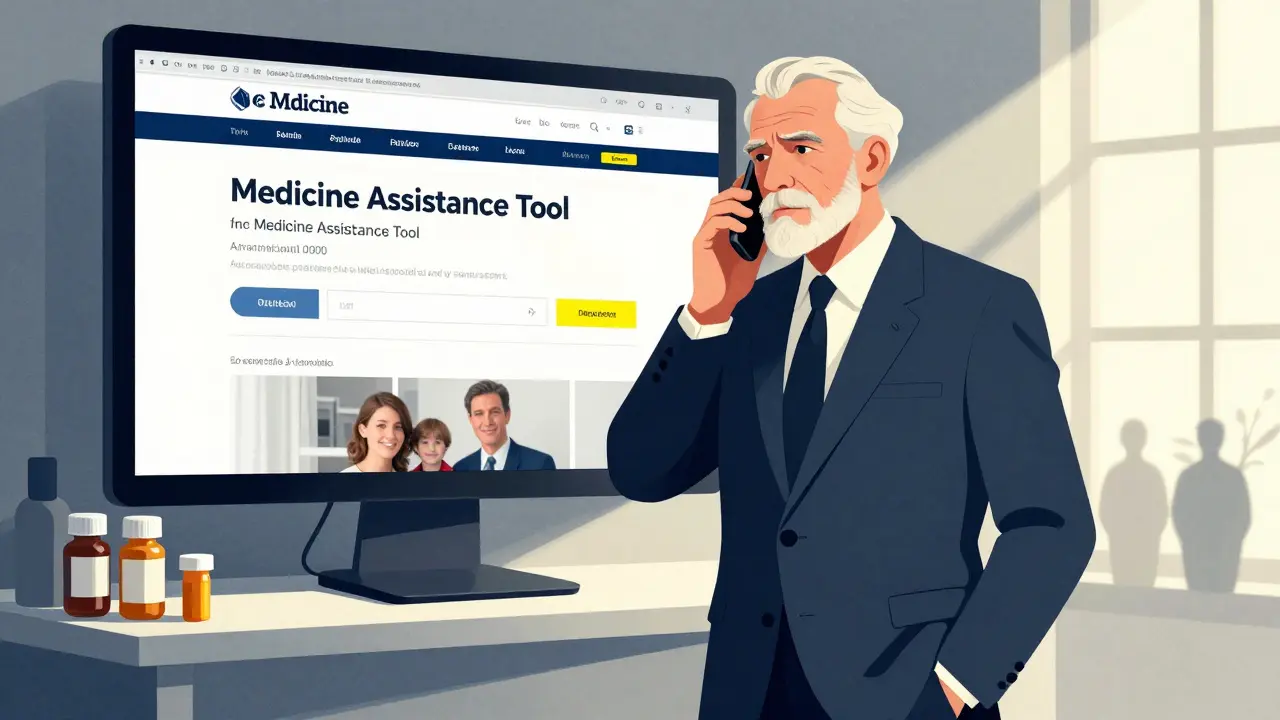
Applying for a PAP isn’t quick, but it’s doable. Here’s how:- Find the right program. Use the Medicine Assistance Tool (MAT), a free, confidential search engine run by PhRMA. It lists over 900 programs from 200+ manufacturers.
- Check eligibility. Most require proof of income (pay stubs or tax returns), U.S. residency, and a valid prescription. Some require you to have no other drug coverage.
- Get your doctor involved. They need to sign off on medical necessity and sometimes fill out forms. This step can take time - the average application takes 45 to 60 minutes.
- Submit and wait. Processing can take 2 to 6 weeks. Some programs send meds directly to your home; others give you a card to use at the pharmacy.
- Renew annually. Most PAPs require yearly reapplication. Set a reminder.
Pro tip: If you’re denied, ask why. Sometimes it’s a simple fix - like submitting a recent pay stub instead of a W-2. Don’t give up after one rejection.
What You Can’t Get From These Programs
These programs have hard limits. You won’t find help if:- You’re on Medicaid (most PAPs exclude you)
- You’re on Medicare Part D and your plan doesn’t allow it (and most don’t)
- Your drug is generic (copay cards only work on brand-name drugs)
- You earn too much - even if you’re struggling
- You’re not a U.S. resident
And here’s the big one: PAP assistance doesn’t count toward your Medicare Part D out-of-pocket maximum. That means even if you get your drug for free through a PAP, you’re still paying full price toward your catastrophic coverage threshold. You might spend years in the coverage gap because the program you’re relying on doesn’t help you get out of it.
What’s Changing in 2025?
The rules are shifting fast. In October 2023, the Department of Health and Human Services proposed new rules requiring manufacturers to publicly report how much they spend on copay assistance. California already passed a law requiring this in January 2024. More states will follow.Pharmacies are also getting smarter. Many now integrate with the Medicine Assistance Tool, so your copay card is applied automatically at checkout - no need to hand over a physical card. That’s a big win for convenience.
But the big question remains: Is this sustainable? In 2022, manufacturers spent $24.5 billion on patient assistance. By 2027, that’s projected to hit $38.2 billion. Meanwhile, 28 million Americans still have no insurance. These programs are lifesavers - but they’re not solutions. They’re a symptom of a system where drug prices are set by companies, not markets.
What to Do If You’re Struggling
Don’t skip your meds. Don’t split pills. Don’t go without because you think you can’t afford help. Here’s your action plan:- Ask your pharmacist: “Does this drug have a manufacturer assistance program?”
- Go to MedicineAssistanceTool.org - it’s free, no sign-up needed.
- Call the manufacturer’s patient support line. Most have dedicated reps who walk you through it.
- If you’re on Medicare, ask your plan about “gap coverage” options - some have their own assistance.
- If you’re denied, ask for an appeal. Sometimes eligibility rules are misapplied.
Remember: You don’t need to be poor to qualify. You just need to be struggling. And you’re not alone - millions use these programs every year. The system isn’t perfect, but the help is real. Use it.
Can I use copay assistance if I have Medicare?
You can use copay assistance if you have Medicare, but only if you’re not enrolled in a Medicare Part D plan. If you are on Part D, most copay cards cannot be used because they don’t count toward your out-of-pocket maximum, and many Part D plans block them entirely. PAPs generally don’t accept Medicare Part D enrollees either - but some manufacturers offer special exceptions for low-income beneficiaries. Always check with the specific program.
Do I need to reapply every year for patient assistance programs?
Yes, almost all PAPs require annual reapplication. You’ll need to submit updated income documents, proof of residency, and sometimes a new prescription from your doctor. Some programs send reminders, but don’t rely on them. Mark your calendar and start the process 60 days before your current approval expires to avoid gaps in coverage.
Can I use a copay card and a pharmacy discount card at the same time?
No. You can only use one discount at a time. Manufacturer copay cards usually offer much deeper discounts than general pharmacy discount cards (like GoodRx), so always try the copay card first. If it’s not available, then use the discount card. The pharmacy will automatically apply the best option - but don’t try to stack them.
Why do some programs say I can’t get help if I have insurance?
That’s because PAPs are designed for the uninsured or underinsured. If your insurance covers the drug, even partially, the manufacturer considers you ineligible for their free program. This is by design - these programs are meant to fill gaps, not replace insurance. However, if your insurance has a high deductible or excludes the drug entirely, you may still qualify. Always ask - eligibility rules vary by program.
Are there any programs for people who make too much for PAPs but still can’t afford their meds?
Yes. Some manufacturers offer tiered programs for people who earn above the standard PAP limit but still face financial hardship. For example, Eli Lilly’s program has a “financial hardship” category for those earning up to 600% of the Federal Poverty Level. Also, nonprofit organizations like NeedyMeds and the Patient Advocate Foundation can help you find state-based or sliding-scale programs. Don’t assume you’re out of options just because you make too much for a PAP.



Nadia Spira
December 31 2025Let’s be real - this whole system is a rigged casino where Big Pharma writes the rules, the patients lose, and the middlemen get rich. Copay cards? Just a marketing gimmick to keep you hooked on $10K/month drugs while your deductible balloons. And don’t even get me started on Medicare Part D being intentionally sabotaged by these ‘assistance’ programs. It’s not help - it’s exploitation dressed in corporate virtue signaling. The fact that we’ve normalized this as ‘solutions’ is the real tragedy.