
Rhabdomyolysis Risk Checker
Personal Risk Assessment
When you take a statin for cholesterol or colchicine for gout, you expect relief-not a life-threatening muscle crisis. But when two common medications mix, they can trigger rhabdomyolysis, a condition where muscle cells literally break apart and flood your bloodstream with toxic debris. It’s not rare. In fact, about 7 to 10% of all rhabdomyolysis cases come from drug interactions, and many of them are preventable.
What Happens When Muscles Start Breaking Down
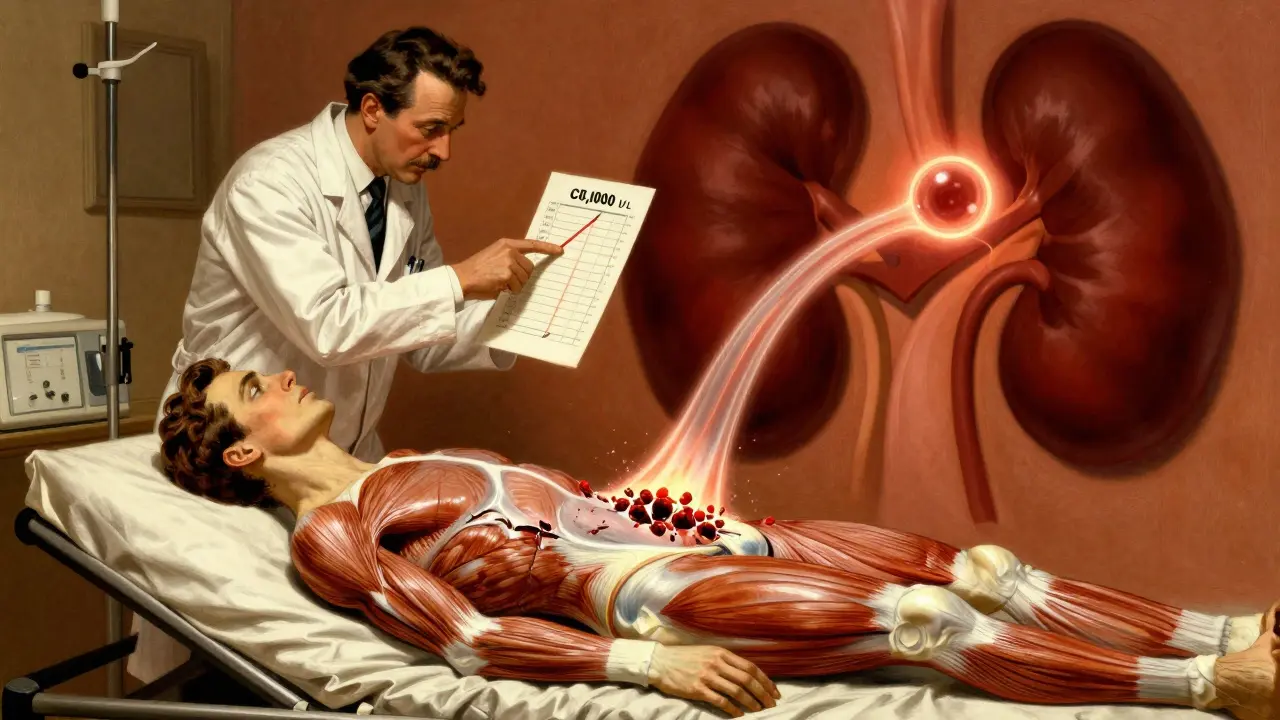
Rhabdomyolysis isn’t just muscle soreness. It’s a medical emergency. When muscle cells are damaged-by a drug combo, extreme exertion, or trauma-their contents leak into the blood. The biggest danger? Myoglobin. This protein, normally inside muscle fibers, turns into a kidney poison once it’s free in the bloodstream. It clogs tiny tubes in the kidneys, leading to acute kidney injury. Up to half of people with severe rhabdomyolysis need dialysis.
The classic signs-muscle pain, weakness, and dark urine-are only present in about half the cases. Many patients show up with nausea, fever, or just feeling "off." Some don’t even realize their urine is dark until someone else points it out. That’s why this condition slips through the cracks so often.
The Top Culprits: Statins and the Dangerous Combos
Statins like atorvastatin (Lipitor) and simvastatin (Zocor) are the most common trigger. They’re prescribed to over 100 million people worldwide. But they’re not the problem alone. The real danger comes from what they’re taken with.
Here’s the hard truth: combining simvastatin with certain antibiotics like clarithromycin or antifungals like itraconazole increases rhabdomyolysis risk by more than 18 times. Why? Both drugs are processed by the same liver enzyme, CYP3A4. When one blocks it, the other builds up to toxic levels in your blood. Simvastatin alone might be fine. Simvastatin plus clarithromycin? That’s a recipe for CK levels over 50,000 U/L-ten times the danger threshold.
Another deadly combo: gemfibrozil (a cholesterol drug) with simvastatin. This pairing raises risk by 15 to 20 times compared to statin use alone. It’s so dangerous that many doctors now avoid gemfibrozil entirely if a patient is on a statin.
Other High-Risk Medications You Might Not Know About
Statins aren’t the only offenders. Colchicine, used for gout, is a quiet killer when paired with CYP3A4 inhibitors. The European Medicines Agency found a 14-fold increase in rhabdomyolysis risk when colchicine is taken with drugs like erythromycin or clarithromycin. One patient on Reddit shared: "Added clarithromycin to my colchicine for gout. Within 48 hours, my urine looked like cola. CK hit 28,500. I was in the ICU. No one warned me."
Even cancer drugs can cause this. Erlotinib, used for lung cancer, interacts with simvastatin to spike CK levels above 20,000 U/L in under 72 hours. In one documented case, the patient needed three days of dialysis.
Propofol, the IV anesthetic, causes a rare but deadly form called propofol infusion syndrome. It shuts down mitochondrial energy production in muscle cells. When rhabdomyolysis develops here, mortality hits 68%. This isn’t theoretical-it’s been seen in ICU patients on prolonged infusions.
And don’t overlook leflunomide, used for rheumatoid arthritis. It has a 2-week half-life, meaning it sticks around. When combined with statins, it can trigger CK levels over 50,000 U/L. Treatment often requires plasma exchange to flush it out.
Who’s Most at Risk?
This isn’t random. Certain people are far more vulnerable:
- People over 65: 3.2 times higher risk
- Women: 1.7 times more likely than men
- Those with kidney problems (eGFR under 60): 4.5 times higher risk
- Anyone taking five or more medications: 17.3 times higher risk
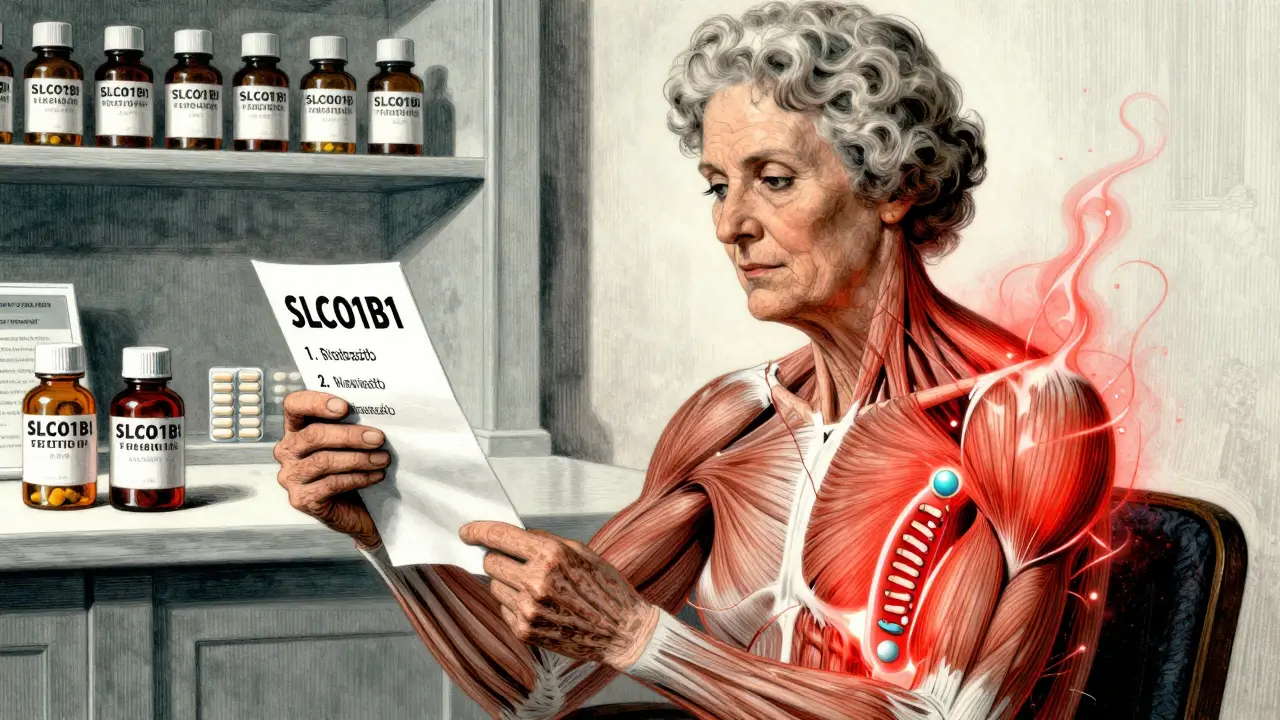
Genetics play a role too. The SLCO1B1*5 gene variant-common in Europeans-makes simvastatin 4.5 times more likely to cause muscle damage. Testing for this isn’t routine, but it should be considered for high-risk patients.
How It’s Diagnosed
Doctors don’t guess. They test. The gold standard is creatine kinase (CK). Normal levels are under 190 U/L. When CK exceeds 5 times the upper limit (roughly 1,000 U/L), rhabdomyolysis is suspected. Severe cases often hit 5,000 to 100,000 U/L.
Urine tests show myoglobin (dark, tea-colored), and blood tests check for dangerous shifts: high potassium (can cause heart rhythm issues), low calcium (can cause muscle spasms), and rising creatinine (a sign of kidney stress). A single CK test isn’t enough-doctors track it over days to see if it’s peaking or falling.
What Happens in the Hospital
Once diagnosed, time is critical. The first step? Stop the offending drugs-immediately.
Then, aggressive hydration. The Cleveland Clinic protocol calls for 3 liters of IV saline in the first 6 hours, then 1.5 liters per hour. The goal? Flush out myoglobin before it damages the kidneys. Urine output must be kept above 200-300 mL/hour.
Urine alkalinization with sodium bicarbonate helps prevent myoglobin from clumping in kidney tubules. Target pH: above 6.5.
Other interventions depend on complications:
- Hyperkalemia? Give calcium, insulin, and albuterol to stabilize the heart.
- Hypocalcemia? Treat only if symptoms are present-overcorrection can worsen things.
- Compartment syndrome? That’s surgery territory.
Some patients need dialysis. Others recover with fluids alone. But recovery isn’t quick. Even without kidney damage, muscle weakness can last 12 weeks. If dialysis was needed, full recovery can take over 6 months.
Why This Keeps Happening
Doctors aren’t ignoring the risks. But the system is broken. A 2022 study in the American Family Physician journal found that 92% of patients with statin-induced rhabdomyolysis had providers who didn’t recognize early muscle symptoms as serious. Patients often don’t mention muscle pain unless asked directly.
Pharmacists catch more of these interactions-but even they can be overwhelmed. One in three patients on statins take at least one other drug that can interact. The average 70-year-old takes 5 medications. The odds of a dangerous combo are high.
Regulations are catching up. The FDA and EMA now require black box warnings on statin labels for CYP3A4 interactions. The EMA mandates contraindications with strong inhibitors like clarithromycin. But these warnings don’t always reach the patient.
What You Can Do
You’re not powerless. Here’s how to protect yourself:
- Know your meds. Keep a written list of everything you take, including supplements.
- Ask: "Could this interact with my statin or other muscle-affecting drug?" Especially if you’re on antibiotics, antifungals, or gout meds.
- Watch for muscle pain, weakness, or dark urine. Don’t wait. Call your doctor immediately.
- If you’re over 65, have kidney issues, or take 5+ drugs, ask about genetic testing (SLCO1B1) or switching to a safer statin like pravastatin or rosuvastatin, which have lower interaction risks.
- Use a pharmacy app like GoodRx or Medscape to check interactions-but don’t rely on it alone. Talk to your pharmacist.
Most cases are preventable. The problem isn’t the drugs-it’s the lack of awareness. You’re not just a patient. You’re the last line of defense.
What’s Next?
Research is moving fast. The NIH is funding a real-time drug interaction alert system to warn prescribers before dangerous combos are written. Clinical trials are testing mitochondrial protectants to shield muscle cells during statin therapy. But none of this matters if we don’t change how we talk about medication risks.
For now, the best protection is knowledge. Know your drugs. Know your body. Speak up.
Can rhabdomyolysis happen with just one medication?
Yes, but it’s rare. Most cases from single drugs happen at high doses or in people with existing risk factors like kidney disease or advanced age. Statins alone can cause rhabdomyolysis, but the risk jumps dramatically when combined with other drugs. The majority of severe cases involve interactions.
How long after starting a new drug does rhabdomyolysis usually appear?
Most cases occur within 30 days of starting or changing a medication. Statin-related cases typically show up around 28 days after initiation. If you develop muscle pain or dark urine within a month of a new drug, consider rhabdomyolysis as a possibility and get tested.
Is it safe to take statins after having rhabdomyolysis once?
Generally, no. Most doctors avoid restarting statins after a confirmed episode. If cholesterol control is still needed, alternatives like ezetimibe or PCSK9 inhibitors are preferred. If a statin must be restarted, a low dose of a low-risk statin (like pravastatin) may be tried with close monitoring-but only after careful discussion with a specialist.
Can exercise cause rhabdomyolysis, and how is it different from drug-induced?
Yes, extreme exercise-especially in untrained individuals-can cause rhabdomyolysis. The key difference is timing and context. Exercise-induced cases usually happen after intense, unfamiliar activity (like CrossFit or marathon training). Drug-induced cases often occur with no physical trigger, and CK levels are typically much higher. Plus, drug-induced cases are more likely to cause kidney failure.
Are there any blood tests besides CK that confirm rhabdomyolysis?
CK is the most specific and sensitive test. But doctors also look at myoglobin in urine, elevated potassium, low calcium, and rising creatinine (a kidney marker). Myoglobin can be detected in urine with a dipstick test that shows blood without red blood cells under the microscope-a key clue that distinguishes rhabdomyolysis from other causes of dark urine.




Jacob Hessler
March 26 2026This is why America needs to stop letting big pharma push drugs without warning people. I got my uncle on simvastatin and clarithromycin last year-no one told him. He ended up in the ICU. My tax dollars fund this crap. Wake up, people!