
When you take an antimalarial, a medication used to prevent or treat malaria, often prescribed in high-risk areas or for travelers. Also known as antimalarial drugs, these compounds work by killing the malaria parasite—but some also interfere with the heart’s electrical rhythm, leading to a condition called QT prolongation, a delay in the heart’s recovery phase after each beat that can trigger life-threatening irregular rhythms.
QT prolongation isn’t just a lab result. It’s a silent danger. Drugs like chloroquine and hydroxychloroquine, once common for malaria, are now known to stretch the QT interval on an ECG. This isn’t rare—it happens in people with existing heart conditions, low potassium, or when these drugs are mixed with other medications like antibiotics or antidepressants. Even healthy people can be at risk if they take high doses or use them long-term. The heart’s electrical system becomes unstable, and that’s when torsades de pointes, a dangerous type of arrhythmia, can kick in. It doesn’t always come with warning signs. One minute you feel fine; the next, you’re in cardiac arrest. That’s why knowing which antimalarials carry this risk matters more than ever.
Not all antimalarials are the same. Artemisinin-based combinations, like artemether-lumefantrine, are now preferred because they don’t significantly affect the QT interval. But if you’re prescribed chloroquine or hydroxychloroquine—maybe for lupus or rheumatoid arthritis, not just malaria—you need to ask about your heart health. Have you had a recent ECG? Are you on diuretics? Do you have kidney or liver problems? These aren’t just doctor questions—they’re survival checks. The same goes for combining antimalarials with other drugs. Antibiotics like azithromycin, antidepressants like citalopram, even some antifungals can stack the risk. It’s not about avoiding treatment. It’s about managing it smartly.
What you’ll find in the posts below isn’t just theory. It’s real-world guidance on how medications interact, how timing affects safety, and how diet, kidney function, and even mail-order delivery can impact your drug levels. You’ll see how drugs like warfarin and cyclosporine require careful monitoring—and why the same logic applies to antimalarials. You’ll learn how to spot hidden risks, avoid dangerous combos, and protect your heart while staying protected from disease. This isn’t about fear. It’s about control. Know the drugs. Know your body. Know what to ask.
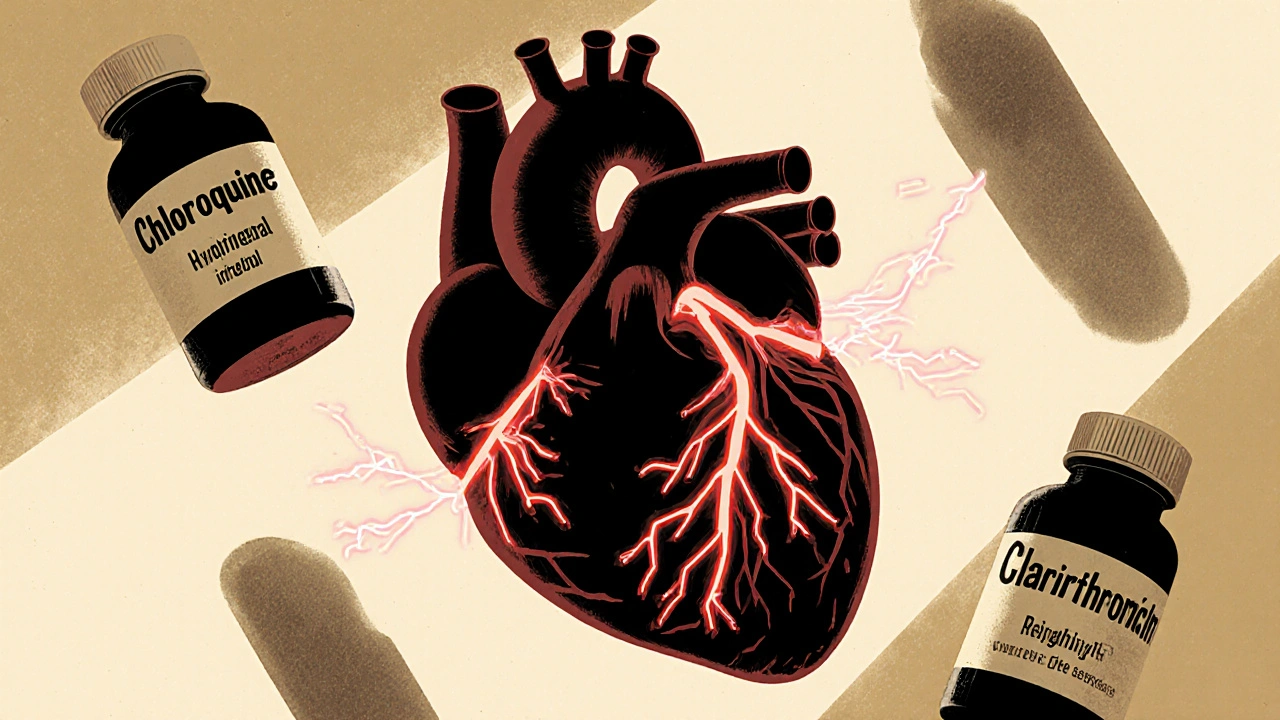
Antimalarial drugs like hydroxychloroquine and artemether-lumefantrine can cause dangerous heart rhythm changes and interact with common medications. Learn which combinations are risky and how to stay safe.