
Athlete's foot is that itchy, burning rash you often see between the toes. It’s caused by a fungus that loves warm, damp skin. The good news? You can clear it up without a prescription in most cases. Below we break down what to look for, how to act today, and when a doctor’s help is needed.
First, spot the common clues: redness, peeling, and a thread‑like itch that gets worse after sweating or wearing tight shoes. The fungus likes moisture, so the rash often appears in the spaces between the toes or on the soles.
Once you notice it, keep the area clean and dry. Wash your feet with mild soap, pat them dry (especially between the toes), and change socks at least once a day. Cotton socks and breathable shoes let the skin breathe, cutting the fungus’s favorite environment.
Several kitchen items have antifungal properties. A daily foot soak in a solution of one part white vinegar and two parts warm water helps restore the skin’s natural acidity, which the fungus dislikes. Let your feet sit for 10‑15 minutes, then dry thoroughly.
Another option is a tea tree oil rub. Mix a few drops of tea tree oil with a carrier oil (like coconut oil) and apply to the affected spots twice a day. The oil’s natural antiseptic action can reduce itching and speed healing.
If you prefer a powder, sprinkle talc‑free antifungal powder (such as those containing miconazole or clotrimazole) inside your shoes at night. This keeps the inside dry and attacks any lingering spores.
When home tricks aren’t enough, reach for an OTC cream or spray. Look for active ingredients like terbinafine, miconazole, or clotrimazole. Apply the product exactly as the label says—usually once or twice a day for two to four weeks, even if the rash looks better early on.
For stubborn cases, a topical gel combined with a foot powder can give a double punch. Many people find that using a foot spray in the morning and a cream at night covers both surfaces and hidden crevices.
Remember: consistency matters more than strength. Skipping doses lets the fungus bounce back.
If the rash spreads to the toenails, turns pus‑filled, or doesn’t improve after three weeks of OTC treatment, it’s time to see a professional. Prescription‑strength oral antifungals may be needed for deep infections.
Also, if you have diabetes, a weakened immune system, or poor circulation, get medical advice early. These conditions can turn a simple athlete’s foot into a serious skin problem.
In short, catch the symptoms early, keep your feet dry, try a vinegar soak or tea tree oil, and use an OTC antifungal if the itch persists. Stick with the routine for a few weeks, and you’ll likely be back to sandal‑ready feet in no time.
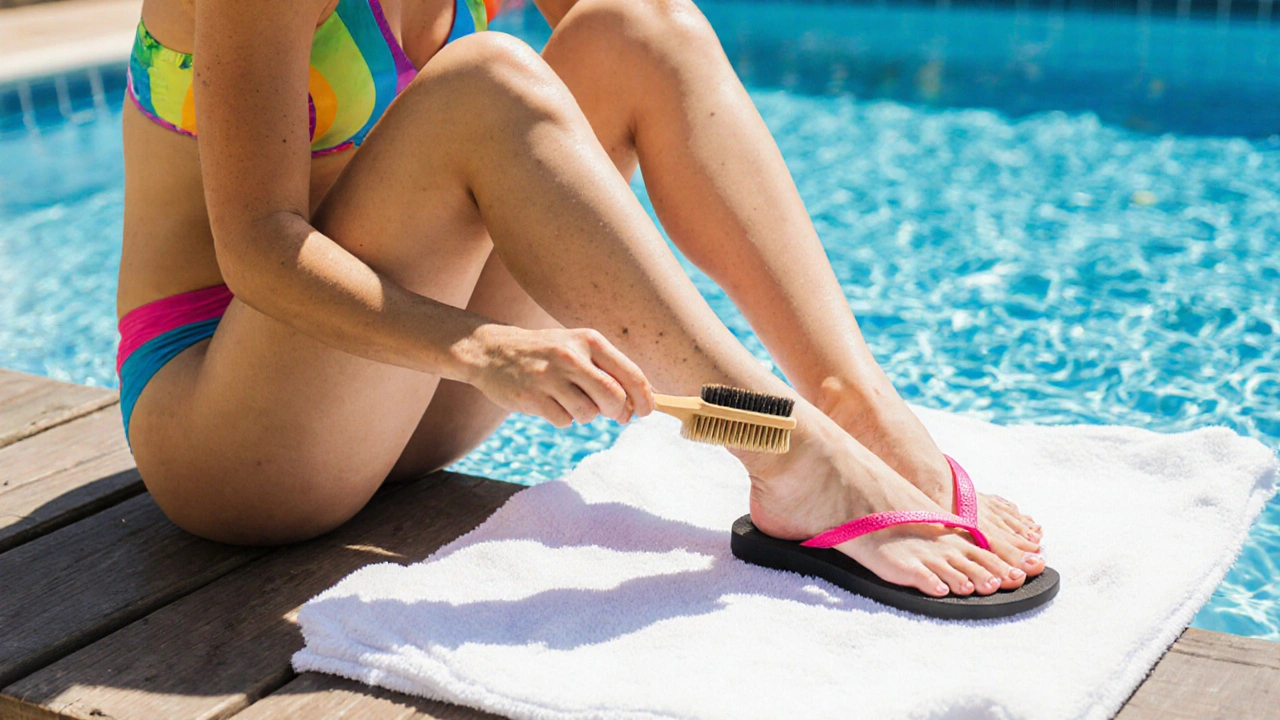
Learn quick, practical ways to prevent and treat common fungal infections like athlete's foot, jock itch, ringworm, and yeast infections with proven prevention tips, effective treatments, and when to seek medical help.