
Every year, thousands of people on blood thinners end up in the emergency room-not because of a heart attack or stroke, but because they took a supplement they thought was harmless. Garlic pills. Ginkgo biloba. Green tea extract. These aren’t drugs. They’re sold as ‘natural,’ ‘safe,’ and ‘healthy.’ But when mixed with warfarin, apixaban, or rivaroxaban, they can turn your body’s natural clotting system into a ticking time bomb.
Why This Isn’t Just a ‘Natural’ Problem
You might think, ‘I’m just taking a little turmeric for my knees.’ Or, ‘I’ve been drinking ginger tea for years-what’s the harm?’ The problem isn’t the dose. It’s the unpredictability. Unlike prescription drugs, herbal supplements aren’t tested for safety before they hit store shelves. The FDA doesn’t require proof they’re safe with other medications. That means you could be taking something that’s been sitting on a shelf for months, with unknown potency, contaminants, or even hidden ingredients.Take danshen, a common herb in traditional Chinese medicine. In clinical case reports, just a few days of using danshen with warfarin caused INR levels to spike by 300-400%. That’s not a typo. INR above 4.0 means your blood takes four times longer to clot. At that level, a simple bump or fall can cause internal bleeding. One patient in the UK ended up in ICU after adding danshen to his regimen. He had no idea it was dangerous.
The Top 10 Dangerous Herbs (And Why They’re Risky)
Based on over 14,000 adverse event reports analyzed by the FDA in 2024, these are the 10 herbal supplements most linked to serious bleeding or clotting events in people on anticoagulants:- Ginkgo biloba: Inhibits platelet function. Adds to warfarin’s effect. Causes spontaneous bruising, nosebleeds, even brain bleeds.
- Garlic: Reduces platelet aggregation. One study showed a 30% increase in bleeding risk after just one week of use.
- Ginger: Even low doses (over 1g/day) can interfere with clotting. High doses are dangerous. Some people tolerate it fine-but you won’t know until you test.
- Ginseng: Can either increase or decrease INR unpredictably. One person’s INR dropped from 2.8 to 1.4 after starting ginseng-putting them at risk for a clot.
- St. John’s Wort: Speeds up how fast your body breaks down apixaban and rivaroxaban. Levels can drop by 50% in 72 hours. That’s like stopping your blood thinner cold turkey.
- Chamomile: Contains coumarin, a natural blood thinner. Adds up over time.
- Cranberry: Once thought to be safe, now known to increase INR in some people. Especially risky if you drink cranberry juice daily.
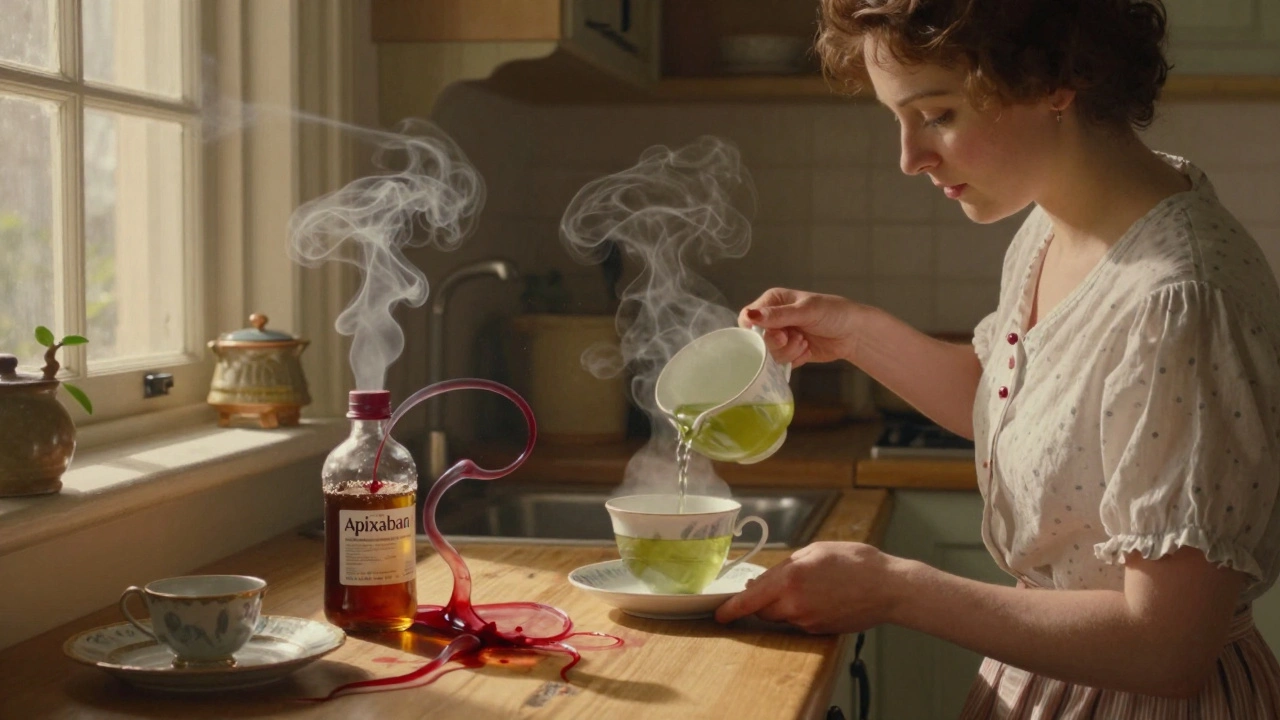
- Green tea: High in vitamin K? No. But it contains catechins that interfere with clotting enzymes. Multiple case reports link it to INR spikes.
- Chinese wolfberry (goji berry): Often marketed as a superfood. Contains compounds that inhibit CYP enzymes-same ones that break down warfarin.
- Dong quai: Also called ‘female ginseng.’ Contains coumarin. Known to cause dangerous bleeding in women on warfarin.
These aren’t theoretical risks. They’re documented in real people. In 2023, the American Pharmacists Association recorded 1,842 major bleeding events tied to herbal supplements. Ginkgo, garlic, and ginseng made up nearly half of those cases.
How Interactions Actually Work
There are two main ways herbs mess with blood thinners:Pharmacokinetic interactions change how your body processes the drug. Think of warfarin as a car. CYP2C9 and CYP3A4 enzymes are the brakes. Some herbs-like danshen or green tea-slam those brakes harder, making the car slow down too much. Others, like St. John’s Wort, cut the brake lines entirely. That’s why apixaban levels can crash by half when taken with it.
Pharmacodynamic interactions don’t change drug levels-they just add to the effect. Ginkgo doesn’t make warfarin stronger in your blood. But it makes your platelets less sticky. So now you’ve got two things working together to stop your blood from clotting. It’s like double-braking on ice.
Warfarin is especially dangerous because it has a narrow window. INR 2.0-3.0 is the target. Below that, clots form. Above that, you bleed. A single herbal supplement can push you out of that range without warning.
What About the ‘Newer’ Blood Thinners?
Many people assume apixaban, dabigatran, or rivaroxaban are safer. They’re easier to use-no weekly INR checks. But they’re not immune.St. John’s Wort cuts apixaban levels by half. That’s not a small drop. That’s the difference between protection and danger. Cranberry juice? Still risky. Garlic? Still a problem. Even CBD oil, which is now widely available, was shown in a 2024 JAMA trial to increase INR by 2.8 times in nearly 70% of warfarin users. That’s a red flag.
There’s no ‘safe’ blood thinner if you’re mixing in herbs. The risk just looks different.
Why Patients Don’t Tell Their Doctors
Here’s the scary part: most people don’t tell their doctors they’re taking these supplements.A 2024 Medscape survey of over 1,200 people on anticoagulants found that 69% didn’t mention herbal use. Why? Because they believe ‘natural’ means ‘safe.’ Or because their doctor never asked. Only 27% of medical records even document herbal supplement use. That’s not negligence-it’s systemic. Most clinics still don’t have a standard question for it.
One Reddit user, u/WarfarinWarrior, posted about his INR shooting to 4.2 after adding turmeric. He didn’t think it mattered. His doctor didn’t ask. He ended up hospitalized. He’s not alone.
What You Should Do Right Now
If you’re on a blood thinner, here’s what you need to do:- List every supplement you take. Not just the big ones. Include teas, capsules, powders, tinctures-even if you’ve been taking them for years.
- Bring that list to every appointment. Don’t wait to be asked. Hand it to your doctor or pharmacist.
- Ask: ‘Is this safe with my blood thinner?’ Don’t rely on Google. Use the Natural Medicines Database. It rates interactions on a 1-7 scale. Level 7 = life-threatening. If it’s 5 or higher, stop it.
- Don’t assume ‘low dose’ is safe. Even 500mg of garlic or 1 cup of green tea daily can add up.
- Monitor for signs of bleeding: Unexplained bruising, nosebleeds, blood in urine or stool, headaches, dizziness. If you notice any, get your INR checked immediately.

What Doctors Should Be Doing
Healthcare providers need to stop treating herbal supplements as optional. The American Heart Association says screening for them should be mandatory at every visit. Simple tools work. One clinic in California added five questions to their intake form:- Do you take any vitamins, minerals, or herbal products?
- Do you drink herbal teas daily?
- Have you started or stopped any supplements in the last 30 days?
- Do you use any traditional or cultural remedies?
- Would you tell me if you were taking something not on this list?
Within 18 months, undocumented supplement use dropped from 73% to 28%. That’s not magic. That’s consistency.
The Bigger Picture
The global herbal supplement market hit $129 billion in 2024. It’s growing fast. But regulation hasn’t kept up. Only 28% of products are verified by third parties. That means you could be buying something labeled ‘garlic’ that actually contains warfarin-like compounds-or worse, heavy metals.And it’s not just in the U.S. In Asia, up to 80% of people on blood thinners use traditional herbs. In Western countries, usage is rising 12% a year. Without better screening, experts predict anticoagulant-herbal interactions will cause 14% of all major bleeding events by 2030.
Final Thought: Natural Doesn’t Mean Safe
You wouldn’t mix prescription painkillers with alcohol. You wouldn’t take antibiotics with grapefruit juice. So why treat herbal supplements differently? They’re not harmless. They’re not ‘just herbs.’ They’re bioactive chemicals-and they interact with your medications in ways we’re still learning.Your blood thinner is there to protect you. Don’t let a supplement undo that. Talk to your pharmacist. Bring your list. Ask the question. It might save your life.



Lara Tobin
December 12 2025I didn’t realize green tea could be this dangerous-I’ve been drinking it daily for years thinking it was helping my heart. 😔 Now I’m scared to even sip it. Thanks for laying this out so clearly.