
If you’ve been lying awake for hours night after night, only to drag yourself through the day exhausted, you’re not broken. You’re stuck in a cycle that’s easy to fall into-and even easier to fix, if you know how. Sleep Restriction Therapy isn’t about sleeping more. It’s about sleeping better, by doing less. And it works-better than pills, better than counting sheep, and better than waiting for your body to "just figure it out."
Why You’re Still Awake After Years of Trying
Most people with chronic insomnia spend way too much time in bed. Not because they want to, but because they’re desperate to sleep. So they go to bed early. They lie there scrolling. They get up for water. They check the clock. They try again the next night. And the next. Over time, your brain starts associating your bed with wakefulness-not rest. That’s the trap. The more you try to force sleep, the more it slips away. Sleep Restriction Therapy breaks that cycle by reversing the logic. Instead of spending 8 hours in bed to get 6 hours of sleep, you start by spending only 6 hours in bed-no more, no less. You’re not trying to fix your sleep. You’re forcing your body to rebuild it from the ground up.How Sleep Restriction Therapy Actually Works
This isn’t guesswork. It’s science-backed, step-by-step protocol developed by Dr. Arthur Spielman and now used by sleep clinics across the U.S. and U.K. Here’s how it unfolds:- Track your sleep for 7 days. Write down exactly when you get into bed, when you fall asleep, when you wake up, and any time you’re awake in the night. No estimates. No guesses. This is your baseline.
- Calculate your average total sleep time. If you slept 5.5 hours per night on average, that’s your starting point. Your time in bed becomes 5.5 hours-not 7, not 8.
- Set a fixed wake-up time. No matter what. Even if you slept 2 hours. Even if it’s Saturday. This is non-negotiable.
- Calculate your bedtime. If you wake at 7 a.m. and your time in bed is 5.5 hours, your bedtime is 1:30 a.m. No earlier.
- Stick to it. No naps. No extra time in bed. No "just 10 more minutes."
When to Increase Your Time in Bed
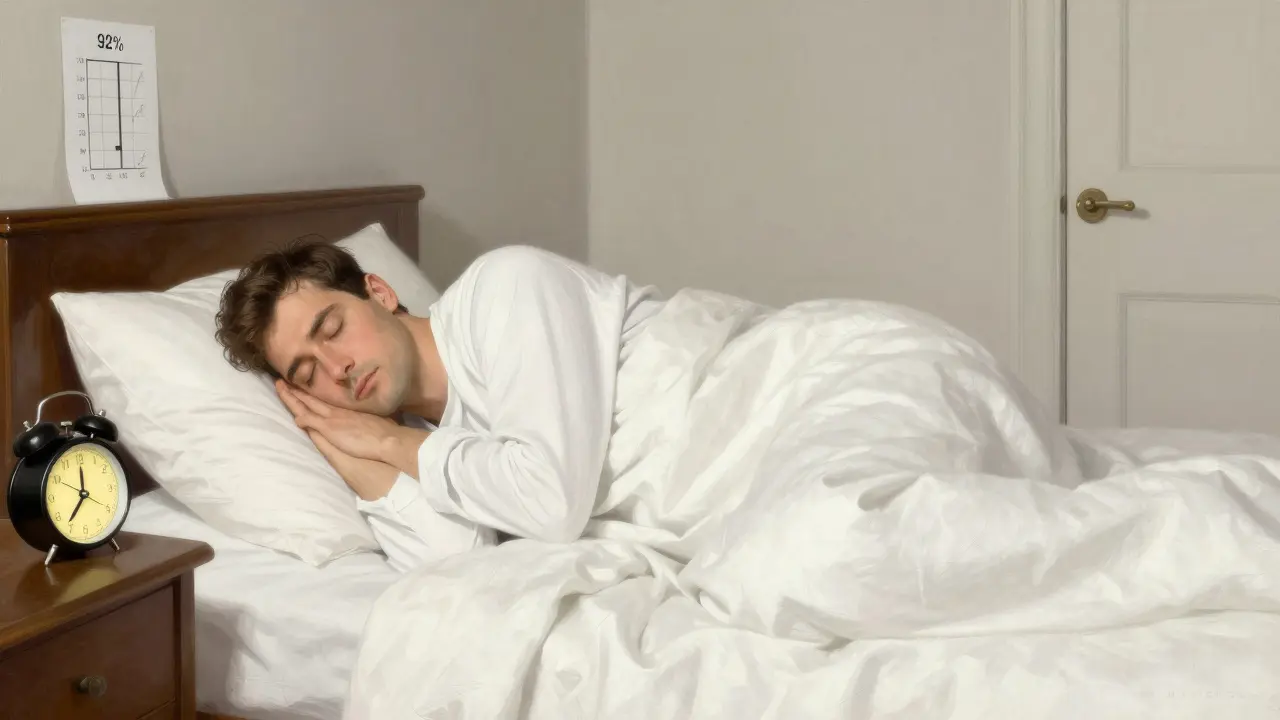
This isn’t a punishment. It’s a reset. After three straight nights where you spent 85% or more of your time in bed actually asleep, you get to add 15 minutes. That’s it. If your sleep efficiency drops below 80%, you go back to the previous schedule. You don’t rush this. Most people take 4 to 8 weeks to reach 7 hours of time in bed. Some take longer. The goal isn’t speed. It’s consolidation. You want to wake up once-or not at all. You want to fall asleep in under 20 minutes. You want to feel rested without needing caffeine by 10 a.m.Why It Beats Sleeping Pills
Pills give you sleep. But they don’t fix the problem. Benzodiazepines and Z-drugs like zolpidem might help you fall asleep faster-but they come with side effects: dizziness, memory fog, dependency, and rebound insomnia when you stop. Studies show 60-70% of users experience withdrawal symptoms. Sleep Restriction Therapy? No drugs. No side effects. No withdrawal. Just results. A 2023 meta-analysis found SRT improved sleep efficiency by 47% more than sleep hygiene alone. In one study, 78% of people who completed SRT still had better sleep six months later. Only 32% of people on medication did. And it’s not just about falling asleep. It’s about staying asleep. People using SRT cut their nighttime awakenings by nearly half. They spend less time lying awake, more time in deep, restorative sleep.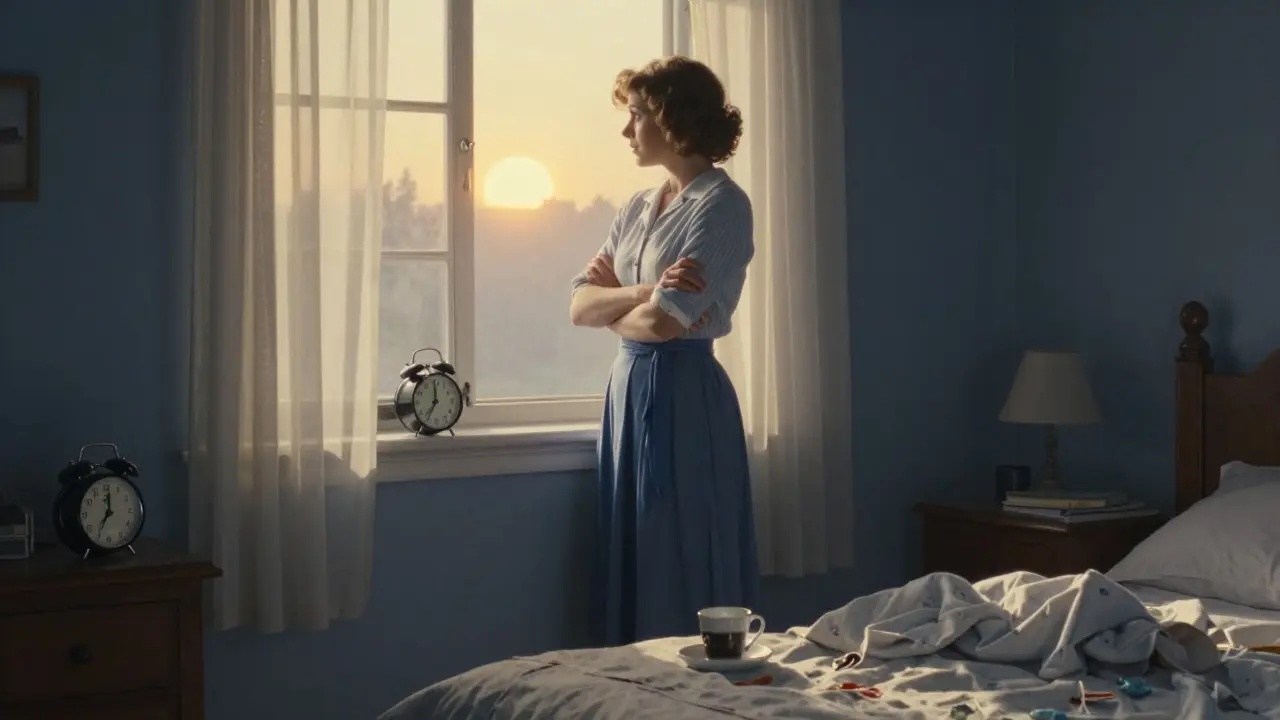
What Doesn’t Work With SRT
This isn’t a magic fix for everyone. It won’t work if you’re:- Working night shifts or rotating schedules-your circadian rhythm is already scrambled.
- Dealing with severe depression or untreated anxiety-SRT can make anxiety worse if not paired with cognitive therapy.
- Trying to do it half-heartedly-cheating by adding 30 minutes on weekends ruins progress.
Real People, Real Results
On Reddit’s r/Insomnia, user SleepSeeker89 wrote: "After 3 weeks of strict SRT, my sleep efficiency jumped from 68% to 89%. I fall asleep in 15 minutes now-not hours." Another user, TiredButSleeping, said: "I was spending 9 hours in bed for 6 hours of sleep. Now I get 7.5 hours in 8 hours-with almost no waking up." A 2023 survey from Sleepstation.org.uk of over 1,200 people found 76% reported "significant improvement" in sleep quality. But 68% also said the first two weeks were brutal-daytime fatigue, irritability, brain fog. That’s the price of the reset. And most say it was worth it.What You Need to Succeed
You don’t need a fancy app or a pricey therapist. But you do need:- A sleep diary (paper or app-just track it daily)
- A reliable alarm clock (no snoozing)
- Zero tolerance for naps
- A fixed wake-up time-even on weekends
- Patience. This isn’t overnight. It’s over weeks.
Why Most People Fail
The biggest reason SRT fails? People break the rules. They think, "I’ll just go to bed a little earlier tonight. I had a rough day." Or they sleep in on Sunday to "catch up." That’s not catching up. That’s undoing. A 2023 analysis found 41% of failed attempts were due to weekend cheating. Your body doesn’t care if it’s Friday or Saturday. It cares about consistency. If your wake-up time changes, your sleep drive resets.What Comes Next
Once you’ve reached 7-8 hours in bed and your sleep efficiency is consistently above 90%, you’re done with the restriction phase. Now you maintain. You keep your wake-up time. You keep your bedtime. You keep the discipline. This isn’t a temporary fix. It’s a new relationship with sleep. You stop chasing it. You stop fearing it. You trust your body to sleep when it’s ready. And if you still wake up once or twice? That’s okay. Normal sleepers do too. The difference? You’re not panicking. You’re not checking the clock. You’re not forcing it. You’re just waiting-and letting it come.The Bigger Picture
Sleep Restriction Therapy is part of CBT-I-Cognitive Behavioral Therapy for Insomnia. It’s the first-line treatment recommended by the American Academy of Sleep Medicine and the American College of Physicians. And yet, only 15% of people with insomnia ever get it. Why? Because doctors still prescribe pills. Because insurance doesn’t cover it. Because it’s harder than popping a pill. But it’s also the only thing that lasts. In 2024, the American College of Physicians officially recognized digital CBT-I programs as equivalent to in-person therapy. Apps like Somryst, FDA-cleared and backed by clinical trials, are making SRT more accessible than ever. And the future? Researchers are now using biomarkers to personalize SRT-adjusting schedules based on your body’s natural rhythms, not just your diary. The next wave isn’t just better sleep. It’s smarter sleep.How long does Sleep Restriction Therapy take to work?
Most people start seeing improvements within 2-3 weeks, with significant changes by week 4-6. Full results-consistent 7-8 hours of consolidated sleep-usually take 6-8 weeks. It’s not fast, but it’s lasting.
Can I nap during Sleep Restriction Therapy?
No. Even a 15-minute nap reduces your sleep drive and can undo progress. If you’re extremely tired, try sitting quietly with your eyes closed instead. But don’t sleep.
What if I can’t fall asleep at my scheduled bedtime?
If you’re still awake after 20 minutes, get out of bed. Go to another room, sit in dim light, and do something quiet-read a book, listen to calm music. Don’t check your phone. Return to bed only when you feel sleepy. This breaks the association between bed and wakefulness.
Is Sleep Restriction Therapy safe?
Yes, for most people. The main risk is daytime sleepiness during the first 1-2 weeks. Avoid driving or operating heavy machinery if you’re too tired. It’s not recommended for people with severe depression, bipolar disorder, or untreated anxiety without cognitive therapy support.
Do I need a therapist to do SRT?
Not necessarily. Many people successfully complete SRT using free tools like CBT-i Coach or structured online programs like Sleepio. But if you have other mental health conditions, working with a CBT-I-certified therapist improves success rates.
Can I use melatonin or other supplements with SRT?
Melatonin isn’t necessary and can interfere with your body’s natural sleep-wake signal. If you’re using it to fall asleep faster, you’re fighting the therapy. SRT works by building natural sleep pressure. Add supplements, and you risk undermining the process.
What if I miss a day or two?
If you extend your time in bed by accident, go back to your previous schedule the next night. Don’t try to "catch up" by sleeping more. Consistency matters more than perfection. One slip-up won’t ruin everything-but continuing to break the rules will.




Gaurav Meena
January 31 2026This SRT method actually saved my life after 5 years of insomnia. I was skeptical, but I stuck to it for 6 weeks-no naps, no weekend cheating-and now I fall asleep in 10 minutes flat. No pills, no apps, just discipline. If you’re tired of lying awake, try it. It’s not easy, but it’s worth every exhausted day. 💪😴