
Imagine walking into your local pharmacy for a routine prescription, only to be told the medication is simply gone. No, they aren't just "out of stock" for a few days-the manufacturer can't produce it. This is the reality for thousands of patients today. Drug shortages is a critical public health situation where the demand for specific medications exceeds the available supply, leading to treatment delays or the use of less effective alternatives. It is not just a minor inconvenience; the American Medical Association has gone as far as calling this an urgent national security threat because it directly impacts patient survival.
The Current State of Medication Scarcity
Right now, we are dealing with a persistent crisis. While the numbers fluctuate, we've seen hundreds of active shortages at any given time. For instance, in 2025, reports showed around 270 active drug shortages. What's more alarming is that over 40% of these shortages started in 2022 or even earlier. This means the system isn't just hitting a temporary bump; it's struggling to recover from deep-seated structural failures.
The vulnerability isn't spread evenly across all medicines. If you are taking a brand-name drug, you're likely safer. The real danger lies in Generic Drugs is medications created to be identical to brand-name drugs but sold at a lower cost, accounting for about 90% of prescriptions filled in the U.S. . Because generic manufacturers operate on razor-thin profit margins-sometimes as low as 5% to 8%-they don't have the financial cushion to absorb sudden cost increases or invest in massive backup inventories.
Which Medications Are Most Affected?
If you're wondering which categories are hitting the hardest, it's usually the drugs that are hardest to make or the ones that have suddenly become "viral" in popularity. Generic sterile injectables are a nightmare for supply chains because they require incredibly precise manufacturing environments. If one facility fails an inspection, the whole country feels it.
Specifically, keep an eye on these high-risk areas:
- Chemotherapy: Critical drugs like Cisplatin have faced severe shortages after quality control failures at overseas plants.
- IV Fluids: Basic saline and dextrose injections (like 5% and 50% Dextrose) have been scarce for years, often due to manufacturing delays.
- CNS Agents: Central nervous system medications make up nearly 28% of current shortages.
- Weight Loss & ADHD: GLP-1 drugs and ADHD medications have seen massive demand spikes, with usage growing by about 35% annually since 2020, leaving manufacturers unable to keep up.
| Drug Class | Approx. % of Shortages | Primary Cause of Scarcity |
|---|---|---|
| CNS Agents | 28% | Demand spikes / Production delays |
| Antimicrobials | 22% | Quality control issues in India |
| Fluids & Electrolytes | 19% | Complex sterile manufacturing |
| Chemotherapy | 16% | Facility failures (CGMP standards) |
| Hormonal Agents | 15% | Supply chain disruptions |
Why is This Happening? The Global Connection
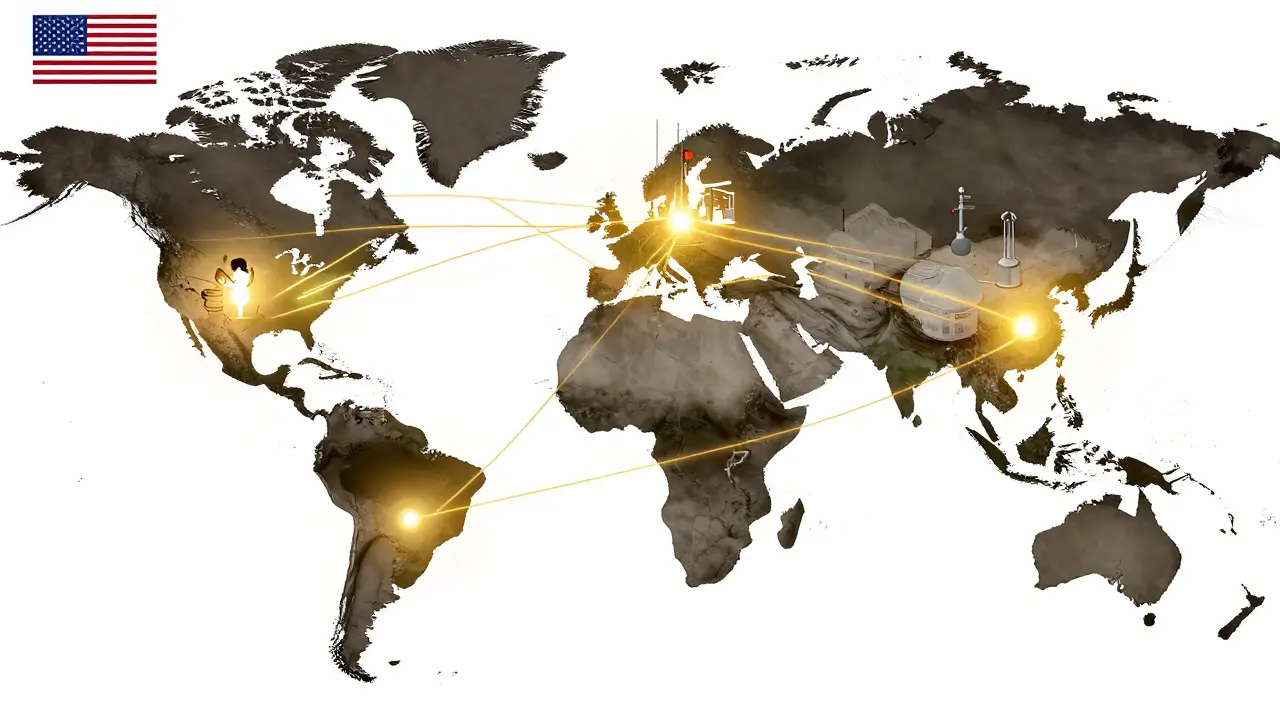
You might wonder why a factory problem in another country affects your medicine cabinet in the U.S. The answer is simple: we've outsourced the basics. Roughly 80% of the Active Pharmaceutical Ingredients (API) is the biologically active component of a drug product that produces the intended pharmacological effect are made overseas. India provides about 45% of the supply, and China provides around 25%.
This creates a "fragile chain." For example, if a plant in India fails a Current Good Manufacturing Practice (CGMP) inspection, the FDA is the U.S. Food and Drug Administration, responsible for protecting public health by ensuring the safety and security of drugs might have to halt production. Because there aren't many other factories capable of making that specific drug, the supply vanishes overnight. Geopolitical tensions and potential tariffs also add risk; a 50% to 200% tariff on Chinese or Indian raw materials could make these drugs even scarcer or more expensive.
The Real-World Impact on Patients and Doctors
This isn't just a logistics problem; it's a clinical crisis. When a drug disappears, doctors are forced to make hard choices. Some have to substitute a medication with a less effective alternative, which happened to about 43% of physicians in a recent survey. In some extreme cases, hospitals have to ration drugs. There are documented stories of pharmacists having to prioritize cisplatin for testicular cancer patients because it's most effective there, while other cancer patients have to wait.
For patients, the results are heartbreaking. Around 31% of cancer patients experienced treatment interruptions in 2024, with delays averaging nearly 15 days. In the world of oncology, two weeks can be the difference between a successful treatment and a disease progressing.
What You Can Do if Your Medication is Scarce
If your pharmacist tells you they can't find your medication, don't panic, but be proactive. First, ask about "therapeutic equivalents." In 47 states, pharmacists have the authority to substitute a similar drug, though some still require a doctor's sign-off.
Here is a checklist for managing a shortage:
- Check the FDA Public Portal: The FDA launched a portal in early 2025 where providers can report shortages. While it's for pros, knowing a shortage is "official" helps you ask for alternatives sooner.
- Request a Dose Optimization: Ask your doctor if there's a different way to take the drug or a different dose that might help your supply last longer.
- Explore Alternative Routes: For IV fluids, ask if oral rehydration is a safe option for your specific condition.
- Call Multiple Pharmacies: Local independent pharmacies sometimes have different distributors than the big chains.
Some states are trying to innovate. New York has looked into searchable databases to find which pharmacies actually have stock, and Hawaii has allowed foreign-approved drugs as a last resort. These are stop-gap measures, but they show that the status quo is no longer acceptable.
Why are generic drugs more likely to be in shortage than brand names?
Generic drugs have much lower profit margins (5-8% compared to 30-40% for brand names). This means generic makers can't afford to keep huge stockpiles of ingredients or invest in redundant factories. When one thing goes wrong in the supply chain, they don't have the financial buffer to fix it quickly.
What is an API and why does it matter?
API stands for Active Pharmaceutical Ingredient. It is the "raw material" that actually treats the disease. Because 80% of APIs for U.S. drugs come from India and China, any political tension, natural disaster, or regulatory failure in those countries immediately creates a shortage in the U.S.
Can the FDA force companies to make more drugs?
Currently, no. While the FDA can intervene to help resolve shortages, they lack the legal authority to mandate that a company increase production or be fully transparent about their internal supply levels. New legislation like the Drug Shortage Prevention Act aims to change this by requiring more detailed reporting.
What should I do if my chemotherapy drug is unavailable?
Contact your oncologist immediately to discuss alternatives. In some cases, a similar drug in the same class can be used, or the dosing schedule may be adjusted. Do not attempt to find "alternative" sources online, as counterfeit medications are a significant risk during shortages.
Are weight loss drugs like Ozempic actually in shortage?
Yes, GLP-1 drugs have faced massive shortages due to a huge spike in demand (roughly 35% annual growth). In this case, the problem isn't a factory failure, but simply that people want the drug faster than factories can build the capacity to produce it.
Next Steps and Troubleshooting
If you are a healthcare provider, the best move is to maintain at least a 30-day strategic inventory of critical meds and establish relationships with multiple suppliers. For patients, the key is communication. Don't wait until the day you need your refill to find out the drug is gone. Check in with your pharmacist two weeks early.
If you encounter a shortage that isn't listed on official databases, encourage your provider to report it through the FDA's new public portal. The more data the government has, the faster they can pressure manufacturers to fix the gap.



Divine Manna
April 5 2026It is fundamentally naive to attribute this crisis solely to "structural failures" without acknowledging the systemic collapse of Western industrial autonomy. The irony of relying on the very nations we politically antagonize for the chemical precursors of our survival is a masterclass in cognitive dissonance. We have traded resilience for the illusion of quarterly profit margins, and now the proletariat of the healthcare system pays the price in blood and delayed treatments. One must wonder if this is an accidental failure or a choreographed dismantling of public health infrastructure to facilitate a transition toward more "controlled" pharmaceutical distributions. The mathematical reality is that a 5% margin is not a business model; it is a countdown to inevitable failure.