
Ever been told you're allergic to a drug-only to find out later it wasn't an allergy at all? You're not alone. Millions of people carry a label like "penicillin allergy" on their medical record, but 80-90% of them don't actually have one. That mistake isn't just confusing-it’s dangerous. It can lead to worse infections, longer hospital stays, and more expensive, less effective treatments. So what’s really going on when you feel sick after taking a pill? Is it a side effect-or a true allergic reaction?
What Exactly Is a Side Effect?
A side effect is a known, predictable reaction to a drug that happens because of how the medicine works in your body. It’s not your immune system going haywire. It’s just the drug doing something it wasn’t meant to do-like causing nausea, dizziness, or dry mouth. These are listed in the drug’s official labeling, often with exact percentages. For example, metformin, a common diabetes drug, causes stomach upset in 20-30% of people. Statins, used to lower cholesterol, cause muscle aches in about 5-10% of users. These reactions usually show up within hours or days of starting the medication. The good news? Most side effects fade over time. About 70-80% of people find their nausea or dizziness improves within two to four weeks as their body adjusts. Sometimes, simple fixes help: taking metformin with food cuts GI side effects in 60% of cases. Or your doctor might lower the dose. Side effects are manageable. They don’t mean you have to stop the drug forever.What Makes an Allergic Reaction Different?
An allergic reaction is your immune system treating the drug like a dangerous invader-like a virus or pollen. It’s not about the drug’s chemistry. It’s about your body’s overreaction. This is where things get serious. True drug allergies trigger specific immune responses. There are two main types: immediate and delayed. Immediate reactions happen within minutes to two hours. Think hives, swelling of the lips or throat, trouble breathing, or a sudden drop in blood pressure. This is anaphylaxis-the life-threatening kind. It’s rare, affecting only 0.05% to 0.5% of drug exposures, but it needs emergency care. Delayed reactions take longer. A rash that shows up a week after starting an antibiotic? That’s often T-cell mediated. These can look like a widespread, itchy, red blotchy rash. In fact, 90% of these delayed skin reactions appear within one to two weeks. Unlike side effects, allergic reactions happen at normal, prescribed doses. You don’t need to take too much for it to happen.How Do You Tell Them Apart?
Here’s the key: side effects are pharmacological. Allergic reactions are immunological. That means one comes from how the drug acts on your body. The other comes from your immune system attacking the drug. Side effects often get worse with higher doses. Take too much of an NSAID like ibuprofen? You’re more likely to get stomach bleeding. But with allergies, even a tiny amount-like a single pill-can trigger a reaction. That’s why someone with a true penicillin allergy can react to a tiny trace in a pill or even in food processed with penicillin-derived ingredients. Another big clue? Timing. Side effects usually show up early and stick around for a few days. Allergic reactions can appear suddenly, even if you’ve taken the drug before without issue. You might have taken amoxicillin five times before with no problem. Then, on the sixth time-hives. That’s not a side effect. That’s your immune system finally recognizing the drug as a threat.What Drugs Cause the Most Allergies?
Some drugs are far more likely to cause true allergies than others. Penicillin and related antibiotics (like amoxicillin) are the big ones-responsible for 80% of severe drug allergies. Sulfonamides (like Bactrim) and NSAIDs (like aspirin or naproxen) are also common triggers. But here’s the twist: almost every drug can cause side effects. Almost none cause true allergies. That’s why so many people think they’re allergic to antibiotics when they’re just experiencing nausea or diarrhea. Those are side effects-not allergies. A 2021 JAMA study found that when people who say they’re allergic to penicillin get tested, 90% test negative.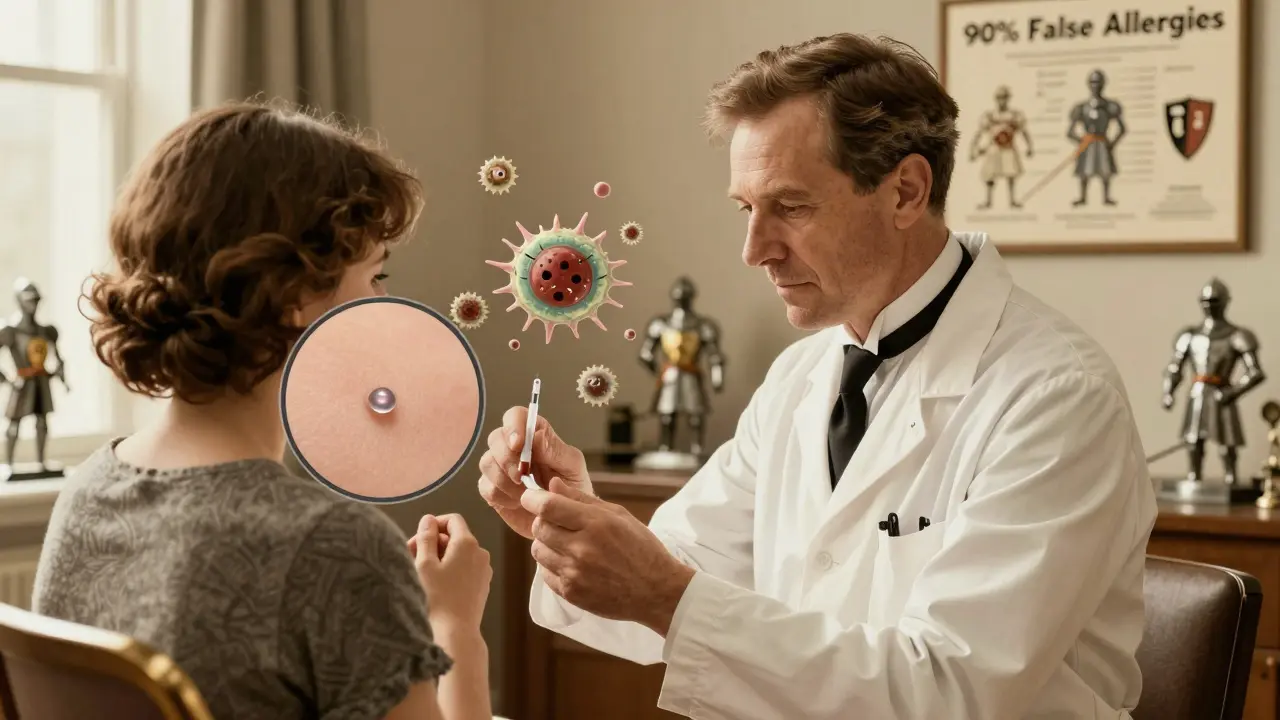
Why Does This Mistake Cost So Much?
Mislabeling a side effect as an allergy doesn’t just confuse patients. It costs the healthcare system $1.1 billion a year in the U.S. alone. Why? Because if you’re labeled “penicillin allergic,” doctors avoid the safest, most effective antibiotic. Instead, they reach for broader-spectrum drugs like vancomycin or clindamycin. These are more expensive, more likely to cause diarrhea, and increase your risk of catching dangerous infections like MRSA. One study found that patients with a mislabeled penicillin allergy had a 69% higher risk of developing MRSA. That’s not just a statistic. It means more hospital visits, longer stays, and more antibiotics-each with their own side effects. And it’s not just penicillin. People who think they’re allergic to statins, blood pressure meds, or even antidepressants often avoid them unnecessarily. That means their conditions go untreated. Their blood pressure stays high. Their cholesterol stays up. Their depression doesn’t improve.How Do Doctors Know It’s an Allergy?
There’s a process. It’s not guesswork. For suspected penicillin allergies, the CDC recommends a three-step approach:- History review: Did you have hives, swelling, or trouble breathing? Or just nausea? Most people can be cleared just by answering a few questions.
- Skin testing: A tiny amount of penicillin is placed under the skin. If there’s a reaction, it’s likely a true allergy. This test has a 97% negative predictive value-meaning if it’s negative, you’re almost certainly not allergic.
- Oral challenge: If skin testing is negative, you’re given a small dose under supervision. Less than 0.2% of low-risk patients react. If nothing happens, the allergy label is removed.
What About Other Reactions?
Not every bad reaction is a side effect or an allergy. Some are idiosyncratic-unpredictable and rare. Others are pseudoallergic, meaning they mimic allergy symptoms without involving the immune system. For example, some people get flushing or itching from IV contrast dye. That’s not an allergy-it’s a direct effect on mast cells. The key is to document what happened, when, and how. Did you break out in hives 10 minutes after the shot? That’s likely IgE-mediated. Did you get a rash two weeks after starting a new antibiotic? That’s probably T-cell mediated. Did you feel nauseous on day three and it got better after a week? That’s a side effect.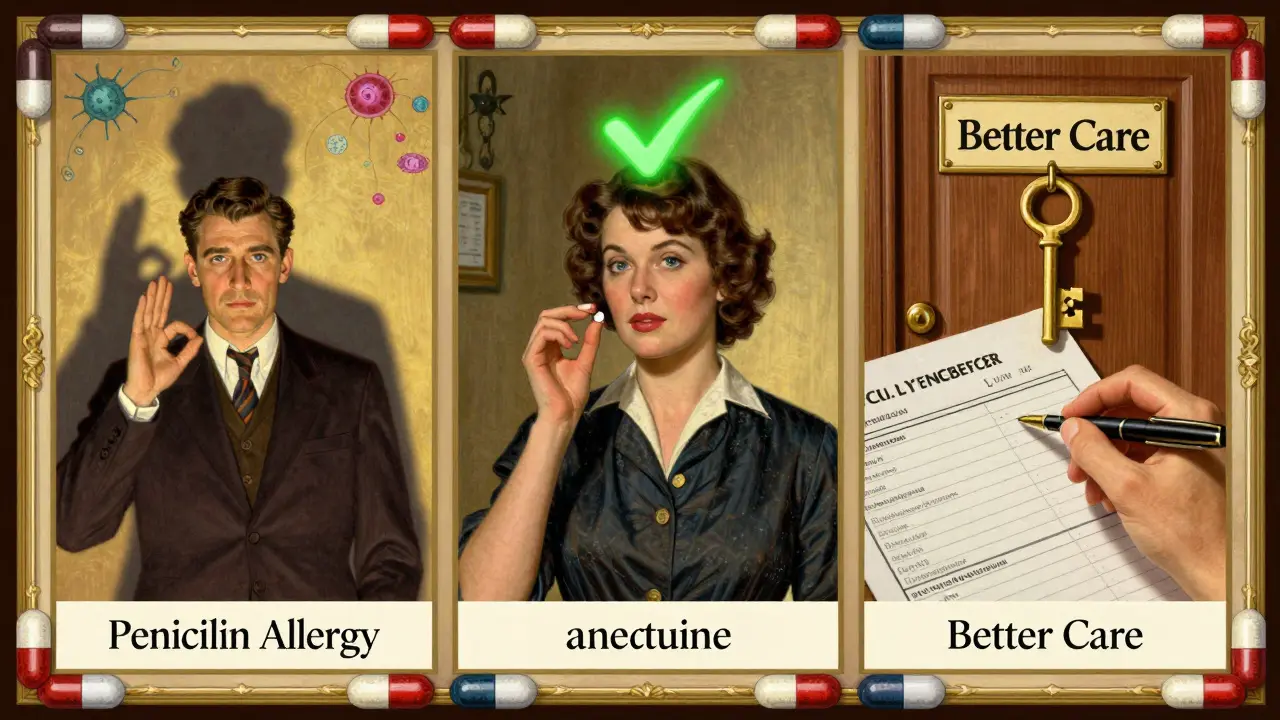
What Should You Do If You Think You’re Allergic?
Don’t assume. Don’t just accept the label. If you were told you’re allergic to a drug because you got sick once, ask: What exactly happened? - If it was diarrhea, heartburn, or a headache-likely a side effect. - If it was swelling, trouble breathing, or hives-that’s a red flag. - If you’re not sure, ask your doctor about allergy testing. Many clinics now offer drug allergy clinics or have allergists on staff. Even if you’re not in a big city, your primary care provider can use tools like the PEN-FAST score to assess your risk. It’s a simple five-question tool that’s 99.8% accurate at ruling out true penicillin allergy.What Happens When You Get Tested?
If you’re cleared, your medical record gets updated. You can go back to first-line antibiotics. You avoid unnecessary drugs. You save money. You lower your risk of superbugs. You get better care. One woman on Drugs.com shared her story: her doctor told her her “allergy” to lisinopril was just a cough-a known side effect. She switched to another blood pressure med and felt better. Another man on AAFA.org had true anaphylaxis: swelling, trouble breathing, within 15 minutes. He now carries an epinephrine pen. Both were right. But only one had a true allergy.Why This Matters More Than Ever
As we age, we take more medications. Adults over 65 are three times more likely to have an adverse drug reaction. With polypharmacy-the use of five or more drugs-mistakes multiply. A mislabeled allergy today could mean you miss out on the best treatment tomorrow. Hospitals are catching on. In 2018, only 15% of U.S. hospitals had formal allergy clarification programs. By 2023, that number jumped to 65%. Academic centers are leading the way. Community hospitals are catching up. The future is even brighter. Genetic testing is already helping. People with the HLA-B*57:01 gene are screened before taking abacavir (an HIV drug). That one test cut allergic reactions from 8% to 0.4%. Imagine if we did this for more drugs.Bottom Line: Don’t Guess. Get Tested.
You don’t need to live with a label that’s holding you back. Side effects are common. Allergies are rare. But they’re not the same. Confusing them puts your health-and your wallet-at risk. If you’ve ever been told you’re allergic to a drug because you felt sick, ask your doctor: Was that a side effect-or a true allergy? If you’re not sure, ask about testing. It’s safe. It’s quick. And it could change your life.Can you outgrow a drug allergy?
Yes, especially with penicillin. Studies show that about 80% of people who had a true penicillin allergy in childhood lose it over time-even if they never got tested. That’s why retesting is recommended every 10 years or before you need antibiotics again. The immune system changes. What was dangerous once might not be anymore.
Can a side effect turn into an allergy?
No. A side effect is a pharmacological response, not an immune response. You can’t “turn” a side effect into an allergy. But you can develop a true allergy to a drug you’ve taken before-even if you never had a problem. That’s because allergies depend on your immune system’s response, which can change at any time.
Is a rash always a sign of an allergy?
Not always. Many rashes after taking antibiotics are actually viral in origin-not allergic. For example, a child on amoxicillin who develops a rash after having a virus is often mislabeled as allergic. But if the rash is itchy, widespread, and appears days after starting the drug, it’s more likely to be an immune reaction. Only testing can tell for sure.
What should I do if I have a severe reaction?
If you experience swelling of the face or throat, trouble breathing, dizziness, or a rapid drop in blood pressure, use an epinephrine auto-injector if you have one and call 911 immediately. These are signs of anaphylaxis-a medical emergency. Don’t wait. Don’t try to “wait it out.” Get help right away.
Can I take other drugs if I’m allergic to one?
It depends. If you’re allergic to penicillin, you might also react to related antibiotics like amoxicillin or ampicillin. But you can usually take unrelated drugs safely. For example, a penicillin allergy doesn’t mean you’re allergic to ibuprofen or metformin. Always check with your doctor or pharmacist about cross-reactivity before taking a new drug.
Are there tests for all drug allergies?
No. Reliable tests exist only for a few drugs, mainly penicillin and some others like cephalosporins and insulin. For most drugs-like antidepressants, statins, or blood pressure meds-there’s no blood or skin test. Diagnosis is based on your history and symptoms. That’s why accurate reporting matters.
Can I be allergic to a drug I’ve taken before without problems?
Yes. Allergies can develop after repeated exposure. Your immune system may have been sensitized over time without showing symptoms. The first time you took the drug, your body didn’t react. The second time, it did. That’s how allergies work-they need prior exposure to become active.
What if I’m told I’m allergic but never had testing?
Don’t accept it without proof. Many people are labeled allergic based on vague symptoms like nausea or a headache. These are side effects, not allergies. Ask your doctor if you can be referred for allergy testing. If your medical record says “penicillin allergy” but you’ve never had a true reaction, you may be at risk for unnecessary treatment. Testing can free you from that label.



Pawan Chaudhary
December 15 2025Wow, this is such a needed post! I thought I was allergic to penicillin because I got a rash as a kid, but turns out it was just a virus. Got tested last year and now I can take the right meds without worrying. Life changed so much!