
Heart disease is still the number one killer worldwide. But what you cook with every day can make a real difference. It’s not about cutting out fat entirely-it’s about choosing the right kind. The oils and fats you use don’t just affect flavor; they directly impact your cholesterol, inflammation levels, and long-term heart health. The science is clear: swap out saturated and trans fats for unsaturated ones, and you can lower your risk of heart attack and stroke. But with so many oils on the shelf, how do you know which ones actually help-and which ones are just marketing hype?
What Makes an Oil Heart-Healthy?
Not all fats are created equal. The key is in the fatty acid profile. Heart-healthy oils are high in monounsaturated fats and polyunsaturated fats, especially omega-3s. These fats help lower LDL (the "bad" cholesterol) by 5% to 15% when they replace saturated fats in your diet, according to clinical studies like the PREDIMED trial. They also reduce inflammation, a hidden driver of artery damage.On the flip side, saturated fats raise LDL cholesterol and are linked to higher heart disease risk. Trans fats are even worse-they not only spike LDL but also lower HDL (the "good" cholesterol). The FDA banned partially hydrogenated oils in 2020, but you still need to watch out. Products can say "0g trans fat" if they contain less than 0.5 grams per serving. That adds up fast if you’re eating multiple servings of packaged foods.
The best oils for your heart have:
- At least 55% monounsaturated fat
- Less than 15% saturated fat
- Minimal processing (cold-pressed or expeller-pressed)
- No hydrogenated oils or "shortening" on the label
The Top Heart-Healthy Oils (And When to Use Them)
Not every oil works for every cooking method. Heat changes how oils behave. Pick the wrong one, and you’re not just losing flavor-you’re creating harmful compounds.Extra Virgin Olive Oil is the gold standard for heart health. It’s packed with 73% monounsaturated fat and loaded with antioxidants called polyphenols. One of these, oleocanthal, has anti-inflammatory effects similar to a low dose of ibuprofen. But it’s not for high heat. Its smoke point is between 325°F and 375°F. Use it for salad dressings, drizzling over roasted veggies, or light sautéing. Look for "cold-pressed" and "extra virgin" on the label. Beware: up to 60% of olive oil sold in the U.S. doesn’t meet purity standards, according to UC Davis testing. Stick to trusted brands or those with certification seals.
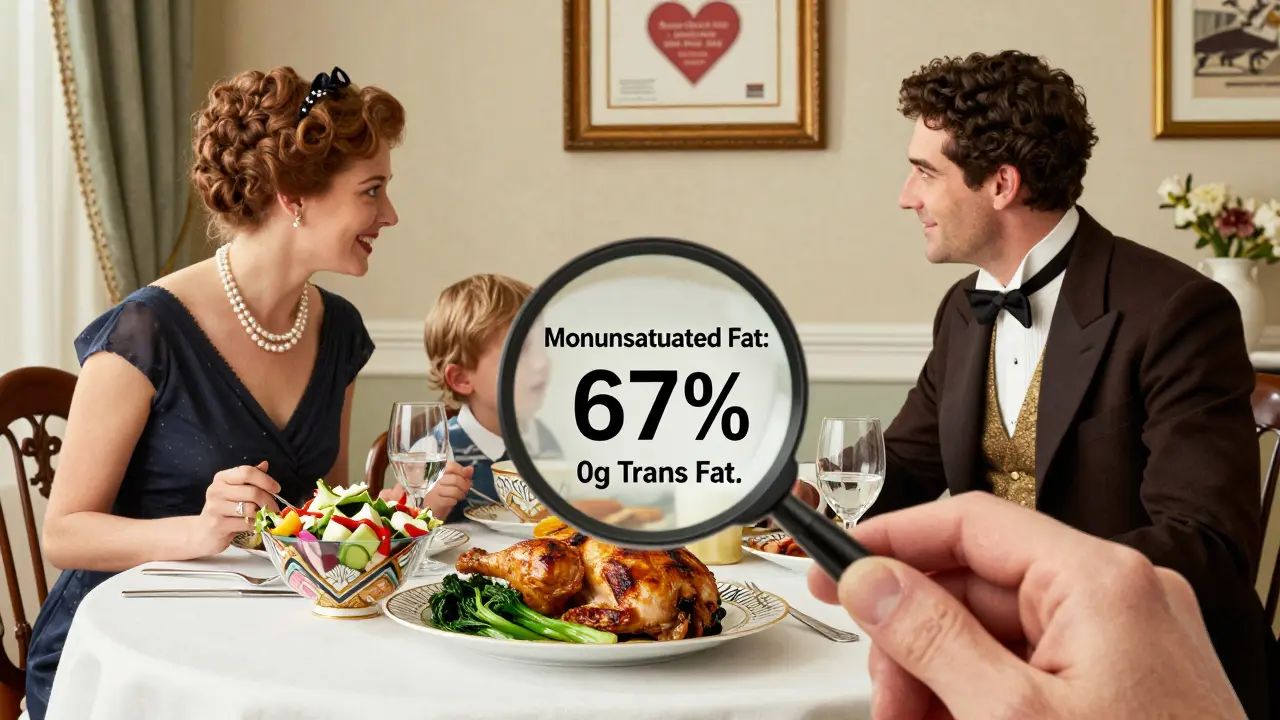
Avocado Oil is a great upgrade if you need higher heat. With 67% monounsaturated fat and a smoke point of 520°F, it’s perfect for searing, roasting, and grilling. It’s also low in saturated fat (12%) and has a mild, buttery taste. The downside? Price. A 16.9 oz bottle runs $13-$20, compared to $9-$15 for olive oil. But if you’re frying or baking often, it’s worth the investment.
Algae Oil is the new kid on the block. With 86% monounsaturated fat-the highest of any cooking oil-and a smoke point of 535°F, it outperforms both olive and avocado oil in heat stability. It’s neutral in flavor, making it ideal for baking and frying. It’s also more sustainable, using 90% less land than olive oil. But availability is still limited, and it costs around $25 per bottle. You’ll find it in stores like Thrive Market and some Whole Foods locations.
Canola Oil is affordable and widely available. It contains 62% monounsaturated fat, only 7% saturated fat, and 2.2 grams of omega-3s per tablespoon. It’s a solid everyday choice for baking and stir-frying. But make sure it’s non-GMO and expeller-pressed, not chemically extracted. Many store brands use solvents like hexane in processing, which strips out nutrients.
Almond and Hazelnut Oils are great for flavoring. Both have around 7% saturated fat and are rich in vitamin E. Use them in low-heat cooking or as finishing oils. Don’t cook with them-they’re expensive and can burn easily.
Oils to Avoid (Even If They Sound Healthy)
Some oils are marketed as "natural" or "healthy," but they’re not heart-friendly.Coconut Oil has become a trendy superfood. But it’s 82% saturated fat-higher than butter. The American Heart Association says it raises LDL cholesterol and should not be used as a primary cooking oil. Some influencers claim its medium-chain triglycerides (MCTs) are beneficial, but the evidence doesn’t support that for heart health.
Corn, Sunflower, and Safflower Oils are high in omega-6 fatty acids. While omega-6s are essential, too much without enough omega-3s promotes inflammation. These oils often make up 50-65% omega-6. The ideal ratio is under 4:1 omega-6 to omega-3. Most people already eat way too much omega-6 from processed snacks and fried foods. Adding more of these oils just makes it worse.
Partially Hydrogenated Oils are officially banned, but watch for "shortening," "vegetable shortening," or "margarine" on labels. These often still contain hidden trans fats. Always check the ingredient list-even if the nutrition facts say "0g trans fat."

How to Read Food Labels Like a Heart Health Expert
Labels can be misleading. Here’s what to actually look for:- Total Fat: Not the enemy. Focus on the type.
- Saturated Fat: Aim for less than 2 grams per serving. If a product has 5 grams, skip it.
- Trans Fat: Zero is good-but check the ingredients. If you see "partially hydrogenated," avoid it.
- Ingredients List: The first few ingredients are the main ones. If oil is listed first, check what kind. If it says "vegetable oil," that’s vague. It could be soybean, palm, or canola. Look for specific names like "extra virgin olive oil" or "avocado oil."
- Claims Like "Natural" or "Heart Healthy": These aren’t regulated. Only look for certifications like the American Heart Association’s Heart-Check mark or Australia’s Tick Program. These mean the product met strict criteria for saturated fat and sodium.
Also, avoid "blended oils." These are often cheap mixes of soybean, canola, and palm oil with no transparency. You don’t know what you’re getting.
Storage Matters More Than You Think
Oils go rancid. When they do, they create free radicals that cause inflammation-exactly what you’re trying to avoid.Store oils away from light, heat, and air. Keep them in dark glass bottles, not plastic. Refrigerate oils high in polyunsaturated fats like flaxseed, walnut, and even avocado oil after opening. They’ll last longer and stay fresh.
Use your oils within 3-6 months after opening. If it smells off-like crayons or old nuts-it’s rancid. Toss it. No amount of cooking fixes it.
Real-Life Tips for Everyday Cooking
You don’t need to overhaul your kitchen overnight. Start small:- Swap butter for olive oil when sautéing vegetables.
- Use avocado oil instead of vegetable oil for roasting potatoes or chicken.
- Make your own salad dressing with olive oil, lemon, and herbs instead of bottled dressings.
- Choose plain yogurt over flavored ones-many contain added oils and sugars.
- When baking, replace half the butter with unsweetened applesauce or mashed banana, and use canola oil for the rest.
Don’t use the same oil for everything. Keep two on hand: extra virgin olive oil for low-heat uses and avocado or algae oil for high-heat cooking. That’s all you need.
What’s Changing in 2025?
The American Heart Association updated its guidelines in 2021 to focus on replacing saturated fats with unsaturated ones-not just cutting fat overall. That’s why demand for heart-healthy oils is expected to grow 12-15% each year through 2025.Algae oil is becoming more accessible. It’s now in over 25,000 U.S. stores. More brands are starting to label their oils with fatty acid breakdowns, making it easier to compare. Look for products that show the percentage of monounsaturated, polyunsaturated, and saturated fats right on the bottle.
Also, new research is showing that the quality of the oil matters more than we thought. Cold-pressed extra virgin olive oil with high polyphenol content has measurable benefits. Cheap, refined oils? Not so much. The difference isn’t just taste-it’s biology.
Is avocado oil better than olive oil for heart health?
Both are excellent for heart health, but they serve different purposes. Avocado oil has a higher smoke point (520°F), so it’s better for frying, roasting, and grilling. Olive oil has more antioxidants and polyphenols, making it superior for dressings and low-heat cooking. Neither raises LDL cholesterol. Choose based on how you’re cooking, not which is "better."
Can I use coconut oil if I have high cholesterol?
No. Coconut oil is 82% saturated fat-higher than butter. Studies show it raises LDL cholesterol, which increases heart disease risk. Even if it’s labeled "natural" or "virgin," it doesn’t change the science. Stick to unsaturated oils like olive, avocado, or canola if you’re managing cholesterol.
What does "cold-pressed" mean on an oil label?
Cold-pressed means the oil was extracted without heat or chemicals. This preserves antioxidants, polyphenols, and nutrients that get destroyed in refined oils. Cold-pressed oils are more expensive, but they’re the only ones that deliver real heart health benefits. Avoid oils labeled just "refined" or "pure"-they’ve been stripped of their good stuff.
Are all "heart-healthy" claims on food labels trustworthy?
No. Terms like "heart-healthy," "natural," or "low-fat" aren’t regulated. Only look for certification seals like the American Heart Association’s Heart-Check mark or Australia’s Tick Program. These require the product to meet strict limits on saturated fat, trans fat, and sodium. If there’s no seal, check the nutrition label yourself.
Should I avoid all fats to protect my heart?
No. Fat is essential for absorbing vitamins and keeping your cells healthy. The problem isn’t fat-it’s the wrong kind. Focus on replacing saturated fats (butter, lard, coconut oil) and trans fats (fried foods, margarine) with unsaturated fats (olive oil, avocado oil, nuts). You’ll improve your cholesterol and reduce inflammation without cutting out flavor or satisfaction.





Joe Bartlett
December 17 2025olive oil is fine but avocado oil is where it's at for frying. no debate.