
Why Liver Cancer Surveillance Matters in Cirrhosis
If you have cirrhosis, your risk of developing hepatocellular carcinoma (HCC) is high-over 80% of HCC cases happen in people with advanced liver scarring. That’s not a guess. It’s what the Hepatocellular Carcinoma is the most common type of primary liver cancer, accounting for 75-85% of all liver cancer cases worldwide, with over 900,000 new diagnoses each year guidelines from the American Association for the Study of Liver Diseases (AASLD) and European Association for the Study of the Liver (EASL) confirm. The scary part? Without screening, most tumors are found too late. Survival drops to under 20%. But with regular surveillance, that number jumps to 50-70%. That’s not just hope. That’s data from real studies, including one published in Hepatology that showed surveillance added about three months to life expectancy when HCC risk was 1.5% per year.
Most people don’t realize HCC doesn’t come out of nowhere. It grows slowly in damaged livers. That’s why catching it early-before symptoms show-is everything. The goal of surveillance isn’t to prevent cancer. It’s to find it when it’s still small, treatable, and curable.
Who Needs Surveillance, and How Often?
Not every person with liver disease needs screening. Only those with cirrhosis are routinely monitored. That includes cirrhosis from hepatitis B, hepatitis C (even after cure), alcohol, or fatty liver disease. The AASLD recommends biannual ultrasound a 6-month interval imaging test using sound waves to detect liver masses, the cornerstone of HCC surveillance for all adults with Child-Turcotte-Pugh (CTP) Class A or B cirrhosis. That means your liver still has enough function to handle treatment if cancer shows up.
But here’s the twist: EASL’s 2023 update changed the game. Instead of screening everyone with cirrhosis, they now say: only screen if your annual risk is 1.5% or higher. That’s based on real-world modeling. For example, someone with hepatitis B and cirrhosis might have a 6% yearly risk. Someone with fatty liver cirrhosis after weight loss might be under 1%. The difference matters. One-size-fits-all screening wastes money and causes unnecessary stress.
CTP Class C cirrhosis? That’s advanced liver failure. Median survival is less than two years. Most guidelines, including AASLD, say don’t screen unless you’re on a transplant list. Why? Because even if you catch HCC early, your liver may not survive treatment. But APASL guidelines in Asia still recommend surveillance for some Class C patients-showing how regional practices vary.
What’s Actually Done During Surveillance?
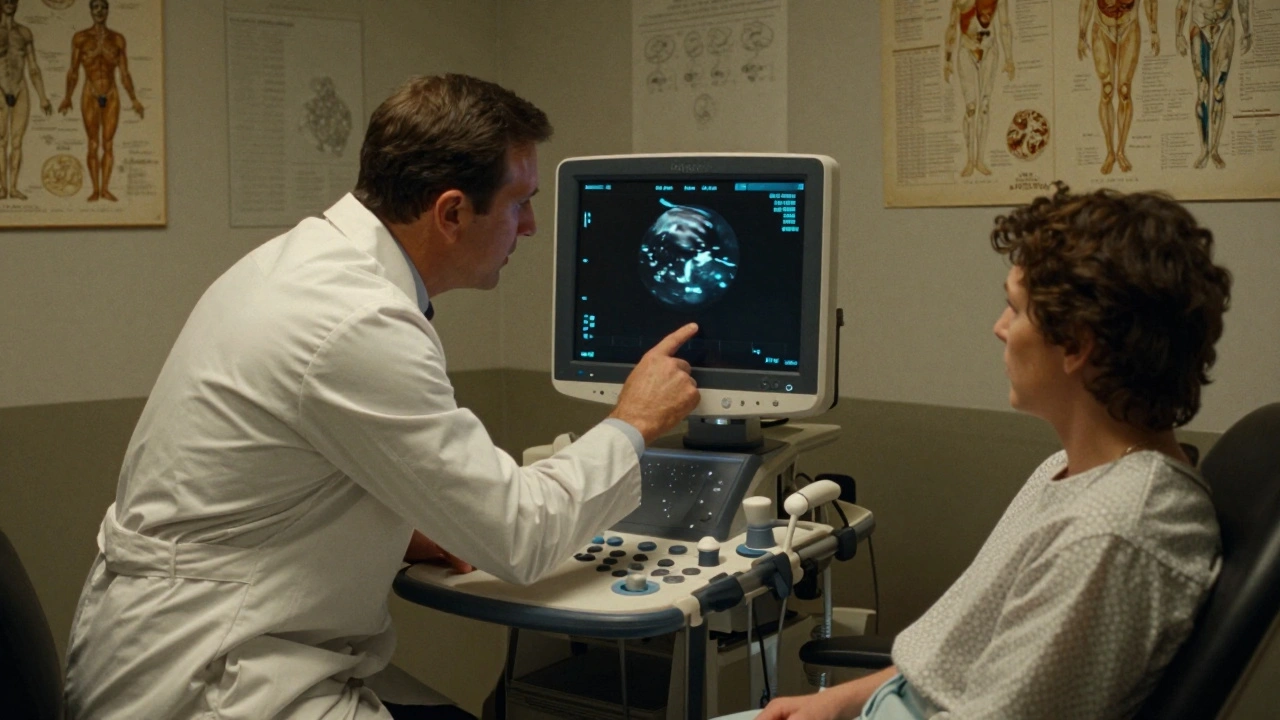
Ultrasound is the first line. It’s cheap, safe, and widely available. A 3-5 MHz curvilinear probe is used to scan the liver every six months. Technicians need training-40 hours minimum-to spot lesions as small as 1 cm. Radiologists must interpret at least 50 liver ultrasounds a year to stay sharp.
Alpha-fetoprotein (AFP) blood tests are optional. AASLD gives it a conditional recommendation. Why? Because AFP isn’t reliable. It can be high in hepatitis flare-ups or pregnancy. But if AFP is over 20 ng/mL (or 20 μg/L), that’s a red flag. It triggers a follow-up scan. Some centers still use it because it’s easy. Others skip it entirely.
Here’s what happens if something shows up: a multiphase contrast CT or MRI imaging technique using intravenous contrast to detect and characterize liver tumors, with 80-90% accuracy for HCC diagnosis. These scans look at how the tumor takes up contrast over time-HCC has a unique pattern. The LI-RADS Liver Imaging Reporting and Data System, a standardized classification system for liver lesions on imaging, updated in 2022 to improve diagnostic consistency system helps doctors classify findings. Inter-observer agreement jumped from 0.45 to 0.78 after LI-RADS was adopted. That’s a big deal-it means fewer misdiagnoses.
What Are the Treatment Options for Early-Stage HCC?
If surveillance finds a tumor under 2 cm and your liver still works well, you have real options. Curative treatments exist-and they work.
- Surgical resection: Removing the tumor. Best if you have one small tumor and healthy liver tissue left.
- Liver transplant: Replacing the whole liver. Ideal if your cirrhosis is advanced but the tumor is small and contained. You must meet Milan Criteria: one tumor under 5 cm, or up to three tumors under 3 cm each, with no spread.
- Ablation: Destroying the tumor with heat (radiofrequency) or cold (cryoablation). Done through the skin, no big surgery. Works best for tumors under 3 cm.
Studies show 5-year survival after these treatments can hit 70% if caught early. That’s not a miracle. It’s medicine working as designed.
But if the tumor is bigger, or the liver is too damaged, options shift to non-curative. That includes transarterial chemoembolization (TACE) a minimally invasive procedure delivering chemotherapy directly to liver tumors via the hepatic artery, commonly used for intermediate-stage HCC, or newer drugs like sorafenib a targeted oral medication approved for advanced HCC that inhibits tumor growth and blood vessel formation and lenvatinib a multi-kinase inhibitor used as first-line therapy for advanced HCC, shown to extend survival similarly to sorafenib. These don’t cure, but they slow growth and add months to life.
Why Is Surveillance So Poorly Done?
Here’s the ugly truth: even though guidelines are clear, only 30-50% of eligible patients in the U.S. get screened. Why?
First, doctors forget. Primary care providers don’t always know who has cirrhosis. No EHR alerts? No reminders? Then no screening.
Second, patients miss appointments. About 25-40% don’t show up for their next ultrasound. Some are scared. Some don’t understand why it matters. One nurse coordinator told me she spends 25 minutes per patient just explaining why they need this test.
Third, disparities are real. In the National Cancer Database, White patients got screened at 52.3% rates. Black patients? 34.1%. Privately insured? 48.2%. Medicaid? 31.6%. This isn’t about access alone-it’s about systemic gaps in care.
Even hepatologists don’t always follow the rules. A 2021 survey of 1,247 specialists found only 58% consistently did surveillance. The top reasons? No EHR reminders (67%) and too many other things to manage (53%).

What’s Changing in 2025 and Beyond?
The future of HCC surveillance is personal. It’s not just about ultrasound anymore.
The aMAP score a validated risk stratification tool for HCC in cirrhosis, based on age, gender, albumin, bilirubin, and platelet levels, with an AUC of 0.81 is already being used in Europe. It combines simple blood tests to calculate your risk. If your score says you’re low risk, you might skip screening. High risk? You get more frequent scans-or even MRI.
Then there’s the GALAD score a multi-marker blood test combining gender, age, AFP-L3, AFP, and DCP to detect early HCC with 85% sensitivity at 90% specificity. It’s not FDA-approved yet, but trials are showing it can spot tumors before they’re visible on ultrasound. The NIH-backed HESBA alliance is testing 17 new biomarkers. One could be in clinics by 2027.
And MRI? It’s getting faster and cheaper. New 5-7 minute protocols from GE and Siemens cut costs to $350-400. That’s close to ultrasound. For high-risk patients, MRI may replace ultrasound entirely by 2027.
AASLD’s next update-expected late 2024-is likely to push risk-based screening hard. And the SURVIVE trial, tracking 10,000 patients, will deliver results by late 2025. That could change global guidelines overnight.
What Should You Do If You Have Cirrhosis?
If you have cirrhosis, ask your doctor: “Am I on the HCC surveillance list?” If they say no, ask why. If they say yes, ask: “When’s my next scan?” and “Will you check my AFP?”
Don’t wait for symptoms. HCC doesn’t cause pain until it’s advanced. Fatigue? Weight loss? Belly swelling? Those are late signs. By then, options shrink.
Use patient navigators if your clinic has them. They help book appointments, explain results, and follow up. One study showed they cut no-show rates from 32% to 14%.
And if you’re worried about cost? Ask about financial aid. Many hospitals have programs. Medicare and most insurers cover surveillance. You shouldn’t skip it because of money.
Final Thoughts: Surveillance Isn’t Optional-It’s Life-Saving
Hepatocellular carcinoma is deadly. But it doesn’t have to be. Surveillance turns a death sentence into a manageable condition. It’s not perfect. It’s not easy. But it works.
Every ultrasound, every blood test, every follow-up scan is a chance to catch cancer early. And early detection means you can still live a full life.
Don’t let confusion, forgetfulness, or fear stop you. Ask. Follow up. Show up. Your liver is fighting for you. Don’t let it fight alone.





Arun Kumar Raut
December 9 2025Just wanted to say thanks for laying this out so clearly. I’ve got cirrhosis from hepatitis B, and I didn’t realize how much the risk changes based on your specific situation. My doctor just gave me the standard 6-month ultrasound, no questions asked. Now I’m going back with the aMAP score info and asking if I even need it anymore. This post saved me a lot of unnecessary stress.