Gut Microbiome Drug Effect Calculator
How Gut Bacteria Affect Your Medications
Gut bacteria can transform your medications, potentially making them more toxic or less effective. This calculator estimates how your gut microbiome might alter specific drugs based on known bacterial interactions.
Select Your Medication
Gut Bacteria Impact
Estimated Effect
When you take a pill, you assume your body processes it the same way everyone else’s does. But what if the trillions of bacteria living in your gut are quietly rewriting how that drug works? For decades, doctors thought drug side effects were mostly about dosage, genetics, or liver function. Now we know something else is at play - and it’s hiding in your intestines.
What the Microbiome Does to Your Medicine
Your gut isn’t just a digestive tube. It’s a living factory filled with over 100 trillion bacteria, fungi, and viruses. These microbes don’t just help break down food - they also chemically alter the drugs you take. They can turn a safe medication into a poison, or make a drug completely useless.
Take irinotecan, a chemotherapy drug used for colon cancer. About one-third of patients who take it develop severe, sometimes life-threatening diarrhea. Why? Because gut bacteria produce an enzyme called beta-glucuronidase. This enzyme reverses a safety mechanism built into the drug, turning it back into its toxic form right in the intestines. Studies show that patients with higher levels of this enzyme have 87% more diarrhea than those with lower levels. It’s not the drug’s fault. It’s the bacteria.
Another example is digoxin, a heart medication. For some people, it works perfectly. For others, it doesn’t work at all. Researchers found that a single bacterial species - Eggerthella lenta - can break down digoxin before it even enters the bloodstream. If you have this bug in your gut, the drug is basically wasted. No amount of increasing the dose helps.
Even common drugs like clonazepam (used for anxiety and seizures) behave differently depending on your gut microbes. In mice without gut bacteria, clonazepam stayed in the blood 40-60% longer than in mice with normal microbiomes. That means the same dose could make one person overly drowsy while another feels nothing.
How Bacteria Change Drugs: The Science Behind It
Gut bacteria don’t just absorb drugs. They actively break them down using seven types of chemical reactions: dealkylation, dehydroxylation, demethylation, hydrolysis, reduction, oxidation, and conjugation. These aren’t random - they’re precise enzymatic actions, like molecular scissors.
One of the most studied reactions is the hydrolysis of glucuronide conjugates. When the liver processes a drug, it often attaches a sugar molecule (glucuronide) to make it water-soluble and safe to excrete. But certain bacteria, especially those with beta-glucuronidase, chop off that sugar. Suddenly, the toxic drug is back - and now it’s sitting in your colon.
Another major player is azoreduction. The old antibiotic prontosil only worked because gut bacteria split it into sulfanilamide, the real active ingredient. Without those bacteria, the drug was useless. Modern drugs like sulfasalazine (used for ulcerative colitis) rely on this same trick. If you’ve taken antibiotics recently, you might be missing the bacteria needed to activate your medication.
Even drugs that seem unrelated to the gut - like the antiviral drug studied by Yale researchers - get transformed. In that study, gut microbes produced 73% of the toxic metabolite causing side effects. That means if your microbiome is different from someone else’s, you’re effectively taking a different drug.
Why This Matters for Real People
Every year in the U.S., about 1.3 million people end up in emergency rooms because of bad reactions to medications. Many of these cases have no clear explanation. Doctors check liver function, kidney function, drug interactions - but rarely look at the gut.
Consider this: a patient takes a statin for high cholesterol. It works well for months. Then they get a course of antibiotics for a sinus infection. Two weeks later, their cholesterol spikes. Why? Because the antibiotics wiped out bacteria that help metabolize the statin. A 2014 study showed that microbiome depletion can reduce statin effectiveness by 35%. The patient didn’t stop taking the drug - their gut did.
Or think about cancer patients. Irinotecan causes severe diarrhea in 25-40% of users. That’s not a side effect - it’s a direct result of bacterial activity. In one trial, giving patients a beta-glucuronidase inhibitor cut diarrhea severity by 60-70%. No change in drug dose. No new side effects. Just blocking the bacterial enzyme.
These aren’t rare cases. A 2022 analysis found that gut bacteria affect at least 63 commonly prescribed drugs - from antidepressants to painkillers to blood thinners. The impact isn’t theoretical. It’s happening right now in clinics, pharmacies, and homes.
How Research Is Changing Drug Development
Pharmaceutical companies used to ignore the microbiome. Now, they’re building it into drug trials.
Since 2020, Pfizer and Merck have started screening new drug candidates for microbiome interactions during Phase I trials. They test how gut bacteria metabolize the compound using human fecal samples. If the bacteria turn the drug toxic or deactivate it, they either redesign the molecule or flag it for special warnings.
This isn’t cheap. Adding microbiome testing adds about $2.5 million to development costs. But it saves far more. The average post-market drug recall due to unexpected side effects costs over $500 million. For drugs with narrow therapeutic windows - like chemotherapy or heart meds - the stakes are even higher.
The FDA and European Medicines Agency now recommend microbiome studies for drugs with high toxicity risks. In oncology, 65% of new drug applications now include microbiome data. Neurology and cardiology are catching up. The message is clear: if your drug is metabolized by the gut, you need to know how.
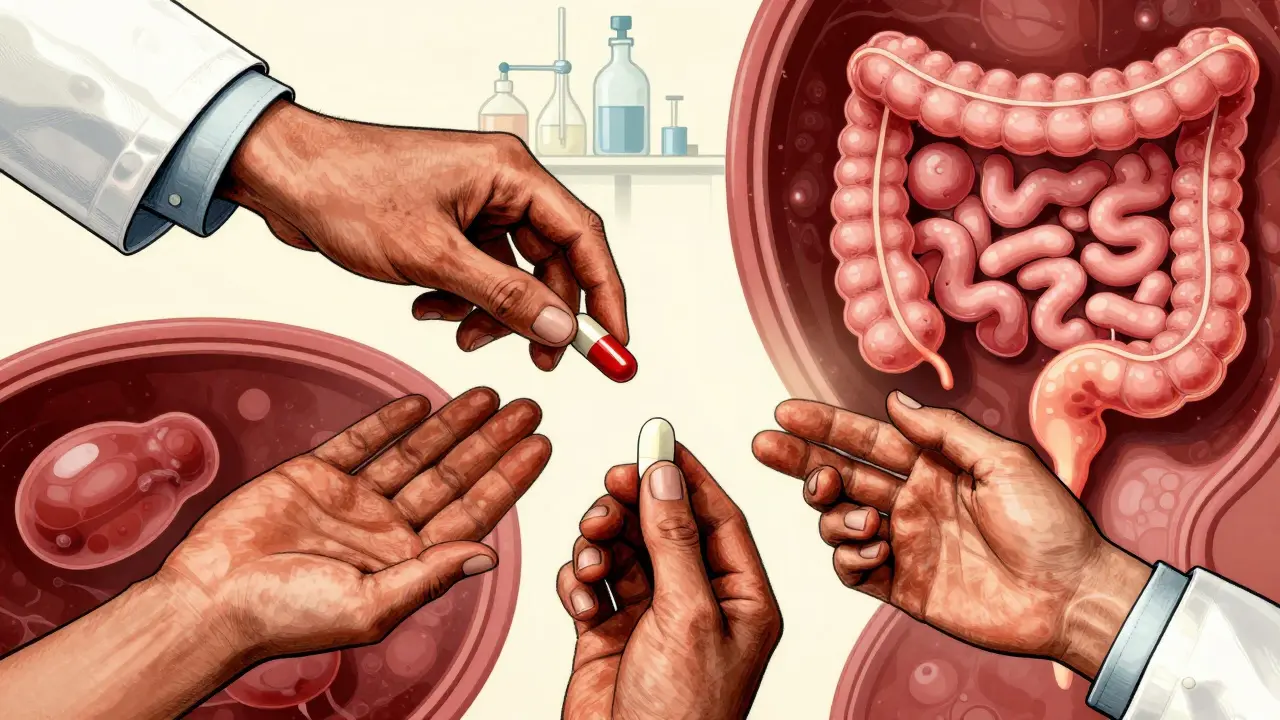
What’s Being Done to Fix This
There are three main paths forward: testing, blocking, and modifying.
Testing: You can now get your gut’s drug-processing ability tested. A simple stool sample is analyzed for bacterial genes linked to drug metabolism. Companies like BiomeBank and MicroBiome Health offer these tests for $300-$500. They don’t just say “you have good bacteria.” They say, “your microbiome has a 92% chance of activating irinotecan into a toxic form.”
Blocking: Scientists are developing enzyme inhibitors. For irinotecan, a beta-glucuronidase inhibitor is in Phase II trials. Taken alongside the chemo drug, it prevents the gut from reactivating the toxin. Early results show a 60% drop in severe diarrhea. Similar inhibitors are being tested for other drugs.
Modifying: Probiotics are being engineered not just to restore gut health, but to control drug metabolism. One trial (NCT05102805) is testing a custom probiotic blend designed to reduce beta-glucuronidase activity. Another is testing a strain that boosts the metabolism of a common antidepressant. These aren’t random probiotics - they’re precision tools.
Even fecal transplants are being explored. In a small pilot study, patients with chronic drug resistance received a transplant from a donor whose microbiome efficiently metabolized their medication. Within weeks, drug levels normalized and side effects disappeared.
What You Can Do Today
You don’t need to wait for a clinical trial. If you’re on long-term medication and notice strange side effects - unexplained nausea, rashes, fatigue, or lack of effect - your gut could be involved.
- Don’t take antibiotics lightly. Even a short course can wipe out bacteria that help metabolize your drugs. Ask your doctor if your medication is affected.
- Track your symptoms. Did side effects start after antibiotics, a major diet change, or illness? That’s a clue.
- Ask about microbiome testing. While not yet routine, some clinics offer it. It’s especially useful if you’re on chemotherapy, heart meds, or psychiatric drugs.
- Don’t self-prescribe probiotics. Not all probiotics help. Some might make things worse. A 2023 study found that common store-bought probiotics actually increased beta-glucuronidase activity in 30% of users.
The future of medicine isn’t just about genes or blood tests. It’s about your gut. And that’s something you can influence - with the right information.
Can gut bacteria make my medication less effective?
Yes. Bacteria like Eggerthella lenta can break down digoxin, a heart drug, before it enters your bloodstream. Antibiotics can also wipe out bacteria that activate certain drugs like sulfasalazine. In some cases, drug effectiveness drops from 90% to 12% if those bacteria are gone.
Do probiotics help with drug side effects?
It depends. Common store-bought probiotics don’t target drug metabolism and may even worsen it. However, experimental probiotics designed to block bacterial enzymes - like beta-glucuronidase - are showing promise in clinical trials. These are not available over the counter yet.
Should I get my gut microbiome tested if I’m on medication?
If you’re on a drug with narrow therapeutic range - like chemotherapy, anticoagulants, or heart meds - and you’re experiencing unexpected side effects or lack of effect, testing could help. It’s especially useful if you’ve recently taken antibiotics or have chronic GI issues. The test costs $300-$500 and looks for bacterial genes linked to drug metabolism.
Can antibiotics cause drug side effects?
Yes. Antibiotics can kill bacteria that either activate or deactivate drugs. For example, a 2014 study found that long-term antibiotic use reduced statin effectiveness by 35%. This can cause cholesterol levels to rise unexpectedly. Always tell your doctor about recent antibiotic use when discussing medication changes.
Are there any drugs that don’t interact with gut bacteria?
Most drugs are affected to some degree. A 2023 review found that 117 out of 127 commonly prescribed drugs are metabolized or altered by gut bacteria. Drugs that are absorbed quickly in the small intestine - like some painkillers - may have less interaction. But even then, the liver’s processing can be influenced by bacterial byproducts. No drug is completely immune.