
Forgetting a pill here or there might seem like a small slip, but when it happens regularly, it becomes a serious health risk. Most of us don't skip doses on purpose; we simply get distracted by the chaos of a busy day. This is called unintentional nonadherence, and according to an American Medical Association (AMA) analysis, it accounts for 60% to 70% of all adherence issues. The good news is that you don't need a complex system or an expensive app to fix this. You just need to link your meds to things you already do without thinking.
The secret lies in a behavioral strategy called habit pairing. Instead of trying to remember a new task from scratch, you "piggyback" your medication onto an established routine. By doing this, you create a mental shortcut. Over time, the existing habit-like brewing your morning coffee-becomes the trigger that automatically reminds you to take your medicine. Research from the National Institutes of Health (NIH) shows that this simple shift can reduce missed doses by 30% to 50% for people with chronic conditions.
| Method | Typical Adherence Boost | Long-Term Sustainability | Main Drawback |
|---|---|---|---|
| Reminder Apps | 32% Improvement | Low (68% abandonment after 3 months) | Notification fatigue |
| Pill Organizers | 28% Improvement | Moderate | Requires manual filling |
| Medication Adherence Habit Pairing | 41% Improvement (combined with organizers) | High (Only 12% dropout) | Less effective for shift workers |
Choosing Your Anchor Habits
To make this work, you need an "anchor." An anchor is a habit you perform every single day at roughly the same time. If you choose something inconsistent, like "checking the mail," the system falls apart on rainy days or holidays. You want something non-negotiable.
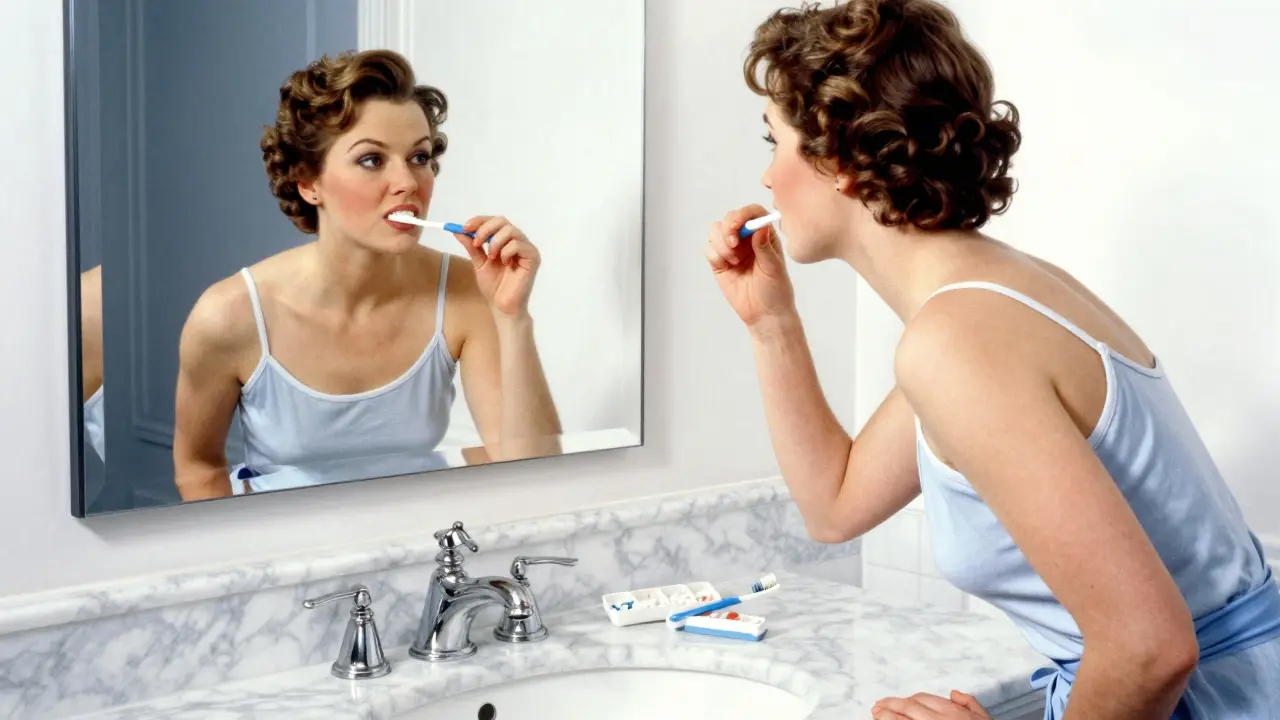
One of the most powerful anchors is the "toothbrushing anchor." Toothbrushing is a daily hygiene routine that occurs at consistent times in the morning and evening. According to data from Central Pharmacy, pairing evening doses with toothbrushing leads to a 92% adherence rate. It works because you're already in the bathroom, usually near a mirror and a sink, which serves as a secondary visual cue.
Other effective anchors include:
- The Coffee Ritual: For those who can't function without their first cup, pairing meds with the coffee maker is a game-changer. One patient on Reddit reported reducing missed doses from 12 to 2 per month after linking their 8 AM medication to their morning brew.
- Meal Times: This is particularly critical for Diabetes Medications, which often require food to prevent hypoglycemia or to improve absorption. Pairing these with breakfast or lunch ensures you're following FDA labeling requirements.
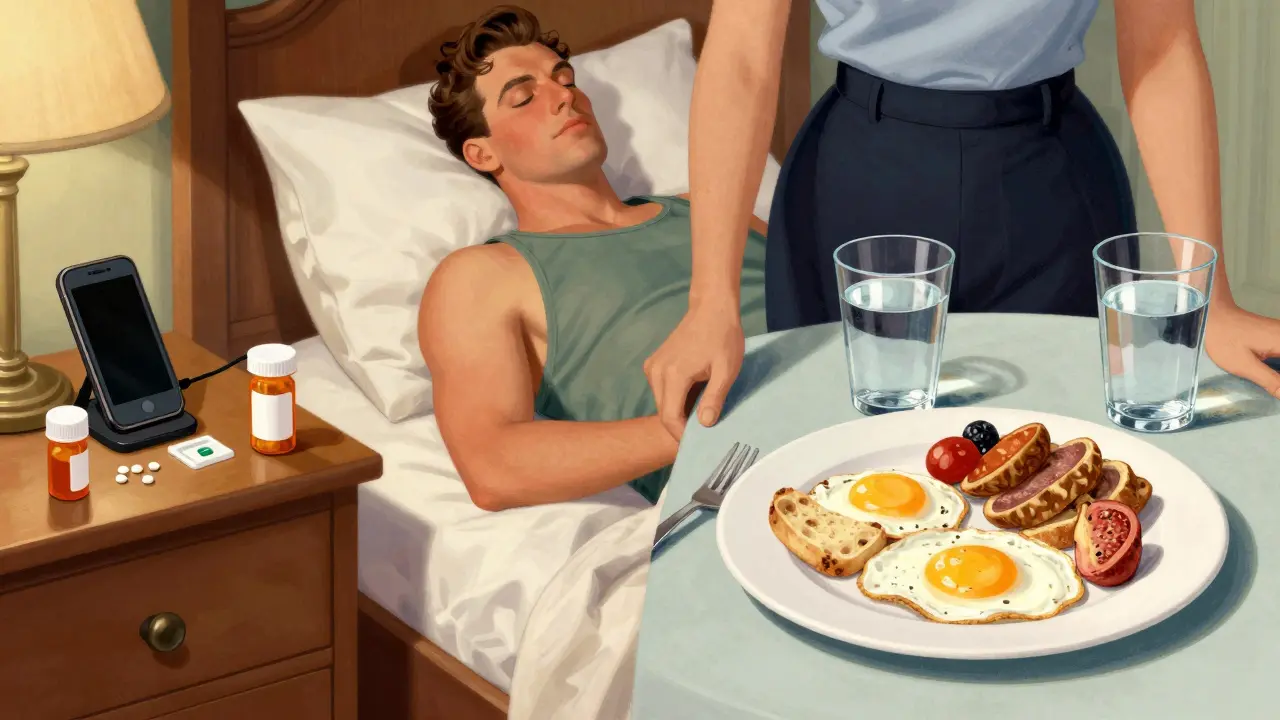
- The Bedtime Routine: Setting your phone on the charger or putting on pajamas can act as a trigger for medications that need to be taken before sleep, such as certain statins.
The 4-Step Setup for Automatic Adherence
You can't just decide to pair a habit and expect it to work instantly. It takes a bit of intentional design. Here is the structured process recommended by Stanford Medicine to lock in these behaviors.
- Track Your Day: Spend 3 to 7 days observing your movements. Note the things you do every single day without fail. Do you always feed the dog at 7 AM? Do you always take off your shoes at 5 PM? These are your potential anchors.
- Match and Map: Align your medications with these activities based on their requirements. If a med needs to be taken on an empty stomach, don't pair it with breakfast; pair it with your first glass of water upon waking.
- Create Visual Cues: This is where most people fail. Don't hide your pills in a cabinet. Place the bottle (or your organizer) exactly where the habit happens. If you pair meds with coffee, put the bottle right next to the coffee pot. This increases initial success by about 31%.
- The 21-Day Commitment: Habit formation isn't overnight. While some people lock in a routine quickly, research in the European Journal of Social Psychology suggests it takes an average of 21 days for a behavior to become automatic. Don't give up if you miss a day in week one; just reset.
Dealing with Common Roadblocks
Even the best system can hit a snag. If you work rotating shifts or have a highly unpredictable schedule, standard habit pairing can be tricky. Shift workers often see lower success rates because their "morning" might be 6 PM on a Tuesday. In these cases, the best approach is a hybrid system: use a pill organizer combined with phone alarms that you shift according to your roster.
Another challenge is "medication overload." When you're taking ten different pills at different times, the mental load is heavy. To solve this, try grouping your doses into 1-hour windows. Instead of five separate alerts, create one "Health Hour" paired with a specific routine, like a mid-morning break. This grouping strategy has been shown to improve adherence by 27%.
It's also important to remember that habit pairing solves unintentional forgetting. If you're skipping meds because they're too expensive or the side effects are unbearable, a coffee-pot reminder won't help. This is a different type of nonadherence that requires a conversation with your doctor or pharmacist to find an alternative medication or a cost-assistance program.
Integrating Tech with Tradition
While low-tech pairing is often more sustainable, technology can act as a safety net. Modern apps like MyTherapy is a digital health app that provides medication reminders and health tracking. Rather than relying on the app alone, use the app to alert you to start the habit. For example, the app pings you, and that ping becomes the cue to go to the kitchen and perform your "coffee-meds" pairing.
We are also seeing a move toward "smart home" integration. Imagine your smart coffee maker or bedside lamp triggering a soft reminder only when it detects you've actually started your morning routine. This blend of AI-powered prediction and physical habit is the future of healthcare, moving us away from annoying alarms and toward seamless, automatic wellness.
How long does it take for medication pairing to become a habit?
Most people find that the behavior becomes automatic within 21 to 66 days. This timeframe can vary depending on how complex your medication schedule is. The key is consistency during the first three weeks to build the necessary neural pathways.
Can I pair multiple medications with one habit?
Yes, and it's often more effective. Grouping medications into specific windows-like a "morning block" paired with breakfast-reduces the mental effort required to remember multiple different times throughout the day and can increase adherence by up to 27%.
What if my daily routine changes frequently?
If you have a variable schedule (like shift work), habit pairing alone may not be enough. We recommend a hybrid approach: use a pill organizer to manage the doses and sync digital alarms to your specific shift schedule to act as the trigger.
Does putting medication on the counter actually help?
Absolutely. Visual cues are a core part of habit pairing. Placing medications in high-traffic areas, such as a kitchen counter or next to your toothbrush, can increase adherence effectiveness by approximately 28% because it removes the "out of sight, out of mind" barrier.
Is habit pairing better than using a reminder app?
In the long run, yes. While apps provide a great initial boost, they have high abandonment rates (up to 68% after three months). Habit pairing creates a permanent behavioral change with a much lower dropout rate (around 12%) because it doesn't rely on a device.
Next Steps for Success
If you're ready to start, don't try to overhaul your entire routine today. Start with one medication and one anchor habit. Once that feels automatic-usually after about three weeks-add the next one. If you find yourself still struggling, take your list of "anchors" to your pharmacist. They can help you figure out the safest way to group your meds without interfering with how they work in your body.




Steve Grayson
April 29 2026This is a really practical way to handle things. I've tried a few of these and they actually work if you stay consistent.