
When you pick up a prescription, you probably don’t think about who made the pill or how much it cost to produce. But the difference between a generic drug and its brand-name counterpart isn’t just in the label-it’s in the entire system behind it, especially when it comes to labor costs.
Why Generic Drugs Cost So Much Less
Generic drugs aren’t cheaper because they’re made worse. They’re cheaper because they don’t have to pay for the research, clinical trials, or marketing that brand-name drugs do. But even within manufacturing, labor plays a huge role in the price gap. A brand-name drug company spends roughly 30-40% of its total production cost on labor during its early years. That includes scientists, quality control specialists, regulatory writers, and production supervisors-all working to meet strict FDA standards for a drug that’s never been made before. Every batch is scrutinized. Every process is documented. Every deviation is investigated. Generic manufacturers? They’re working off a blueprint. The active ingredient, the dosage form, the delivery method-all already proven. So they don’t need the same level of R&D staff. Their labor costs drop to about 15-25% of total production expenses. That’s not because they’re cutting corners. It’s because they’re doing less.Quality Control: The Hidden Labor Burden
Here’s where people get it wrong. Many assume generic drugs have lower quality standards. That’s not true. The FDA holds generics to the same standards as brand-name drugs. That means the same testing, same documentation, same inspections. So why the lower labor cost? Scale. A generic manufacturer might produce 10 million tablets of the same drug every month. A brand-name maker might produce 100,000. When you double the volume, generic manufacturers see a 45% drop in per-unit labor cost. Brand manufacturers? Only 29%. That’s because repetitive, high-volume production lets you train workers faster, automate more, and reduce errors. Quality control alone can eat up more than 20% of a generic drug’s total production cost. That’s not just running tests-it’s training staff to do them correctly, writing batch records, auditing procedures, and responding to FDA audits. A medium-sized generic company spends about $184,000 a year just on compliance systems. Add in $1.9 million for program participation and another $320,000 per new drug application, and you’re looking at a labor-heavy regulatory machine.Where the Work Happens: Global Labor Arbitrage
The biggest factor in lower labor costs for generics? Location. About 70% of the active pharmaceutical ingredients (APIs) used in U.S. generic drugs come from India and China. Labor there is roughly 42% cheaper than in the U.S. That doesn’t mean workers are underpaid because they’re lazy. It means wages, housing, and regulatory enforcement are fundamentally different. The U.S. Department of Health and Human Services calls this “structural distortion.” It’s not that Indian factories are more efficient-it’s that they operate under different rules. Lower minimum wages, fewer environmental protections, and government subsidies all help drive down costs. The result? A pill that costs $0.10 to make in India might cost $0.18 to make in Ohio-even if the process is identical. That’s why most generic manufacturers outsource API production. Some even outsource final packaging. This shifts labor from fixed costs (hiring full-time staff) to variable costs (paying a contract manufacturer per batch). It’s smart business. But it also means the U.S. workforce is shrinking in this sector.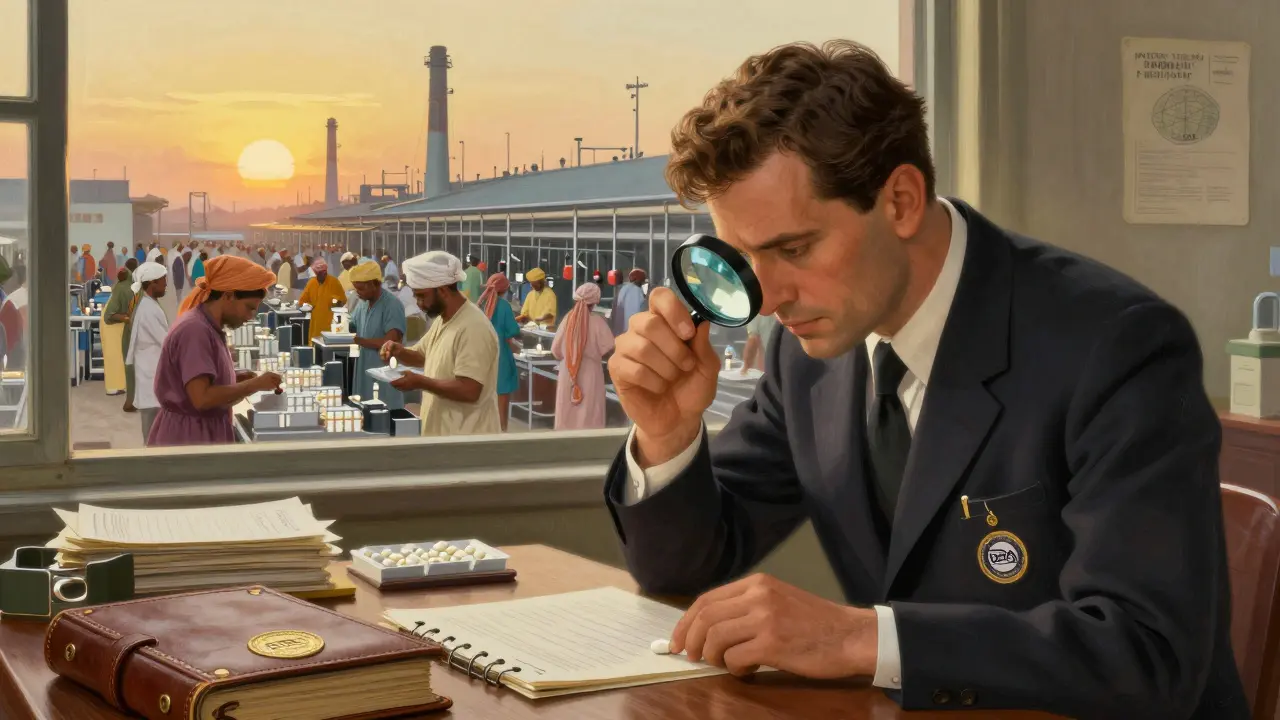
Brand Drugs: Paying for the Past
Brand-name drug makers aren’t wasting money on labor. They’re paying for the future they already built. Developing a new drug takes 10 to 15 years and costs about $2.6 billion on average. That’s billions spent on salaries for chemists, biologists, statisticians, clinical trial coordinators, and regulatory experts. Once the drug is approved, those teams don’t just disappear. They’re kept on to manage post-market studies, safety monitoring, and patent extensions. Meanwhile, a generic manufacturer walks in after the patent expires. They don’t pay for any of that. Their labor team is smaller, leaner, and focused on execution-not innovation. That’s why a brand-name drug can cost 80-85% more than its generic version, even though the pill inside is chemically identical.Competition Drives Labor Efficiency
There are over 600 generic manufacturers in the U.S. competing for the same handful of drugs. That’s why prices keep falling. When three companies make the same generic, the price drops. When ten do, it plummets. That pressure forces manufacturers to cut costs wherever they can-and labor is the easiest target. Some reduce shift lengths. Some cut training hours. Some outsource even more. The FDA has warned that this pressure could lead to supply shortages. If a company cuts too many quality control staff to save money, they might miss contamination issues. One batch of bad pills can shut down a plant for months. The smartest generic manufacturers know this. They invest in training, automation, and prevention-not just to save money, but to avoid disaster. A company that trains its staff to catch errors before they happen spends more on labor upfront-but ends up spending far less on rework, recalls, and regulatory fines.




Allison Deming
January 14 2026It’s deeply concerning how we’ve outsourced the very foundation of our pharmaceutical supply chain to nations with lax labor and environmental standards. This isn’t efficiency-it’s ethical evasion. We celebrate the $4 pill while ignoring the fact that the workers producing its active ingredients are often exposed to toxic fumes without proper ventilation, paid less than $3 a day, and denied basic healthcare. The FDA may certify the pill, but it cannot certify the human cost behind it. We are not consumers; we are complicit.
And yet, we pat ourselves on the back for choosing generics as if it’s a moral victory. It’s not. It’s a surrender to global exploitation disguised as affordability. If we truly cared about public health, we’d invest in domestic production-even if it meant paying $12 for a prescription. The alternative is a system built on silent suffering, and that’s not a bargain. That’s a tragedy.
And don’t even get me started on how the U.S. government incentivizes this through trade deals that prioritize corporate profit over human dignity. We’re not saving money-we’re exporting our conscience.