Imagine this: You walk into a room and find a loved one who isn't responding. Their breathing is shallow. Their lips look blue. In those first few minutes, your ability to recognize what is happening can mean the difference between life and death. For families dealing with substance use disorders, knowing how to spot an overdose isn't just helpful-it’s essential. According to recent data from the Centers for Disease Control and Prevention (CDC), over 107,000 drug overdose deaths occurred in the U.S. in a single year ending in April 2022. With National Institute on Drug Abuse (NIDA) reporting that 78% of these tragedies happen in private homes, family members are often the first-and sometimes only-responders.
Teaching your family to recognize overdose symptoms is not about fear; it’s about empowerment. It’s about giving them the tools to act quickly and correctly when seconds count. This guide breaks down exactly how to teach these critical skills using evidence-based methods that actually work.
Understanding the Core Signs of an Opioid Overdose
The most common type of overdose involves opioids like heroin, fentanyl, or prescription painkillers. To teach recognition effectively, you need to focus on the "Opioid Triad," a set of three specific symptoms identified by health authorities like the California Department of Public Health (CDPH). These signs are distinct and should be taught as a cluster:
- Unresponsiveness: The person cannot be woken up. Shouting their name or rubbing their sternum (breastbone) with knuckles produces no reaction.
- Respiratory Depression: Breathing is slow or has stopped. Look for fewer than one breath every five seconds.
- Cyanosis: Skin discoloration. Lips and fingernails may turn blue or purple.
Beyond the triad, NIDA’s 2023 lesson plans highlight other crucial indicators. Teach family members to look for extreme pallor (paleness) or clamminess of the face, which appears in 87% of cases according to data from Rady Children's Hospital. A limp body posture is also a major red flag, observed in 76% of overdoses. Finally, listen for gurgling sounds, often called the "death rattle," which occurs in 68% of cases due to fluid in the throat.
It is vital to distinguish between being intoxicated and overdosing. A key differentiator is response to physical stimulation. Research shows that while someone who is merely high will usually react to a sternum rub (92% success rate), someone in an opioid overdose will not (0% success rate). Make sure your family understands this distinction clearly.
Recognizing Stimulant and Polysubstance Overdoses
Not all overdoses involve opioids. Stimulants like methamphetamine or cocaine present very different symptoms. The Washington State Department of Health notes that stimulant overdoses often involve hyperthermia (body temperature exceeding 104°F/40°C), seizures, and cardiovascular distress such as chest pain or irregular heartbeat.
Complicating matters further is the rise of polysubstance use. The CDC updated its guidelines in October 2023 to address this, noting that 67% of overdose cases now involve multiple substances. When teaching family members, emphasize that symptoms can be mixed or confusing. If a person shows signs of both respiratory depression and agitation, treat it as a medical emergency immediately. Do not try to diagnose the specific drug; focus on the immediate life-threatening symptoms.
Effective Teaching Methods: Beyond Lecture
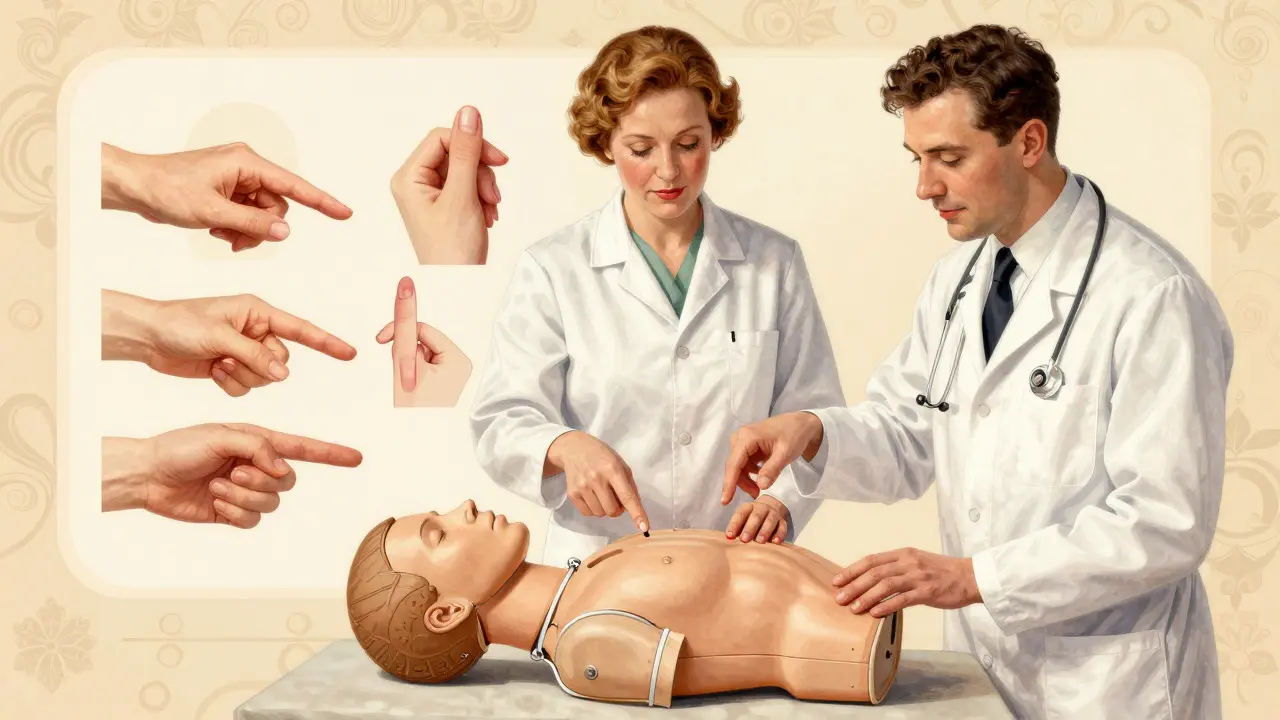
How you teach these signs matters as much as what you teach. Dr. Nora Volkow, Director of NIDA, stated in a 2023 interview that families retain 73% more information when taught through scenario-based practice rather than lecture alone. The American Psychological Association’s 2023 meta-analysis supports this, identifying hands-on training as superior for skill retention.
Consider these evidence-based approaches:
- The 'Recognize-Respond-Revive' Framework: Developed by Rady Children's Hospital, this method validates 94% accuracy in family recognition. It structures learning into clear steps: identify signs, call for help, and administer reversal medication if available.
- SAMHSA's 'Stop Overdose' Curriculum: Implemented in all 50 state health departments, this curriculum provides standardized materials that are easy for laypeople to understand.
- Simulation Training: Use training kits with anatomically correct mannequins. The Overdose Lifeline organization’s simulation approach has been shown to increase family confidence in overdose response by 82%.
A practical tip: Create a "practice pouch" for your family. Include a training naloxone device (which costs around $35 per kit as of Q3 2023) and scenario cards. Practice together monthly. User feedback from the Addiction Policy Forum’s 2023 survey indicates that 78% of family members prefer this hands-on approach over traditional lectures.
Addressing Skin Tone Variations in Symptom Recognition
A critical but often overlooked aspect of overdose education is recognizing cyanosis across different skin tones. The CDPH reports that programs addressing skin color differences reduce misidentification errors by 63%.
When teaching family members, explain that:
Skin Tone
Appearance of Cyanosis
Lighter-skinned individuals
Bluish or purple discoloration of lips and fingernails
Darker-skinned individuals
Grayish or ashen appearance, particularly around the lips and nail beds
Use visual aids or reference guides that show these variations. This ensures that no family member misses a critical sign due to lack of awareness about how oxygen deprivation manifests differently on various skin types.
Overcoming Emotional Barriers to Training
Teaching overdose recognition can be emotionally difficult. The 2023 Family Overdose Response Survey found that 34% of respondents initially resisted training due to fear of "jinxing" their loved one. However, 92% later reported that this concern diminished after completing the training.
To ease this anxiety, frame the conversation around preparedness rather than pessimism. Emphasize that knowledge is power. Share stories of success, such as the Georgia Coastal Health District’s evaluation, where 87 trained family members intervened in actual overdoses, resulting in a 94% survival rate. Remind them that hesitation costs lives, but action saves them.
Practical Steps for Implementation
Implementing effective training requires structure. Follow this protocol validated by NIDA:
- Time Allocation: Dedicate 45-60 minutes. Spend 20 minutes on recognition signs, 25 minutes on response procedures, and 15 minutes on hands-on practice.
- Materials Needed: Training naloxone devices, scenario cards, and skin tone reference guides.
- Trainer Qualifications: Ensure the trainer has at least 8 hours of certified overdose response training. Many states require certification through the Overdose Response Training Registry.
- Legal Awareness: Check your local laws. As of 2022, 31 states permit family members to obtain naloxone without a prescription through standing orders, while others require specific training certification.
Resources like NIDA’s "Understanding an Overdose and How to Respond to One" lesson plan and the Overdose Lifeline mobile app (downloaded 147,000 times since 2022) provide excellent supplementary material. Keep these resources accessible for ongoing reference.
How long does it take to teach family members to recognize overdose symptoms?
A comprehensive session typically takes 45-60 minutes. This includes 20 minutes for learning signs, 25 minutes for response procedures, and 15 minutes for hands-on practice. Regular refreshers every few months are recommended to maintain skill retention.
What is the difference between being high and overdosing?
The key difference is responsiveness. Someone who is high will usually react to loud noises or physical stimulation like a sternum rub. An overdose victim will be unresponsive to these stimuli. Additionally, breathing becomes dangerously slow or stops entirely during an overdose.
Do I need a prescription to get naloxone for my family?
In many places, no. As of 2022, 31 U.S. states allow family members to obtain naloxone without a prescription through standing orders. However, requirements vary by location, so check your local pharmacy board regulations. Some states may require proof of training certification.
How can I make training less emotional for my family?
Frame the training as empowerment rather than fear. Use hands-on simulations with training kits to build confidence. Share success stories of families who saved loved ones. Remember that 92% of people who initially feared "jinxing" their loved ones felt better after training.
What should I do if I suspect a polysubstance overdose?
Treat it as a medical emergency immediately. Polysubstance overdoses can present mixed symptoms. Call emergency services right away. If opioids are suspected, administer naloxone. Monitor breathing and be prepared for changing symptoms as different drugs affect the body.