
Every year, millions of people in the UK keep old pills, syrups, and creams in their medicine cabinets-some for years past their expiration date. You might think, "It’s probably still fine," but the truth is, expired medications can lose potency, change chemical structure, or even become unsafe. The FDA warns that taking expired antibiotics could lead to treatment failure, and expired insulin or nitroglycerin could be life-threatening in emergencies. The good news? You don’t need a fancy hospital system to keep track. With a few simple, practical steps, you can turn your cluttered cabinet into a safe, organized space that keeps your family protected.
Start with a full cabinet audit
Before you do anything else, empty your medicine cabinet completely. Lay everything out on a clean surface. This isn’t just about tidying up-it’s about seeing exactly what you have. Look for prescription bottles, over-the-counter painkillers, antihistamines, eye drops, creams, and even first aid supplies like antiseptic wipes. Don’t forget the back of the cabinet, the bottom shelf, or that drawer next to the bathroom sink.Check every item for an expiration date. These are usually printed on the label, bottle, or box in MM/YYYY or DD/MM/YYYY format. If you can’t find one, assume it’s expired. The UK’s NHS advises that most medications are safe for up to a year after opening, but that’s only if stored properly. Eye drops, for example, should be thrown away 28 days after opening, even if the bottle says otherwise.
Set aside anything that’s expired, discolored, cracked, smells strange, or has changed texture. Creams that have separated, pills that are sticky or chalky, and liquids with particles floating in them should go straight into the trash-no exceptions.
Use a simple tracking system
You don’t need an app or RFID tags to stay on top of this. A basic spreadsheet or even a notebook works perfectly. Create two columns: Medication Name and Expiration Date. Add the date you opened it if it’s something that degrades after opening-like liquid antibiotics or eye drops.For example:
- Amoxicillin 500mg - Exp: 08/2025 - Opened: 01/15/2025
- Paracetamol 500mg - Exp: 11/2026
- Hydrocortisone cream - Exp: 03/2025 - Opened: 10/2024
Put this list somewhere visible-taped to the inside of the cabinet door, stuck to the fridge, or saved on your phone. Update it every time you finish a bottle or open a new one. It takes less than 30 seconds per item.
If you prefer digital tools, use your phone’s Notes app or a free calendar app. Set a reminder for 2 weeks before each expiration date. That way, you’re not caught off guard. You’ll have time to talk to your GP about refills or dispose of what you don’t need.
Organize by use and risk
Once you’ve cleared out the expired stuff, reorganize what’s left. Group items by how often you use them and how critical they are.- Emergency meds: EpiPens, nitroglycerin, asthma inhalers. Keep these front and center, at eye level, and never locked away. Check these every month.
- Regular use: Blood pressure pills, diabetes meds, thyroid tablets. Store these in a dry, cool spot-never above the sink or in the bathroom. Humidity ruins most medications.
- Occasional use: Antihistamines, laxatives, sleep aids. These can go on a higher shelf.
- Children’s meds: Keep these locked away or in a high cabinet. Even if they’re not expired, kids shouldn’t have access.
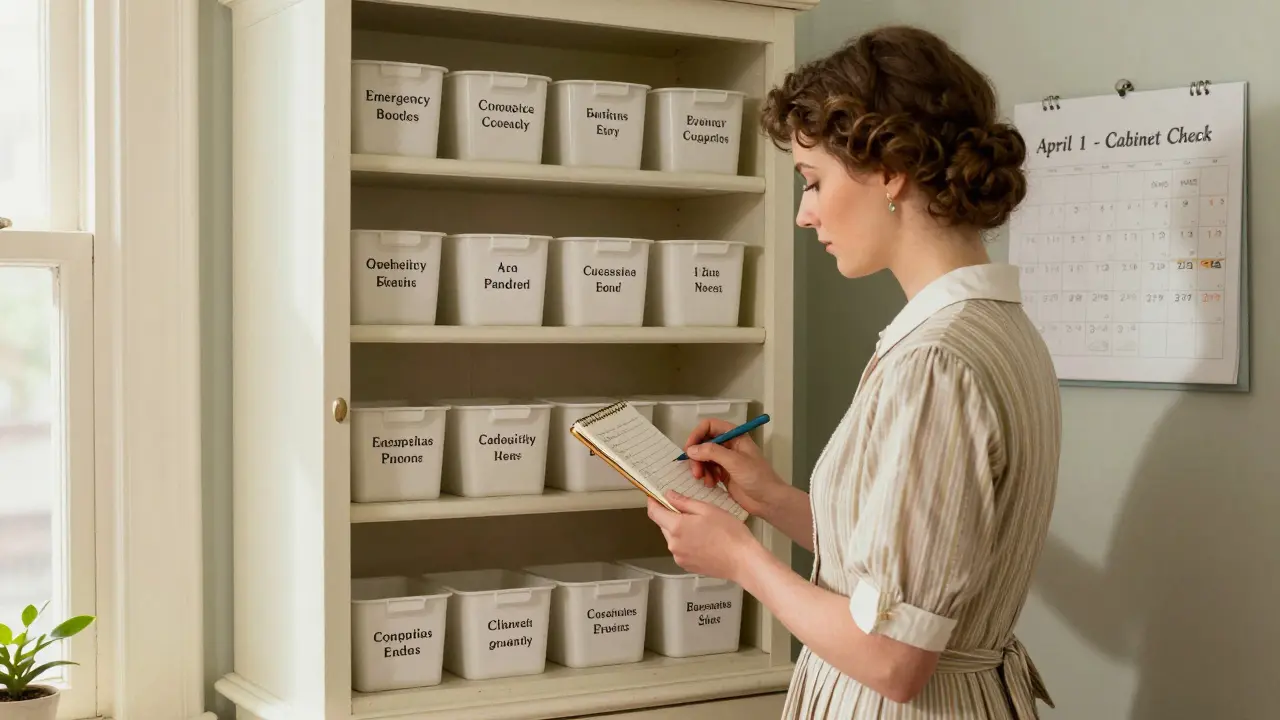
Use small bins or drawer dividers to separate categories. Label them clearly. This isn’t just about convenience-it’s about speed. In an emergency, you need to find the right thing in seconds.
Store properly to extend shelf life
Medications don’t last as long if they’re stored wrong. The ideal conditions are cool, dry, and dark. That means:- Don’t keep pills in the bathroom. Steam and moisture from showers break them down.
- A kitchen cupboard away from the stove or sink is better.
- Some medications, like insulin or certain antibiotics, need refrigeration. Check the label. If it says "store below 25°C," keep it in a cupboard-not the fridge.
- Keep everything in original packaging. The foil blister packs and bottles protect against light and air.
Temperature matters more than you think. A study in the British Journal of Clinical Pharmacology found that storing aspirin at temperatures above 30°C for 6 months reduced its potency by up to 18%. That’s not a small loss-it’s the difference between relief and no relief at all.
Dispose of expired meds safely
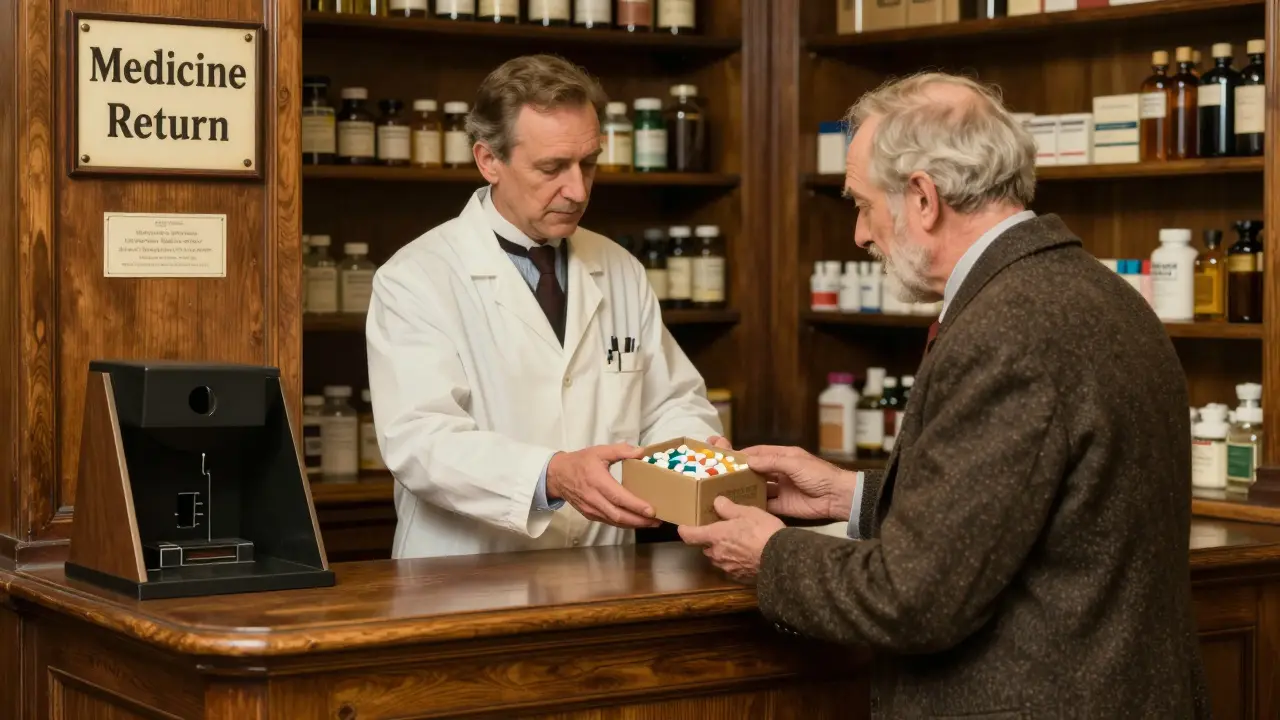
Never flush pills down the toilet or throw them in the regular trash. In the UK, the NHS has a safe disposal system. Take expired or unwanted medicines to your local pharmacy. Most chemists have a dedicated medicine return box-no questions asked. You can drop off anything: pills, liquids, patches, inhalers.If your pharmacy doesn’t offer this, contact your local council. Many towns run periodic medicine take-back events, especially around spring cleaning or the holidays. Some pharmacies even offer free postage labels for returning unwanted meds by post.
When you’re at home and need to dispose of something right away, mix pills with something unappealing-used coffee grounds, cat litter, or dirt. Put them in a sealed plastic bag and toss them in the bin. This stops kids or pets from digging through the trash. Remove or black out personal info on the labels before throwing them away.
Make it a habit
The key to keeping your medicine cabinet safe isn’t one big cleanup-it’s consistency. Set a reminder on your phone for the first day of every quarter: January 1, April 1, July 1, October 1. On that day, spend 10 minutes checking your cabinet.Ask yourself:
- Have I used this in the last 6 months?
- Is the expiration date still valid?
- Does it look, smell, or feel different?
If the answer to any of those is no, it’s time to go.
After doing this for three cycles, you’ll notice something: you’re buying fewer medicines. You’re not stockpiling "just in case" anymore. You’re only keeping what you actually need. That saves money, reduces clutter, and most importantly-keeps you safe.
What about those "use by" dates on OTC meds?
Many people think expiration dates are just a way for drug companies to make more money. But that’s not true. The UK’s Medicines and Healthcare products Regulatory Agency (MHRA) requires manufacturers to test drugs for stability and potency up to their labeled expiration date. After that? No guarantees.Some medications, like antibiotics or epinephrine, can become ineffective-or even toxic-after expiration. Others, like painkillers, may just lose strength. Either way, you can’t risk it. If you’re unsure, ask your pharmacist. They’re trained to know which meds are more sensitive to time.
And don’t trust those "best before" dates on vitamins or supplements. They’re not regulated the same way. If it’s been sitting for more than two years, toss it.
Can I still use medicine after the expiration date?
Some medications may still be safe after their expiration date, but you can’t rely on it. The MHRA and NHS advise against using expired medicines because their potency and safety can’t be guaranteed. Certain drugs-like insulin, antibiotics, and heart medications-can become dangerous. Even painkillers may not work as well. When in doubt, throw it out.
How often should I check my medicine cabinet?
Every three months is ideal. Set a reminder on your phone for the first day of January, April, July, and October. This helps you catch expired items before they become a problem and gives you time to refill prescriptions without rushing.
Where’s the best place to store medicine at home?
A cool, dry, dark cupboard away from the bathroom or kitchen sink is best. Avoid places with heat, humidity, or direct sunlight. If your medicine needs refrigeration, keep it in the main part of the fridge-not the door, where temperatures fluctuate.
Can I donate unused medicine?
No. In the UK, it’s illegal to donate unused prescription or over-the-counter medicines, even if they’re unopened. The only safe option is to return them to a pharmacy for proper disposal. This protects both you and others from potential misuse or contamination.
What should I do if I accidentally take an expired pill?
If you take one expired pill by accident, don’t panic. Most expired medications won’t cause immediate harm-they just might not work. But if it’s something critical like an asthma inhaler, EpiPen, or blood pressure medication, contact NHS 111 or your GP right away. Keep the packaging so you can show the expiration date.
Next steps: Make your cabinet foolproof
Start today. Grab a notebook, open your cabinet, and write down every item with its expiration date. Throw out the expired ones. Organize the rest. Set a reminder for next quarter. In six months, you’ll wonder why you didn’t do this sooner.It’s not about being perfect. It’s about being safe. One expired pill can be the difference between recovery and a hospital visit. You don’t need expensive tech to protect your family. Just a little attention-and a few minutes every few months.


josh plum
January 4 2026Wow, finally someone who gets it. I’ve been saying this for years-most people treat their medicine cabinet like a haunted attic full of expired demons. You think that 2018 ibuprofen is harmless? Nah. It’s probably just waiting for you to have a migraine so it can betray you with zero pain relief. And don’t even get me started on people who keep antibiotics ‘just in case.’ You’re not a warrior, you’re a walking antibiotic resistance factory.