
Have you ever been handed a generic pill and thought, “This just doesn’t feel right”? You’re not alone. Millions of people switch from brand-name medications to generics every year-often because their insurance requires it or because it saves them money-and then quietly wonder if they’re getting less medicine. The truth? Generic drugs are scientifically identical to their brand-name counterparts. But perception? That’s a different story.
They’re the Same Medicine, But Your Brain Says Otherwise
The U.S. Food and Drug Administration (FDA) requires generic drugs to contain the exact same active ingredient, in the same strength, and delivered the same way as the brand-name version. That means if you’re taking a generic version of lisinopril, you’re getting the same molecule that’s in Zestril. Same for sertraline and Zoloft. Same for levothyroxine and Synthroid. The FDA doesn’t just trust the manufacturer’s word. Every generic drug must pass a bioequivalence test. That means in a controlled study with healthy volunteers, the generic must deliver the same amount of medicine into the bloodstream as the brand, within a narrow range of 80% to 125%. That’s not a guess. That’s hard science. And for over 90% of drugs, that tiny variation has zero clinical impact. Yet, people still say things like, “My generic blood pressure pill doesn’t work like the brand.” Or, “I feel worse on the generic version of my antidepressant.” These aren’t imaginary. The feelings are real. But the cause? It’s not the pill. It’s the expectation.Why Do We Think Generics Are Weaker?
It’s not about the science. It’s about the story we tell ourselves. Brand-name drugs come with polished packaging, TV ads, and names we recognize. They’re marketed as premium, reliable, even luxurious. Generics? They’re often in plain white bottles with a small label. They cost less. And when something costs less, our brains assume it’s less valuable. That’s called the price-quality heuristic. It’s a mental shortcut we use every day-buying a $500 pair of shoes because they “feel” better, even if a $50 pair does the same job. There’s also the nocebo effect-the opposite of placebo. If you’re told a drug might not work as well, or you hear someone say their generic made them feel sick, your brain starts looking for symptoms. You notice a headache. A slight fatigue. A change in mood. And you blame the pill. But if you’d stayed on the brand, you’d have blamed stress, sleep, or the weather. A 2023 study in JAMA Network Open proved this. Patients who were told generics were “just as effective” had 34% better adherence. Those told generics were “less effective” had 41% worse adherence. The pills didn’t change. Only the words did.Who’s Most Likely to Doubt Generics?
Not everyone feels this way. But the skepticism isn’t random. It’s tied to demographics, income, and access to information. A 2015 study in the Journal of General Internal Medicine found that non-Caucasian patients were nearly twice as likely to believe generics were less effective than white patients. In rural areas-like Alabama’s Black Belt region-people openly say generics are “for poor people” or “not real medicine.” These aren’t just myths. They’re rooted in real experiences: years of being offered cheaper options, being told to “make do,” or being excluded from the marketing that makes brand drugs feel trustworthy. Older adults, too, are more likely to stick with brand names-even when they can’t afford them. They remember when generics were less reliable. Back in the 1980s, before the Hatch-Waxman Act, there were real quality issues. But since 1984, the rules tightened. Today, every generic manufacturer-whether based in Indiana or India-must follow the same strict manufacturing standards (cGMP) as Pfizer or Merck. The FDA inspects both. The same factory might make both the brand and the generic version.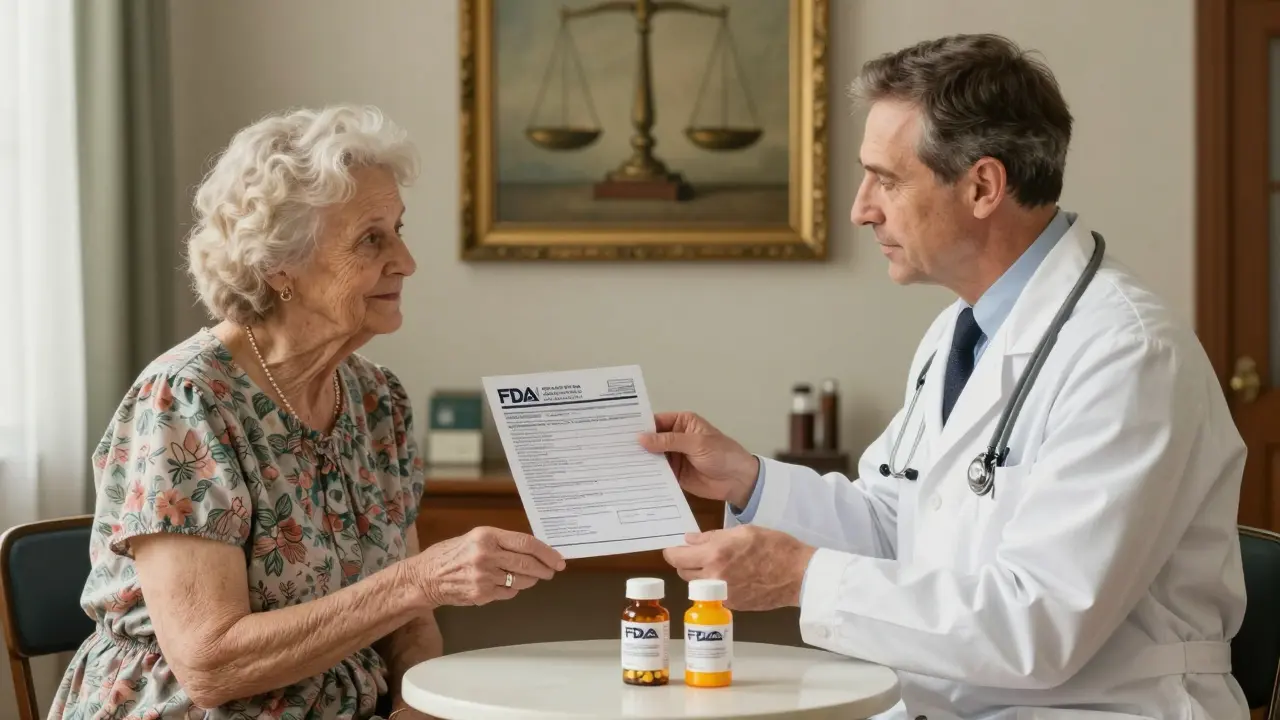
What About the “Narrow Therapeutic Index” Drugs?
You’ve probably heard the argument: “What about warfarin? Or levothyroxine? Those are different.” Yes, these are drugs where tiny changes in blood levels matter. But here’s the truth: even for these, the FDA’s bioequivalence standards still hold. A 2020 analysis by the American College of Clinical Pharmacy reviewed over 100 studies and found no consistent evidence that generic versions of these drugs caused more side effects or worse outcomes than brands. Some patients do report feeling different after switching. But when researchers looked deeper, the issue wasn’t the drug-it was the switch itself. Changing any medication, even to an identical one, can trigger anxiety. And anxiety changes how you feel. One pharmacist in Ohio told me about a patient who refused her generic levothyroxine for three years. She said it “didn’t work.” When she finally agreed to try it again, after a detailed explanation and a week of tracking symptoms, her thyroid levels were perfect. She just needed to believe it would work.How Much Money Are We Losing?
This isn’t just about feelings. It’s about billions. Generics save the U.S. healthcare system about $1.7 trillion every decade. In 2022, 90% of all prescriptions filled were generics. But if even 10% of people who switched to generics stopped taking them because they thought they were “less effective,” that’s hundreds of thousands of people risking hospitalizations, ER visits, and worsening chronic conditions. A 2019 study found that 22% of people who believed generics were inferior stopped taking their medication early. Only 8% of those who didn’t have that belief did. That’s a huge gap. And it’s not because the drug failed. It’s because the message failed. Meanwhile, brand-name companies spend $1.8 billion a year on marketing that subtly reinforces the idea that their drugs are superior-without ever saying it outright. Ads show happy families, smiling doctors, and sleek packaging. Generics? They’re rarely advertised at all.
What Works? How to Bridge the Gap
The good news? We know how to fix this. A 2022 meta-analysis in the Annals of Pharmacotherapy found three things that dramatically increase patient acceptance:- Showing the patient the exact same active ingredient on both bottles
- Handing them a printed FDA fact sheet on bioequivalence
- Directly addressing the nocebo effect: “Some people feel different when they switch, but it’s usually because they expect to. The medicine is the same.”
What’s Next?
The FDA is launching a new tool in 2024 called “Equivalence Explorer”-an interactive website that lets you look up any drug and see exactly how its generic compares. It’s a step forward. But tools won’t change minds unless people know they exist. Medical schools are finally starting to include training on generic perception in their curriculum. The American Medical Association now requires it in continuing education. That’s huge. Because if your doctor doesn’t know how to explain this, you won’t believe it. The real solution isn’t better packaging or fancier websites. It’s conversation. It’s trust. It’s a doctor taking two minutes to say: “I know you’re worried. But this isn’t a cheaper version. It’s the same medicine. And it’s working for millions of people just like you.”You’re Not Crazy. But You’re Being Misled
If you’ve ever doubted your generic pill, you’re not stupid. You’re not weak. You’re just human. Our brains are wired to trust what looks expensive, what we’ve heard of, what feels familiar. But the science is clear. Generics aren’t second-rate. They’re not a compromise. They’re the same drug. Made to the same standard. Tested to the same rule. And they’re saving lives every day-quietly, reliably, affordably. The next time you’re handed a generic, look at the bottle. Find the active ingredient. Compare it to the brand. They’re identical. And if you still feel off? Talk to your pharmacist. Ask them to explain it again. You deserve to feel safe. But don’t let a label tell you what your medicine can-or can’t-do.Are generic drugs really the same as brand-name drugs?
Yes. Generic drugs contain the exact same active ingredient, strength, dosage form, and route of administration as the brand-name version. The FDA requires them to prove they work the same way in the body-delivering the same amount of medicine at the same rate. This is called bioequivalence. The only differences are in inactive ingredients like fillers or colors, which don’t affect how the drug works.
Why do some people feel worse on generic medications?
The most common reason is the nocebo effect-when expecting a negative outcome causes real symptoms. If you believe a generic is weaker, your brain may interpret normal side effects or stress as proof the drug isn’t working. Studies show patients who are told generics are equally effective have better adherence and fewer reported side effects. The drug hasn’t changed; the expectation has.
Are generic drugs made in worse facilities?
No. All drug manufacturing facilities-whether making brand-name or generic drugs-must follow the same FDA standards called Current Good Manufacturing Practices (cGMP). The FDA inspects both types of factories equally. While some foreign generic plants have had more inspectional observations, that doesn’t mean the final product is unsafe. The FDA still requires every batch to meet the same quality and purity standards before it can be sold in the U.S.
Can generics be less effective for drugs like warfarin or levothyroxine?
For drugs with a narrow therapeutic index, even small changes can matter. But decades of research show no consistent evidence that generic versions of these drugs are less effective or cause more side effects than brands. The FDA has stricter oversight for these drugs, and multiple studies-including a 2020 review by the American College of Clinical Pharmacy-confirm therapeutic equivalence. Any reported differences are usually due to switching medications, not the drug itself.
How much money do generics save?
Generics saved the U.S. healthcare system $1.7 trillion between 2009 and 2019. On average, they cost 80-85% less than brand-name drugs. If perception barriers were eliminated, an additional $5.9 billion in annual savings could be achieved. But when people stop taking their meds because they think generics don’t work, it leads to higher hospital costs and worse health outcomes-costing far more than the drug itself.


Andy Grace
December 24 2025I used to think generics were sketchy too-until my doctor explained the science. Now I take them without a second thought. Turns out, my blood pressure’s never been better.
Turns out, my brain was the problem, not the pill.