
Imagine getting behind the wheel feeling perfectly fine, only to discover your reaction time is sluggish or your judgement is off. It sounds like a nightmare scenario, but for millions of drivers, this is the reality of medication-induced impairment. We all know drinking and driving is dangerous. Yet, the science is becoming clear: many common pills create similar risks on the road. With nearly 18 percent of car crashes linked to drug impairment, understanding how your medicine affects your driving isn't just medical advice-it’s a survival skill.
This isn't just about heavy-duty painkillers either. From the allergy tablets in your bag to the sleep aid you took last night, hidden dangers lurk in everyday prescriptions. In fact, research from the National Highway Traffic Safety Administration indicates that drug-impaired driving is now the second leading cause of preventable traffic fatalities, right behind alcohol. So, how do you stay safe, and what does the law actually say about taking your medication and hitting the highway?
The Science Behind Drowsy Driving
When we talk about driving, our brains need to process speed, distance, and braking points in split seconds. Medications interfere with this processing power. Central Nervous System Depressants are perhaps the most notorious offenders. These drugs literally slow down brain signals. Research from the Canadian Centre on Substance Abuse shows they can reduce processing speed by 25 to 40 percent.
It's not just about feeling sleepy. You might feel alert enough, but your body isn't responding fast enough when a child runs into the street. Another critical factor is reaction time. If you are under the influence of certain substances, your physical reaction time can lag by up to 300 milliseconds. That might seem like nothing to you, but at 60 miles per hour, that delay covers nearly 4 meters-the length of two cars. That gap is exactly where accidents happen.
High-Risk Medication Categories
Not all drugs carry the same level of risk. Some classes pose a significantly higher threat to your ability to drive safely. Here is a breakdown of the most concerning categories identified by safety experts:
| Medication Class | Common Examples | Risk Level | Primary Effect |
|---|---|---|---|
| Benzodiazepines | Alprazolam, Diazepam | Severe | Slows brain processing, increases crash risk by 40-60% |
| Opioids | Oxycodone, Fentanyl | Moderate-High | Droopy eyelids, constricted pupils, delayed reactions |
| First-Generation Antihistamines | Diphenhydramine (Benadryl) | Moderate | Sedation comparable to 0.10% blood alcohol concentration |
| Antidepressants | Tricyclics, Mirtazapine | Moderate | Increases motor vehicle accident rates significantly |
| Nighttime Sleep Aids | Zolpidem (Ambien) | Extreme Duration | Impairment can last up to 11 hours after ingestion |
The Hidden Danger of Over-the-Counter Pills
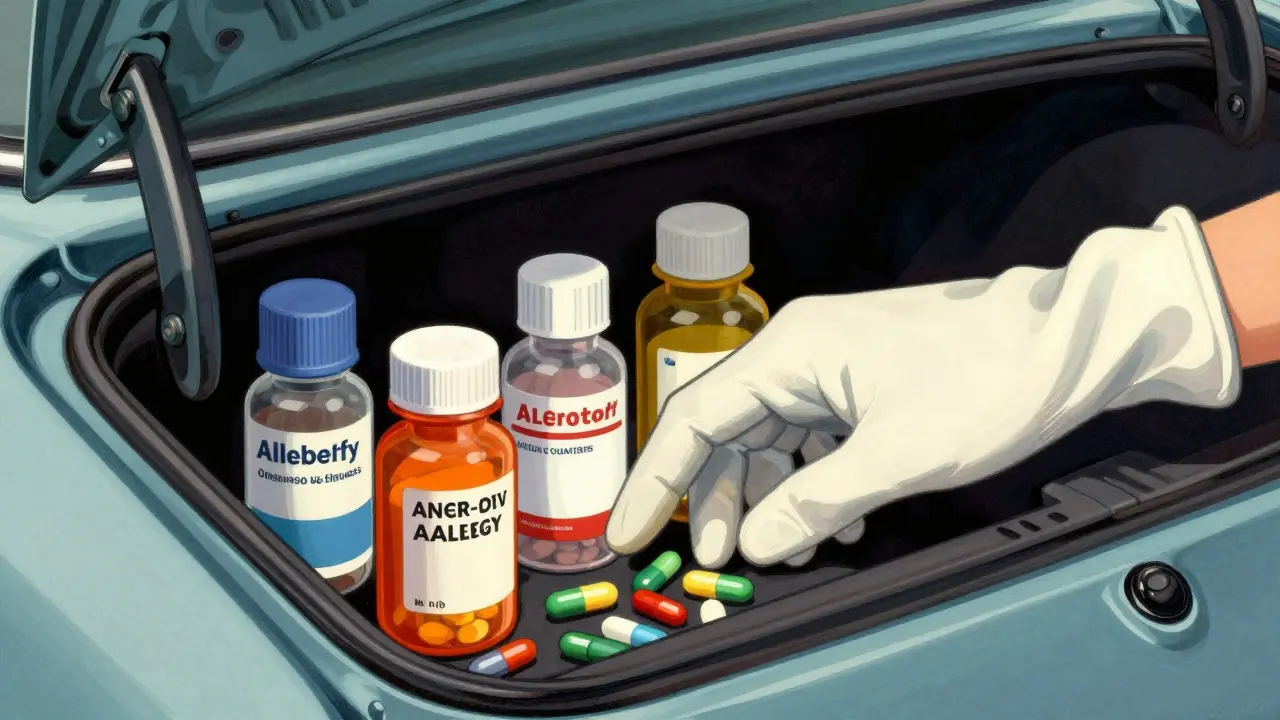
It’s easy to ignore risks when buying something without a prescription. Cold and allergy remedies often contain diphenhydramine, a sedating antihistamine. Despite having no warning label requiring a doctor's visit, these can impair driving to levels equivalent to a blood alcohol concentration of 0.10 percent. To put that in perspective, that exceeds the legal limit of 0.08 percent in many jurisdictions.
Even standard painkillers aren't risk-free. Nonsteroidal anti-inflammatory drugs (NSAIDs) like ibuprofen have been linked to a 58 percent higher crash risk in users. While less obvious than a sleeping pill, the subtle impact on your coordination or alertness can still be fatal. If you pop a tablet before heading out, you might be driving impaired without ever checking the warning labels.
Vulnerable Groups: Age and Polypharmacy
Your age plays a huge role in how medications affect you. For individuals over 65, the body processes drugs differently. Kimberly Zammit from the Mount Sinai Health System explains that older adults experience changes in responsiveness and the body removes drugs more slowly. This means a dose that hits a younger person hard wears off quickly, but for an older driver, the effects linger much longer.
Then there is the issue of "polypharmacy"-taking three or more medications at once. A study by the AAA Foundation found that 70 percent of drivers taking multiple potentially impairing meds admitted to driving within two hours of consumption. This combination creates synergistic effects where two mild drugs together become a major hazard. Doctors often warn about this using tools like the Beers Criteria guidelines, which list over 30 medications to avoid in adults over 65 specifically due to driving risks.
Legal Consequences and Enforcement Challenges
If you get caught driving while impaired by medication, the legal fallout can be severe. Unlike alcohol, where breathalyzers provide a clear result, detecting drug impairment is trickier. Dr. Robert Voas notes that roadside tests for prescription drugs lack the reliability of alcohol screening. However, that doesn't mean you're off the hook.
All 50 U.S. states now include prescription drugs in their DUI statutes. If an officer suspects impairment based on your driving behavior or field sobriety test performance, they can arrest you regardless of whether the substance was legal. In the UK and other regions, the principle remains similar: if a court deems your fitness to drive is below acceptable standards, you face charges, fines, and license suspension. The infrastructure investment acts globally are pushing for better detection, including saliva-based roadside tests currently being developed with high accuracy rates.
The financial stakes are also rising. The market for drug-impaired driving testing grew to $187.5 million in 2022 alone. Law enforcement is increasingly equipped to identify prescription drug involvement. Furthermore, insurance companies may deny claims if it's proven you were under the influence of non-compliant medication.
A Practical Guide to Safe Driving
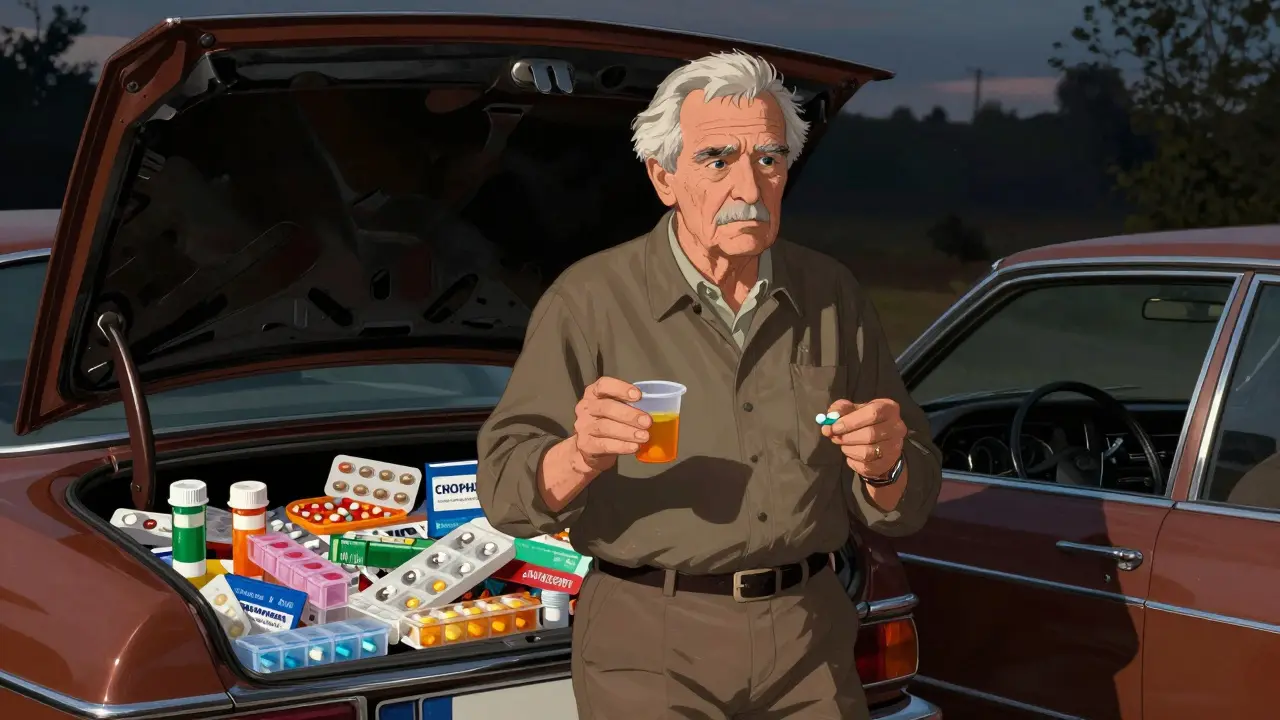
You cannot control the side effects every single time, but you can manage the risk. Start by treating your first dose with extra caution. If you have never taken a new medication, do not drive for several hours after taking it. Watch for signs of drowsiness or confusion.
- Ask your pharmacist: When picking up a script, ask specifically: "Will this affect my driving?" Only 41 percent of physicians discuss this routinely, so pharmacists are often your best source of guidance.
- Time your doses: Avoid driving during peak potency. Zolpidem, for instance, requires waiting 8-12 hours. First-generation antihistamines require at least 4-6 hours before you get behind the wheel.
- Self-Assess: Before every trip, perform a quick check. Do you feel slower than usual? Is your eyelid drooping? If yes, don't drive.
- Avoid mixing: Never combine alcohol with prescription meds. Even a single drink combined with a benzodiazepine creates a level of impairment far greater than the sum of its parts.
Frequently Asked Questions
Can I drive if I take prescribed sleeping pills?
Driving shortly after taking sleeping pills like zolpidem (Ambien) is extremely dangerous. Studies show these can impair driving for up to 11 hours after ingestion. It is safest to wait until the next day before operating a vehicle.
Does Ibuprofen really affect driving ability?
Yes. Research from LeRoy and Morse indicates NSAIDs like ibuprofen increase crash risk by 58%. While the effect is milder than strong sedatives, it contributes to overall reaction slowing and injury risk.
Am I legally protected if my doctor prescribed the drug?
No. Holding a prescription is not a defence for impaired driving. If you are deemed unfit to drive due to impairment caused by any medication, you can still be charged with DUI or DWI depending on local laws.
Which medications are worst for elderly drivers?
Benzodiazepines, opioids, and tricyclic antidepressants are flagged by the Beers Criteria. Older bodies remove drugs slower, making the accumulation of side effects more dangerous for seniors over 65.
Is allergy medication safe to drive on?
It depends on the generation. Second-generation options like loratadine (Claritin) usually have minimal effects. However, first-generation ones like Benadryl cause impairment equal to being drunk. Check the label specifically.





Molly O'Donnell
March 31 2026First generation antihistamines cause impairment equivalent to a blood alcohol concentration of 0.10 percent.