
Protein Medication Timing Calculator
Medication & Protein Calculator
Enter your meal details to see optimal medication timing and potential absorption effects.
Protein Tracking Guide
Helping you redistribute protein for better medication effectiveness.
Key Guidance:
70% of daily protein intake should be consumed at dinner to minimize medication interference. Keep protein intake below 15g per meal when taking medication.
Daily Protein Tracker
Breakfast Protein
0g
Lunch Protein
0g
Dinner Protein
0g
Total Daily
0g
Results
Many people don’t realize that what they eat for breakfast could be making their medication less effective. It’s not just about avoiding grapefruit juice anymore. Protein-rich foods - like eggs, chicken, beans, and dairy - can seriously interfere with how your body absorbs certain drugs, especially those used for chronic conditions like Parkinson’s disease. This isn’t speculation. It’s backed by clinical studies, FDA guidelines, and real patient outcomes.
How Protein Blocks Medication Absorption
Protein doesn’t just feed your muscles - it also floods your bloodstream with amino acids. And those amino acids compete with some medications for the same transport system in your gut and brain. The most well-documented example is levodopa, the main drug used to treat Parkinson’s. Levodopa uses large neutral amino acid transporters (LNAATs) to cross the blood-brain barrier. When you eat a protein-heavy meal, those transporters get overwhelmed by amino acids from food - and levodopa gets left behind.
Studies show that a meal with 50 grams of protein can reduce levodopa absorption by 30% to 50%. That means your brain gets less of the drug, and your symptoms return earlier. You might feel fine after taking your pill, but by mid-morning, your tremors come back. That’s not your condition worsening - it’s your breakfast interfering.
This isn’t limited to Parkinson’s. Other drugs like certain antibiotics (penicillins, ampicillin) and antiepileptics (phenytoin, gabapentin) also rely on these same transporters. High-protein meals can delay gastric emptying by 45 to 60 minutes, which pushes back when the drug even reaches your bloodstream. For drugs that need to hit peak levels quickly, that delay can mean the difference between control and a flare-up.
Not All Drugs Are Affected the Same Way
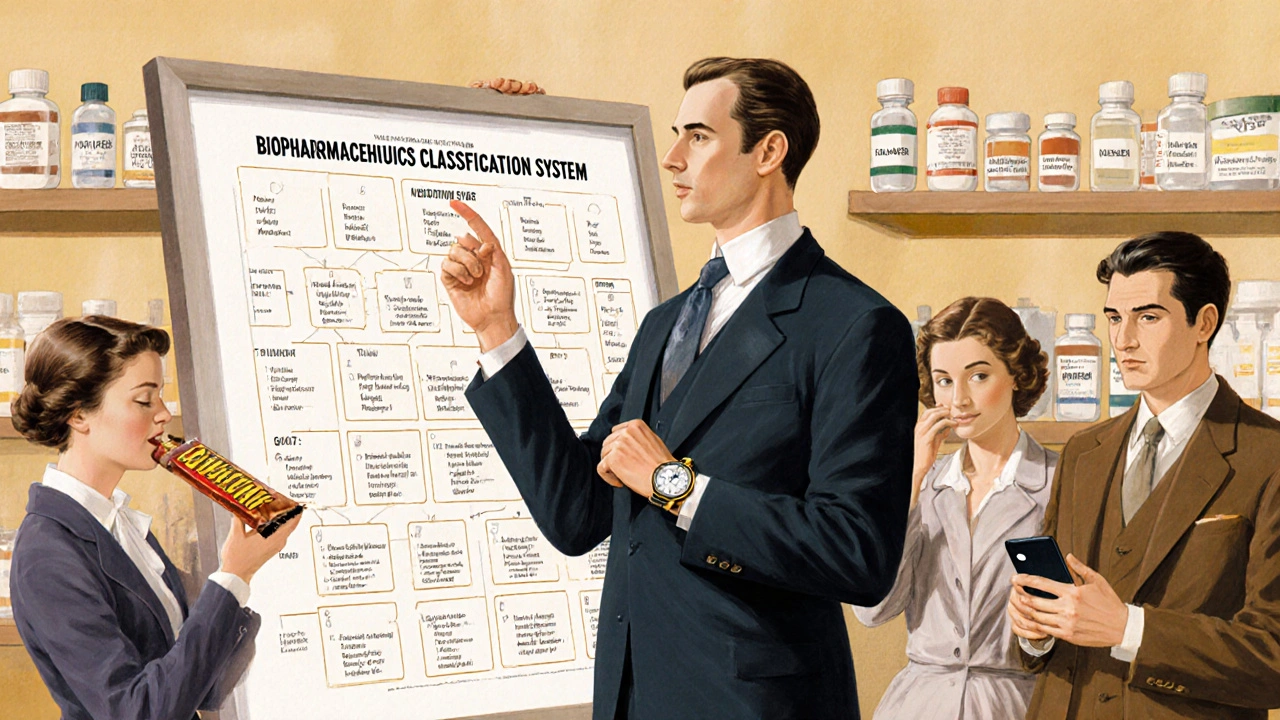
Here’s the key: not every medication is sensitive to protein. The Biopharmaceutics Classification System (BCS) helps explain why. Drugs in BCS Class I - high solubility, high permeability - like aspirin or atorvastatin - aren’t really affected by food. They absorb easily no matter what you’ve eaten.
But BCS Class III drugs - high solubility, low permeability - are the problem. Levodopa falls into this group. So do drugs like alendronate (for osteoporosis) and ciprofloxacin (an antibiotic). These drugs need specific transporters to get into your system. Protein blocks them. That’s why you’ll see warnings on some prescriptions, but not others.
And here’s something surprising: protein can sometimes help. In a few cases, like with certain antibiotics, protein increases blood flow to the intestines and boosts absorption. But these are exceptions. For most drugs, especially those targeting the brain or nervous system, protein is a roadblock.
Real Patients, Real Struggles
On the Parkinson’s Foundation Forum, users share daily battles with protein timing. One person wrote: “I took my levodopa with my morning smoothie - full of Greek yogurt and protein powder. By 10 a.m., I couldn’t walk.” Another said: “I tried a low-protein diet. Lost 15 pounds in six months. My arms got weak. I couldn’t hold a coffee cup.”
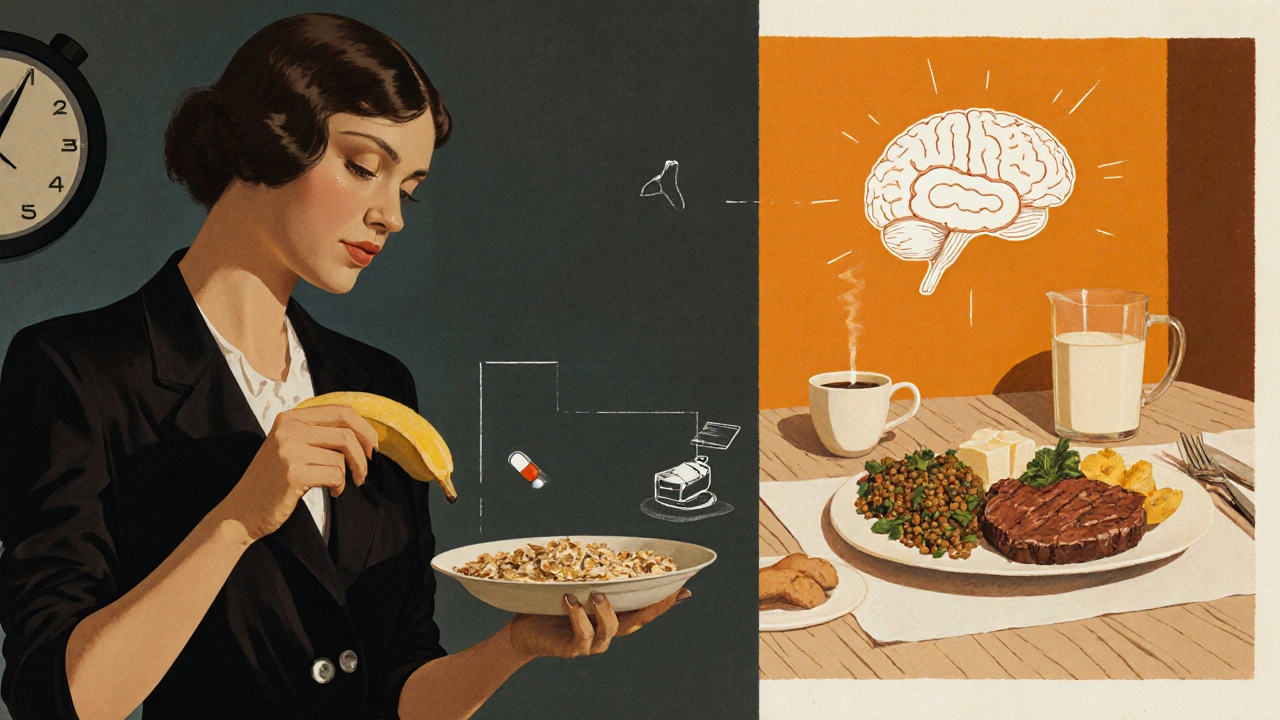
The solution isn’t cutting out protein entirely. It’s managing when you eat it. The Michael J. Fox Foundation recommends a protein redistribution strategy: get 70% of your daily protein at dinner. That means lighter meals at breakfast and lunch - think oatmeal, fruit, and toast - and saving the steak, fish, and lentils for the evening.
Patients who follow this see real results. One user tracked their symptoms with a wearable sensor and found their “off” time dropped from over five hours a day to just over two. That’s five extra hours of mobility, independence, and control.
What Doctors Aren’t Telling You
Despite strong evidence, most doctors don’t bring this up. A 2023 study found that 68% of clinicians never discuss protein timing with patients starting levodopa. Even worse, 61% of medication labels don’t include any protein-related instructions - even though the European Medicines Agency now requires it for all CNS drugs since January 2025.
Dr. Alberto Espay, a leading neurologist, calls protein redistribution “underutilized” despite solid clinical support. The problem? Doctors assume patients know. Patients assume the pill works no matter what. The gap is dangerous.
It’s not just Parkinson’s. People on thyroid medication, antibiotics, or antidepressants are also at risk. If your drug is taken on an empty stomach, protein-rich food might be the hidden reason it’s not working.
Practical Tips for Managing Protein and Medication
Here’s what actually works, based on guidelines from the American Academy of Neurology and Parkinson’s Canada:
- Take levodopa and other sensitive drugs 30 to 60 minutes before meals.
- Avoid protein-rich foods (meat, dairy, legumes, soy) for at least one hour after taking your dose.
- Choose low-protein snacks if you need something with your pill - like a banana, apple, or 1 slice of white bread (about 2g protein).
- Redistribute protein: eat 70% of your daily protein at dinner. This keeps daytime symptoms under control.
- Use apps like ProteinTracker for PD to log meals and track protein intake. Users report 40% fewer timing mistakes.
Don’t rely on labels. Check the drug’s prescribing information or ask your pharmacist. If you’re on multiple medications, bring your full list to a registered dietitian who specializes in neurology. They’ll help you design a plan that protects your health without leaving you hungry or weak.
The Hidden Danger in Processed Foods
One of the biggest mistakes people make is assuming “healthy” means low-protein. A “protein bar” can have 15-20g of protein. A “healthy” granola bar? Often 7g. A cup of yogurt? 10-12g. Even a bowl of cereal with milk can push you over the 15g threshold - enough to interfere with your medication.
Read labels. Look at the “Protein” line on the nutrition facts. If you’re on levodopa or a similar drug, aim for under 5g per meal or snack when taking your medication. That means swapping Greek yogurt for regular yogurt, choosing rice cakes over protein crackers, and avoiding protein-fortified foods unless it’s dinner time.
What’s Changing in 2025
The field is evolving fast. In 2025, the FDA proposed a new “Protein Interaction Score” for drug labels - similar to the alcohol warning you see on some medications. Pharmaceutical companies now run food-effect studies in 92% of Phase III trials, up from 67% in 2020.
New treatments are also emerging. Duopa, a gel delivered directly into the small intestine, bypasses the stomach entirely. It’s helping patients who can’t manage timing with pills. And early research in Nature Medicine shows certain probiotics might reduce protein competition by 25%, offering a future solution.
But for now, the best tool you have is knowledge - and timing. You don’t need to give up protein. You just need to move it to the right part of the day.
When to Call Your Doctor
If you’re taking any medication for a chronic condition - especially Parkinson’s, epilepsy, thyroid disease, or an infection - and you notice your symptoms are worse after meals, talk to your doctor. Ask:
- Is my drug affected by protein?
- Should I take it before or after meals?
- Can you refer me to a dietitian who understands drug-nutrient interactions?
Don’t assume it’s your condition getting worse. It might just be your lunch.
Can eating protein reduce the effectiveness of my medication?
Yes, for certain medications - especially levodopa for Parkinson’s, some antibiotics, and antiepileptic drugs. Protein competes with these drugs for transporters in your gut and brain, reducing how much gets absorbed. Studies show up to a 50% drop in levodopa absorption after a high-protein meal.
Should I avoid protein completely if I’m on medication?
No. Protein is essential for muscle, immune function, and overall health. Cutting it out can lead to muscle loss, weakness, and malnutrition. Instead, manage when you eat it. Experts recommend consuming 70% of your daily protein at dinner and keeping breakfast and lunch low in protein to avoid interfering with morning medications.
How long before a meal should I take my medication?
For drugs like levodopa, take them 30 to 60 minutes before eating. This gives your body time to absorb the medication before protein from food starts competing for transporters. If you feel nauseous, have a low-protein snack like a banana or a slice of white bread (under 5g protein) to ease stomach upset.
Do all protein sources affect medication the same way?
Yes. Whether it’s chicken, beans, eggs, tofu, or dairy - all are sources of amino acids that compete with medication transporters. The total amount of protein matters more than the source. A 100g chicken breast and a cup of lentils both contain about 25g of protein and will have similar effects.
What if I forget to take my medication before eating?
Wait at least two hours after your meal before taking your dose. This allows most of the protein to be digested and cleared from the transporters. If you’re on a strict schedule like levodopa, try setting phone reminders or using a medication tracker app. Missing a dose isn’t as risky as taking it with a protein-heavy meal.
Are there apps that help track protein and medication timing?
Yes. Apps like ProteinTracker for PD (developed by Johns Hopkins) let you log meals, track daily protein intake, and set reminders for medication timing. Users report 40% fewer errors in dosing. Other general nutrition apps like MyFitnessPal can also help if you manually track protein grams.
Can protein affect medications other than Parkinson’s drugs?
Yes. Antibiotics like penicillin and ampicillin, thyroid medications like levothyroxine, and some epilepsy drugs like phenytoin can also be affected. Always check the medication guide or ask your pharmacist. If your drug says to take it on an empty stomach, protein-rich food counts as a meal.
Why don’t more doctors talk about this?
Many doctors assume patients know or that the interaction is minor. But studies show 68% of clinicians never discuss protein timing with patients starting levodopa. Only 37% of neurologists routinely check dietary protein intake. It’s a gap in care - not a lack of evidence. Don’t wait for your doctor to bring it up. Ask.
Is there a test to see if my medication is affected by protein?
No direct blood test exists, but you can track your symptoms. Keep a daily log: note when you take your medication, what you ate, and how you feel over the next 4-6 hours. If your symptoms improve when you take your drug before meals and worsen after eating protein, that’s strong evidence of an interaction. Share this log with your doctor or dietitian.
What’s the future of managing protein-medication interactions?
The FDA is developing a standardized “Protein Interaction Score” for drug labels, similar to alcohol warnings. New treatments like Duopa (a levodopa gel delivered to the intestine) bypass the problem entirely. Research into probiotics that reduce protein competition is also promising. In the next five years, personalized timing algorithms and AI-powered nutrition apps will likely become standard tools for managing these interactions.
If you’re managing a chronic condition and taking medication daily, don’t underestimate the power of your plate. What you eat isn’t just fuel - it’s part of your treatment plan. Get the timing right, and you might just reclaim hours of your day.


Michael Fitzpatrick
November 25 2025Wow, this is one of those posts that makes you realize how much we take our meds for granted. I’ve been on gabapentin for years and never thought my protein-packed smoothie could be why I’m still zoning out by noon. Guess I’m switching to oatmeal and berries from now on. Thanks for the wake-up call.