
Imagine your body fighting a battle every single night while you're unconscious. For millions of people, sleep isn't a time of recovery, but a series of mini-emergencies. Every time your airway collapses and you stop breathing, your brain panics, sending a surge of adrenaline through your system to wake you up just enough to gasp for air. This isn't just a snoring problem; it's a systemic shock to your cardiovascular system. If you've been struggling with sleep apnea and heart risk, you're essentially putting your heart through a high-intensity workout while you're trying to rest. The good news is that once you understand the mechanics, this risk is highly manageable.
What Exactly is Obstructive Sleep Apnea?
When we talk about Obstructive Sleep Apnea (OSA), we're describing a physical blockage. Unlike central sleep apnea, where the brain simply forgets to tell the muscles to breathe, OSA happens when the soft tissues in the back of your throat collapse. This creates a partial or complete blockage of the upper airway.
Doctors measure this using the Apnea-Hypopnea Index (AHI), which is basically a count of how many times your breathing stops or becomes shallow per hour. If you have 5 to 14 events per hour, it's considered mild; 15 to 29 is moderate; and 30 or more is severe. While a few pauses a night might sound insignificant, those with severe OSA are facing a 40-50% higher risk of major cardiovascular events compared to those who breathe clearly. It's a cumulative stressor that wears down the heart's resilience over years.
The Direct Link to Blood Pressure and Hypertension
Ever wonder why some people's blood pressure stays high even with the best medication? The answer often lies in the bedroom. During an apneic episode, your oxygen levels plummet. This triggers a "chemoreflex" that spikes your sympathetic nervous system-the "fight or flight" response-by 200-300%.
This biological panic causes your blood pressure to jump by 20-40 mmHg every single time you stop breathing. While you might expect your pressure to drop when you wake up, the damage is already done. This nocturnal hypertension often bleeds into your daytime hours, leading to resistant hypertension. In fact, the American Heart Association now recommends screening for OSA in anyone whose blood pressure stays above 140/90 mmHg despite taking three different medications.
How Sleep Apnea Triggers Heart Arrhythmias
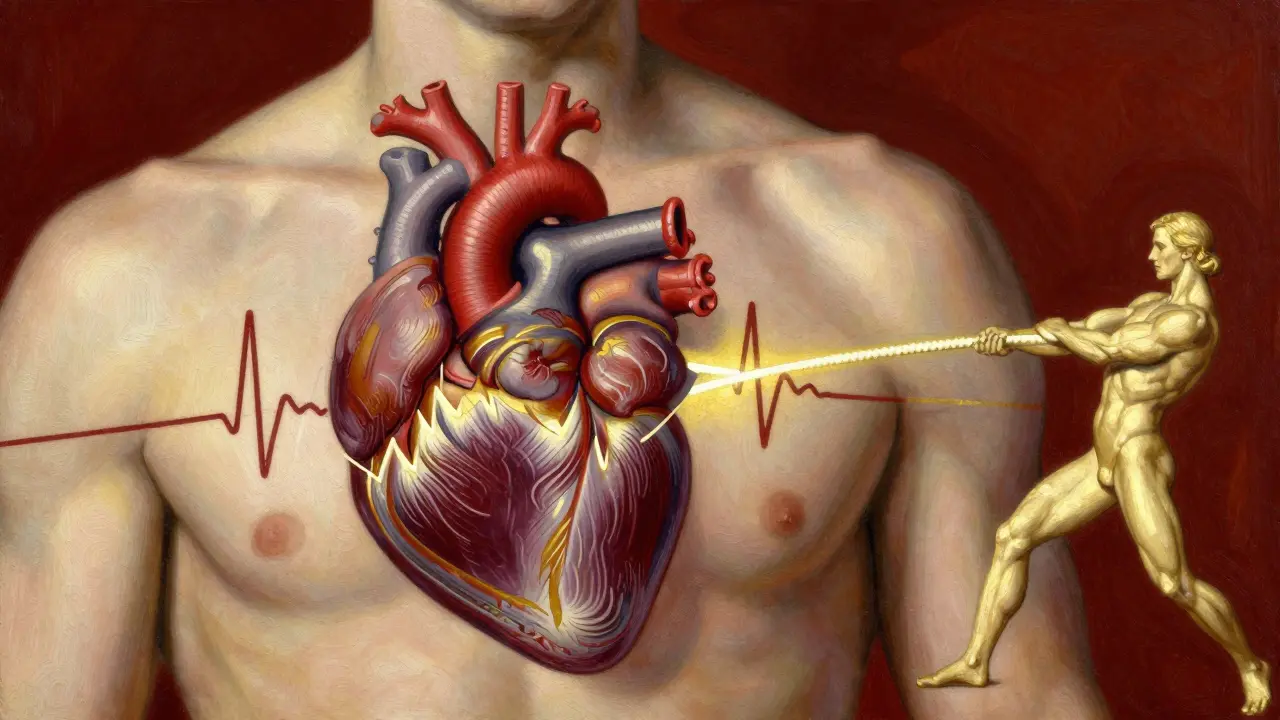
Your heart relies on a steady electrical rhythm. OSA throws a wrench into that system. When you stop breathing, the pressure inside your chest swings wildly-sometimes as low as -80 cm H2O. This creates a massive strain on the cardiac chambers and triggers an autonomic imbalance. Imagine a tug-of-war between the vagus nerve (which slows the heart) and sympathetic surges (which speed it up). This instability is a breeding ground for arrhythmias.
The most common result is Atrial Fibrillation (AFib). Research from UT Southwestern Medical Center indicates that people with OSA experience AFib episodes 3 to 5 times more often than those without it. While standard high blood pressure might increase AFib risk by 50%, severe OSA can spike that risk by a staggering 140%. It's not just about the heart beating irregularly; it's about the physical scarring, or atrial fibrosis, that intermittent oxygen loss causes in the heart tissue.
| Risk Factor | Impact on AFib Risk | Primary Mechanism | Reversibility |
|---|---|---|---|
| Hypertension | ~50% Increase | Pressure on artery walls | Manageable with meds/diet |
| Severe OSA (AHI 30+) | ~140% Increase | Intermittent hypoxia & pressure swings | Highly reducible via CPAP |
| Obesity | Moderate Increase | Systemic inflammation | Long-term lifestyle change |
Beyond the Rhythm: Heart Failure and Stroke
The danger doesn't stop at a fast heartbeat. The repeated stress of OSA can actually change the shape and function of your heart. Between 35% and 45% of OSA patients show evidence of left ventricular diastolic dysfunction-meaning the heart can't relax properly to fill with blood. This is a direct path toward heart failure. In fact, some estimates suggest OSA increases the risk of heart failure by up to 140%.
Then there is the risk of stroke. When your oxygen levels drop and your blood pressure spikes, it creates a perfect storm for vascular damage. The American Heart Association reports a 60% increase in stroke risk for those with OSA. Because the heart is struggling to pump effectively against the pressure changes in the chest, blood flow to the brain can become compromised, making the risk of a clot or rupture much higher.
Breaking the Cycle: The Role of CPAP and Treatment
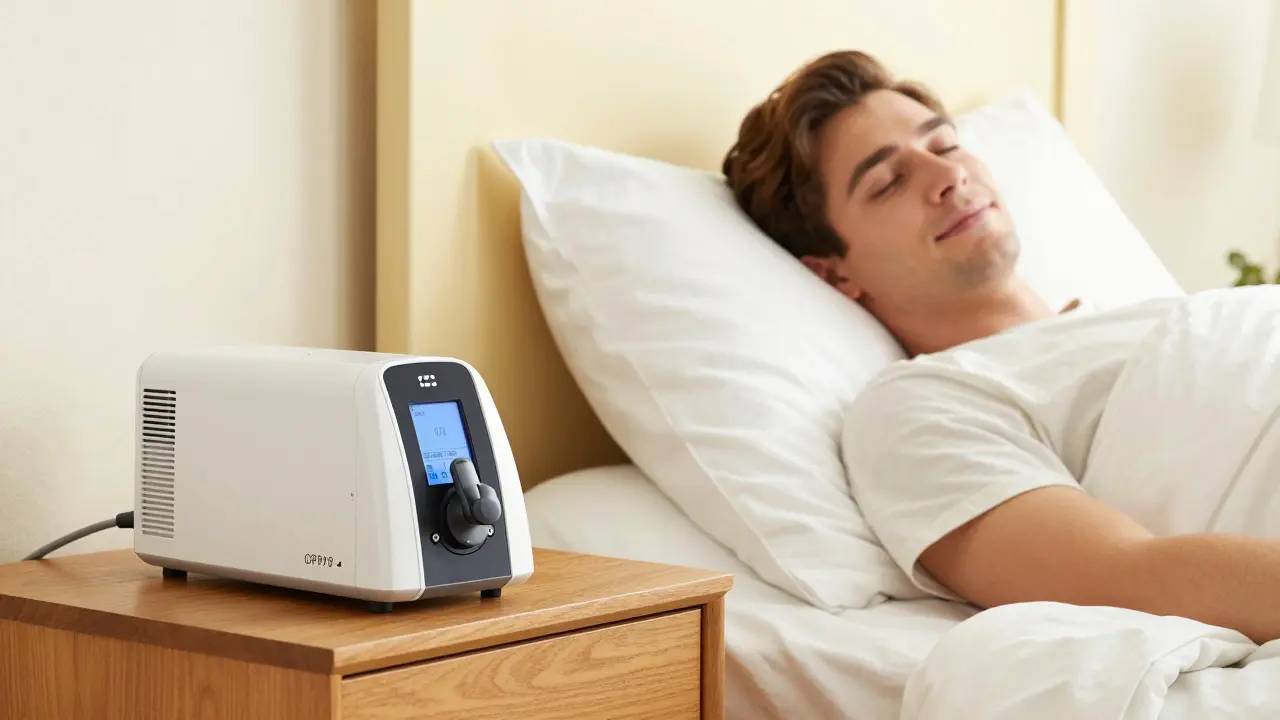
The most critical takeaway here is that these risks aren't permanent. Unlike some genetic predispositions, the cardiovascular damage from OSA can be significantly halted or even reversed. The gold standard is CPAP Therapy (Continuous Positive Airway Pressure). By pumping a steady stream of filtered air into your throat, the machine acts as a "pneumatic splint," keeping the airway open so you never stop breathing.
The numbers for CPAP are impressive. On average, consistent users see a drop in systolic blood pressure of 5-10 mmHg. More importantly, the recurrence of atrial fibrillation can drop by 42% after a year of use. For some, this means fewer medications and a significantly lower chance of a heart attack. If CPAP isn't an option, newer alternatives like Inspire Therapy (hypoglossal nerve stimulation) are showing a 79% reduction in AHI for eligible patients.
Practical Steps for Diagnosis and Adherence
If you wake up feeling like you haven't slept, or if your partner says you sound like a freight train, it's time for a screen. You don't always need to spend a night in a clinic. About 80% of cases can now be diagnosed via home sleep apnea testing. However, if you have complex heart issues, a full in-lab polysomnography is usually the safer bet to get a precise AHI reading.
The hardest part isn't the diagnosis-it's the adherence. About 30% of people quit CPAP in the first year because the mask is uncomfortable or the air feels too strong. To make it work, try these pro tips:
- Use a Ramp Setting: This starts the pressure low and gradually increases it as you fall asleep so it doesn't feel like a wind tunnel.
- Humidification: Dry nasal passages are a common reason people quit. Use the built-in humidifier to keep the air moist.
- Fresh Gear: Replace mask cushions every three months. A leaky mask makes the therapy ineffective and annoying.
Can sleep apnea cause a heart attack?
While sleep apnea itself isn't a heart attack, it significantly increases the risk. The combination of intermittent hypoxia (low oxygen) and sudden spikes in blood pressure puts immense strain on the coronary arteries, increasing the risk of coronary artery disease by 30% and making a heart attack more likely over time.
Will using CPAP lower my blood pressure?
Yes, for many people. By eliminating the nightly adrenaline surges and oxygen drops, CPAP can reduce systolic blood pressure by an average of 5-10 mmHg. Some patients find they can even reduce their blood pressure medication under a doctor's supervision.
Is it only older people who should worry about OSA and heart risk?
No. Recent research from UT Southwestern Medical Center has shown that OSA increases cardiovascular disease risk even in adults under 40. Early intervention in younger adults is crucial to prevent permanent heart scarring and chronic hypertension.
What is the difference between OSA and Central Sleep Apnea?
Obstructive Sleep Apnea (OSA) is a physical blockage of the airway. Central Sleep Apnea occurs when the brain fails to send the signal to the muscles to breathe. While both affect sleep, OSA has a much stronger and more direct mechanical link to hypertension and AFib due to the pressure changes in the chest.
How do I know if my snoring is actually sleep apnea?
Snoring alone isn't always apnea, but "gasping" or waking up choking is a major red flag. Other signs include excessive daytime sleepiness, waking up with a dry mouth or headache, and having high blood pressure that is hard to control. A sleep study (polysomnography) is the only way to confirm a diagnosis.
Next Steps for Better Heart Health
If you suspect you have OSA, don't wait for a cardiac event to take action. Start by keeping a sleep diary and noting how often you wake up feeling exhausted. Schedule a visit with your primary care provider and specifically ask for an OSA screening, especially if you have a history of hypertension or AFib. For those already on CPAP, focus on your "hours of use"-aiming for at least 4 hours a night is where the most significant cardiovascular benefits are seen. Your heart works hard for you 24/7; giving it a night of uninterrupted oxygen is the best way to pay it back.




julya tassi
April 21 2026This is so scary! 😱 I never knew snoring could actually damage the heart like that.