
More than 270 generic drugs are currently in short supply across the U.S., and the problem isn’t getting better. These aren’t niche medications-they’re the ones hospitals and clinics rely on every day: antibiotics, IV fluids, chemotherapy drugs, and basic painkillers. When these drugs disappear from shelves, it’s not just an inconvenience. It’s a threat to patient safety. The reason? A broken supply chain built on thin profits, overseas dependence, and fragile manufacturing networks.
Why Generic Drugs Are the Weakest Link
Generic drugs make up 90% of all prescriptions filled in the U.S., but they account for just 13.1% of total drug spending. That’s because they’re cheap. And that’s exactly the problem. Manufacturers can’t make much money on them, so they cut corners-often by relying on the lowest-cost suppliers, even if those suppliers are far away and hard to monitor. Most active pharmaceutical ingredients (APIs) used in U.S. generics come from just two countries: China and India. Less than 30% of APIs are made in the U.S. China alone supplies about 40% of the world’s APIs. This concentration means a single factory shutdown, a natural disaster, or a political dispute can ripple through the entire system. In 2023, a tornado damaged a Pfizer plant in Kentucky, halting production of 15 essential medications. In India, FDA inspections found quality violations at a cisplatin manufacturing site, triggering a nationwide shortage of this critical chemotherapy drug.Sterile Injectables Are the Most Vulnerable
Not all generic drugs are equally at risk. Sterile injectables-like IV fluids, epinephrine, heparin, and chemotherapy agents-are the most likely to go missing. Why? Because making them is complex. They require clean rooms, sterile equipment, and highly trained staff. A single contamination can shut down an entire production line. And because these drugs often sell for under $5 per unit, there’s little room to absorb the cost of quality control or backup systems. The FDA has identified around 20 essential injectable drugs that were at high risk of shortage during the pandemic. Even today, these drugs remain the most frequent entries on the shortage list. Hospitals report running out of saline bags, antibiotics like vancomycin, and even basic anesthetics. Pharmacists spend 20 to 30% of their workweek just trying to find alternatives or ration what’s left.One Factory, One Drug: The Single Point of Failure
For many older generic drugs, manufacturing has collapsed down to just one or two companies. If one of them has a problem, there’s no backup. Take the case of doxycycline, a common antibiotic. At one point, only two manufacturers made it in the U.S. When one had an FDA inspection failure, the other couldn’t scale up fast enough. Patients went without. That’s not a fluke-it’s the norm. Brand-name drugmakers don’t face this because they have higher margins. They invest in multiple suppliers, stockpile inventory, and design flexible production lines. Generic manufacturers don’t have that luxury. They’re locked into razor-thin pricing models, often bidding against each other for government contracts. The lowest bidder wins-and the system rewards the cheapest, not the most reliable.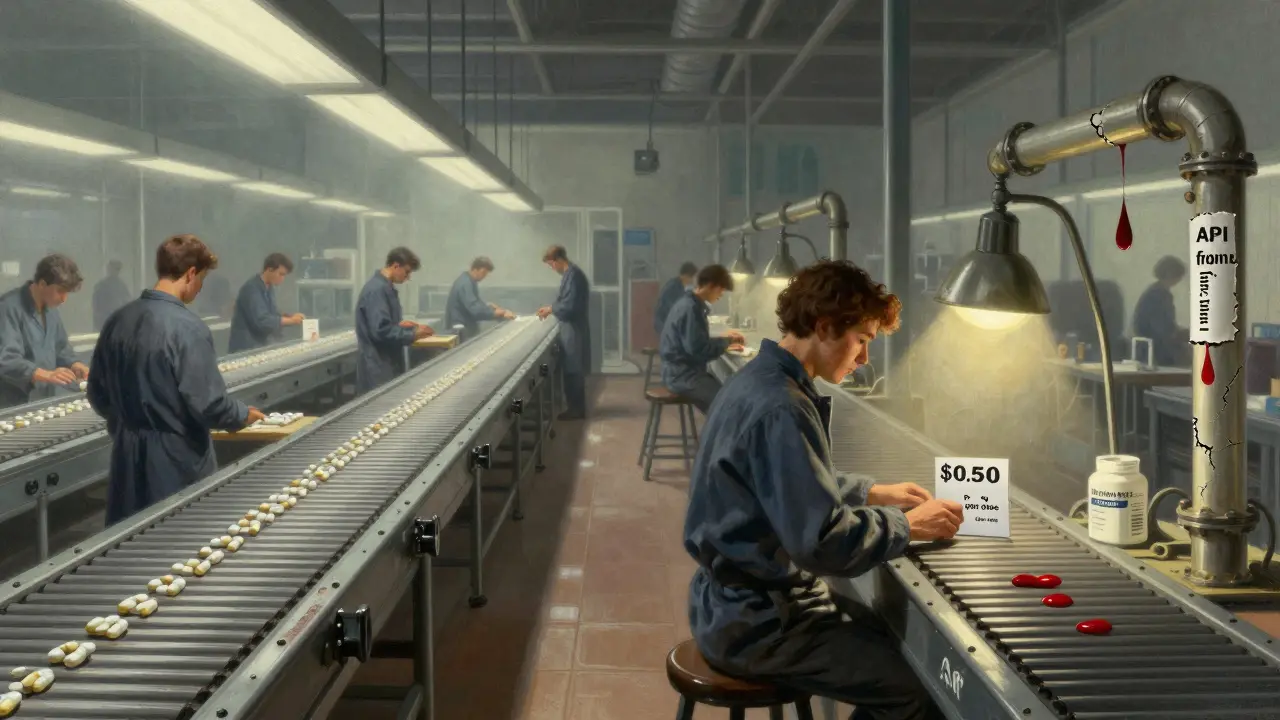
Why Tariffs Won’t Fix This
Some policymakers suggest imposing tariffs on imported APIs to push production back to the U.S. But experts warn this could make things worse. A 50% to 200% tariff on Chinese or Indian ingredients would immediately raise the cost of generic drugs. Manufacturers would either stop making them or pass the cost to hospitals and patients. Either way, access drops. CSIS analysis shows that tariffs could lead to higher prices, delayed treatments, and more shortages-not fewer. The real issue isn’t where the drugs are made; it’s that no one is paid enough to make them reliably. Even if you built a new factory in Ohio, you’d need $20-30 billion in investment and 5-7 years to bring it online. And without a sustainable pricing model, it would sit empty.What’s Being Done-and Why It’s Not Enough
There are proposals on the table. S.2062 would require manufacturers to keep six months of stock for critical drugs. The FDA is pushing for more transparency in API sourcing. Congress is exploring public-private partnerships to support domestic production. But implementation is slow. Federal agencies like HHS have seen staff cuts and funding reductions, making oversight harder. At the same time, inspections of foreign facilities have increased, while domestic inspections have declined. That creates a dangerous gap: more scrutiny overseas, less at home. Meanwhile, manufacturers still don’t know what’s coming next. One month they’re told to ramp up production; the next, they’re told to cut costs.
Real Impact: Patients, Nurses, and Doctors on the Front Lines
This isn’t a theoretical problem. In hospitals, nurses scramble to find substitutes for missing drugs. Doctors delay cancer treatments because cisplatin isn’t available. Surgeons cancel operations because the anesthetic ran out. One hospital pharmacist described the stress as "constant." Families are told their loved one’s medication isn’t in stock-and there’s no timeline for when it might return. The American College of Physicians found that shortages hit internal medicine and subspecialties hardest. Diabetics without insulin. Cancer patients without chemo. Newborns without antibiotics. These aren’t rare cases-they’re happening weekly.What Needs to Change
Fixing this won’t happen overnight. But it won’t happen at all without three key changes:- Price floors for critical generics. Drugs like epinephrine and saline need a minimum price that covers safe, reliable production-not just the cheapest bid.
- Multi-source manufacturing. The government should incentivize at least three manufacturers for every essential generic drug to eliminate single points of failure.
- Transparent API tracking. Patients and providers deserve to know where the active ingredients in their meds come from. Labeling requirements would help build accountability.
What You Can Do
If you’re a patient, ask your pharmacist if your medication is on the shortage list. If you’re a provider, document every shortage you encounter. These reports feed into the FDA’s tracking system and help prioritize action. The system is failing because it’s designed to be cheap-not safe. Until we treat generic drugs like the lifelines they are, shortages will keep happening. And every time they do, someone’s health is on the line.Why are generic drug shortages so common?
Generic drug shortages are common because manufacturers operate on extremely thin profit margins. With little financial incentive to invest in quality control, backup production, or domestic manufacturing, companies rely on low-cost overseas suppliers. When one factory shuts down due to quality issues, natural disasters, or regulatory actions, there’s often no alternative supplier-especially for older, low-priced drugs.
Are brand-name drugs affected by the same shortages?
Brand-name drugs rarely face the same level of shortages because their manufacturers have higher profit margins. This allows them to maintain multiple suppliers, stockpile inventory, and absorb cost increases. They also invest in more resilient production networks. Generic manufacturers, by contrast, compete on price alone, leaving them vulnerable to any disruption in their supply chain.
Which types of generic drugs are most likely to be in short supply?
Sterile injectables are the most vulnerable-things like IV fluids, chemotherapy drugs, antibiotics, and epinephrine. These require complex, sterile manufacturing environments that are expensive to maintain. Because they’re often priced under $5 per dose, manufacturers have little room to invest in redundancy or quality upgrades. Oral pills are less affected because they’re easier and cheaper to produce.
Can the U.S. just make all its generic drugs domestically?
Rebuilding full domestic production isn’t feasible in the near term. It would take $20-30 billion in investment and 5-7 years to build the necessary facilities, train workers, and get regulatory approvals. Even then, without higher prices for generics, new factories wouldn’t be profitable. The solution isn’t just onshoring-it’s creating sustainable economic models that reward reliable production.
Do pharmaceutical tariffs help reduce shortages?
No-tariffs on imported ingredients like APIs would likely make shortages worse. They’d increase production costs, forcing manufacturers to either raise prices (making drugs unaffordable) or stop making them entirely. Experts warn that tariffs could trigger delays, reduce supply, and push more drugs onto the shortage list, especially for essential medications like antibiotics and IV fluids.
How do drug shortages affect patient care?
Drug shortages directly delay or cancel treatments. Cancer patients miss chemotherapy doses. Diabetics can’t get insulin. Newborns go without antibiotics. Hospitals resort to dangerous substitutions-using less effective or riskier alternatives. Pharmacists spend up to 30% of their time managing shortages. The result is increased patient risk, longer hospital stays, and higher costs.
Without systemic changes, the cycle will continue: low prices → thin margins → single-source production → shortages → patient harm. The fix isn’t about blame-it’s about value. If we want safe, reliable access to essential medicines, we have to pay for them like they matter.





Tru Vista
January 4 2026APIs from China? LOL. We’re literally trusting our antibiotics to a country that doesn’t even have FDA oversight. And don’t get me started on how the FDA inspects 3x more foreign plants than domestic ones. Classic. Also, why is no one talking about the fact that Medicare pays $0.02 for a bag of saline? That’s not a price-it’s a joke.