
Statin Exercise Risk Calculator
How Your Exercise Routine Affects Statin Safety
This tool estimates your risk of muscle pain when exercising while taking statins based on key factors from the latest research. Results are not medical advice but help you make informed decisions with your doctor.
Millions of people take statins to lower their cholesterol and protect their heart. But for many, the real problem isn’t the pill itself-it’s what happens when they try to move more. Muscle pain. Weakness. Fatigue. It’s not just in their head. And it’s not always the statin’s fault. The truth? Exercise and statins don’t have to be enemies. But they do need to be handled with care.
Why Do Statins Cause Muscle Pain?
Statins work by blocking an enzyme your liver uses to make cholesterol. But that same enzyme is also involved in making coenzyme Q10 (CoQ10), a compound your muscles need to produce energy. When CoQ10 drops-by as much as 40% within 30 days of starting a statin-your muscles don’t have enough fuel to recover properly, especially after physical activity. Not everyone feels this. About 5-10% of people on statins report muscle symptoms in clinical trials. But real-world numbers? Higher. One 2014 study found nearly 3 in 10 users experienced muscle discomfort. The type of statin matters too. Lipophilic statins like atorvastatin and simvastatin slip into muscle tissue more easily than hydrophilic ones like pravastatin or rosuvastatin. That’s why switching from atorvastatin 80 mg to rosuvastatin 20 mg has helped marathon runners stay active without pain.Exercise Isn’t the Enemy-But Intensity Is
If you’re on a statin, you don’t need to quit working out. In fact, you shouldn’t. The American Heart Association recommends 150 minutes of moderate exercise every week. But not all exercise is equal when you’re on statins. A 2023 study from Radboud University Medical Center tracked 105 people-some on statins, some not-after a 30-minute bike ride at moderate intensity. Muscle damage markers like creatine kinase (CK) didn’t spike any higher in statin users than in those not taking them. That’s good news. It means walking, cycling, swimming, or light strength training at a steady pace won’t trigger muscle injury. But push too hard? That’s where trouble starts. A 2007 study of Boston Marathon runners showed statin users had nearly 50% higher CK levels after the race than non-users. Another study found eccentric movements-like downhill running or lowering weights slowly-caused CK levels to jump 300% in statin users, compared to 200% in others. That’s a big difference. High-intensity interval training (HIIT), heavy lifting, or long-distance events can overwhelm muscles already struggling with low energy.Who’s at Highest Risk?
Some people are more likely to feel muscle pain on statins. Age plays a role. Older adults have less muscle mass and slower recovery. Women report symptoms more often than men. And if you’re already active before starting statins, you’re less likely to develop pain-Harvard Health found regular exercisers were 37% less likely to have muscle issues. Genetics matter too. A variant in the SLCO1B1 gene makes it harder for your body to clear statins from muscle tissue. People with this variant are more than twice as likely to develop muscle pain during exercise. And high doses? Atorvastatin 80 mg carries a 10.5-fold higher risk of serious muscle damage than pravastatin 40 mg, according to FDA data.What Does the Science Say About Exercise and Statins?
The latest guidelines are clear: Keep moving. The 2023 American College of Cardiology says moderate exercise is safe-even for people with muscle symptoms. The key word? Moderate. The 4Days Marches study in the Netherlands tested 100 athletes walking 30-50 km a day for four straight days. Both statin users and non-users saw their CK levels rise from 150 to about 350 U/L. No difference. That’s proof that sustained, steady activity doesn’t harm muscles on statins. But here’s the catch: statins can dull the benefits of exercise. A 2013 study found people on simvastatin gained 6.9% less in VO2 max (a measure of cardiovascular fitness) after 12 weeks of training than those on placebo. And a 2023 trial showed high-dose atorvastatin reduced mitochondrial function in muscle by over 15%. That means even if you don’t feel pain, your heart and muscles might not be getting the full boost from your workouts.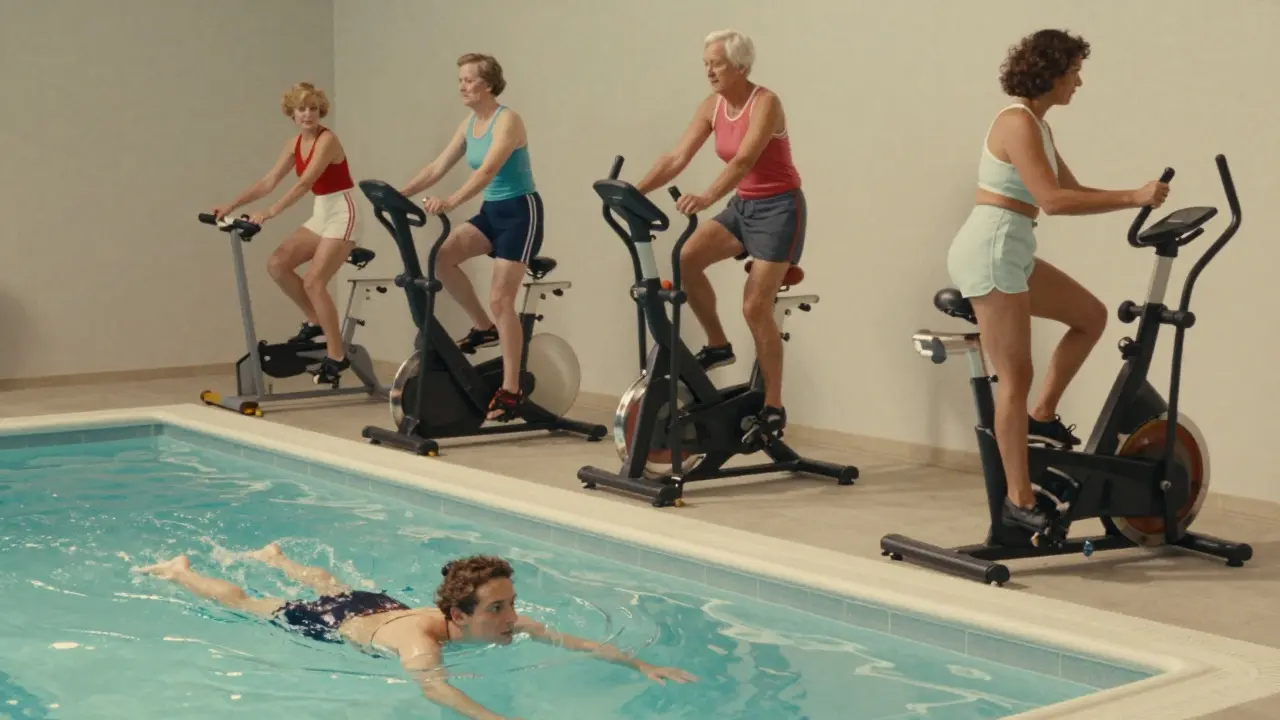
What Should You Do? A Practical Guide
If you’re on statins and want to stay active, here’s what works:- Start slow. Walk 10-15 minutes a day at a pace where you can talk but not sing. Increase by 5 minutes each week.
- Avoid HIIT and heavy lifting. Save sprinting, burpees, and max-effort squats for when you’re off statins-or at least until your doctor gives the green light.
- Choose low-impact cardio. Cycling, swimming, elliptical machines, and brisk walking are your best friends.
- Listen to your body. If your legs feel heavy or sore for more than 48 hours after a workout, you pushed too hard.
- Track your pain. Statin pain is constant-it doesn’t go away with rest. Exercise pain comes and goes with activity.
When to Talk to Your Doctor
Don’t ignore muscle pain. If it’s severe, or if you notice dark urine, extreme weakness, or swelling, get checked immediately. That could be rhabdomyolysis-a rare but dangerous condition where muscle breaks down and floods your bloodstream. One cyclist in 2023 had CK levels hit 12,450 U/L (normal is 30-200) after combining high-dose simvastatin with intense training. She ended up hospitalized. Your doctor can help you:- Switch to a hydrophilic statin like rosuvastatin or pravastatin
- Lower your dose or take it every other day
- Test for the SLCO1B1 gene variant
- Check your CK levels before and after starting or changing exercise
Supplements and Other Strategies
CoQ10 supplements (200 mg daily) have shown promise in reducing muscle pain in some studies. A 2023 meta-analysis found that combining CoQ10 with a gradual exercise plan improved symptom relief in 78% of users. Vitamin D deficiency is also linked to muscle pain. Get your levels checked. If you’re low, supplementation can help. And don’t underestimate the power of timing. Taking your statin at night-when your liver is most active making cholesterol-can reduce muscle exposure. Some people also find that avoiding alcohol on workout days helps.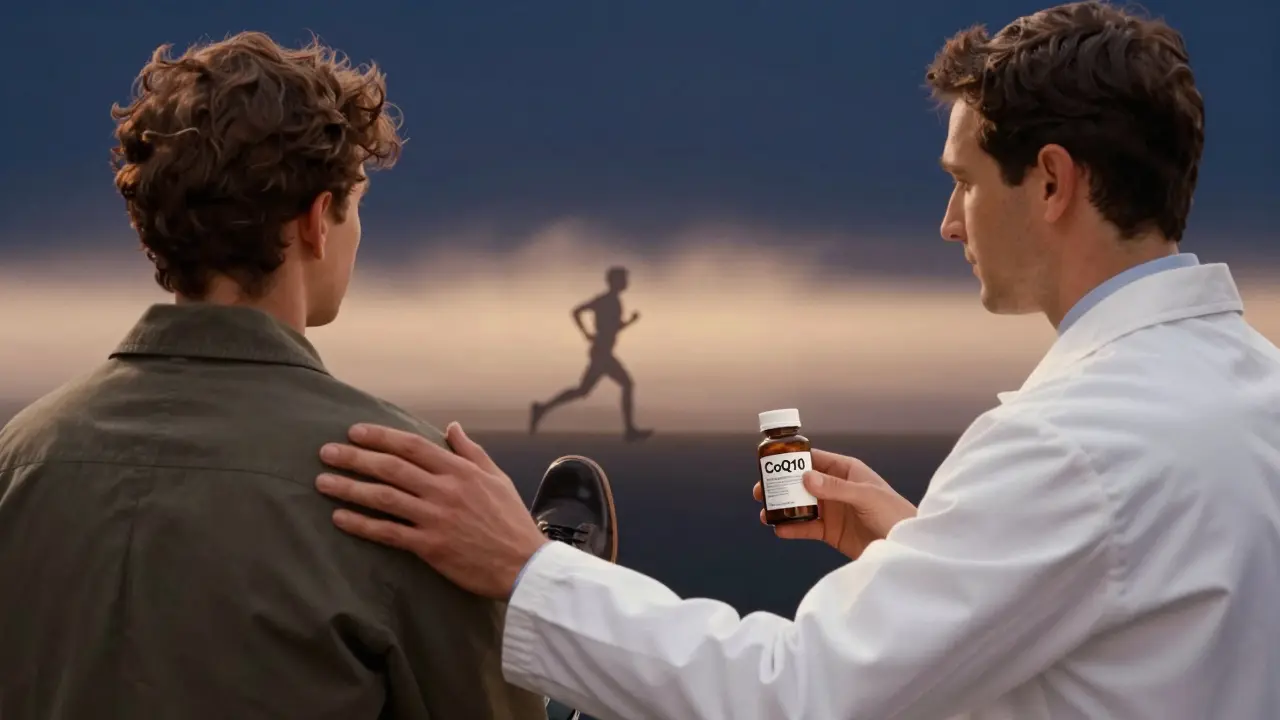
Real People, Real Results
John Davis, a 58-year-old marathoner from Colorado, switched from atorvastatin to rosuvastatin and kept running 40 miles a week. His pain faded in six weeks. He didn’t stop running. He just changed his medication. Maria Rodriguez, a competitive cyclist, wasn’t so lucky. She pushed through pain, kept racing, and ended up in the hospital. Her story isn’t rare. A 2023 survey found 61% of statin users quit exercise after muscle pain started-mostly because they were scared it would get worse. But you don’t have to be one of them.What’s Next?
The Statin-Exercise Interaction Registry (SEIR), launched in April 2024, is tracking 10,000 people to better understand how statins affect muscle recovery during physical activity. Early results are expected by late 2025. Meanwhile, the American College of Sports Medicine is finalizing new guidelines for statin users, due out in early 2025. The message is clear: Statins save lives. Exercise saves lives. The goal isn’t to choose one over the other. It’s to find the balance that lets you do both-safely, consistently, and without pain.Can I still exercise if I have muscle pain from statins?
Yes, but you need to adjust. Moderate exercise like walking, swimming, or cycling at a steady pace is safe and even helpful. Avoid high-intensity workouts like HIIT, heavy lifting, or long-distance running until your symptoms improve. Start slow-10-15 minutes a day-and build up gradually. If pain lasts more than 48 hours after a workout, you’ve pushed too hard.
Which statin causes the least muscle pain?
Hydrophilic statins like rosuvastatin and pravastatin are less likely to cause muscle pain because they don’t penetrate muscle tissue as easily as lipophilic ones like atorvastatin or simvastatin. Studies show switching from atorvastatin to rosuvastatin reduces muscle symptoms in about 65% of cases. Dose matters too-lower doses (like 10-20 mg) carry less risk than high doses (80 mg).
Does CoQ10 help with statin muscle pain?
Evidence suggests it can. Statins reduce your body’s natural CoQ10, which muscles need for energy. Taking 200 mg of CoQ10 daily has helped reduce muscle pain and fatigue in multiple studies. A 2023 meta-analysis found that combining CoQ10 with a gradual exercise plan improved symptoms in 78% of users. It’s not a cure, but it’s a low-risk support tool.
Should I stop exercising if my CK levels rise?
Not necessarily. CK levels naturally rise after exercise-even in healthy people. Normal post-exercise levels can reach 500-1,000 U/L. If your CK goes above 1,000 U/L (5 times the upper limit), or if you feel extreme weakness or dark urine, stop exercising and contact your doctor. That could signal early muscle damage. Otherwise, mild increases are expected and not dangerous.
Can statins stop me from getting fit?
They can blunt some of the benefits. Studies show statins, especially high-dose ones, can reduce improvements in cardiovascular fitness (VO2 max) by up to 7%. That doesn’t mean you can’t get stronger or healthier-it just means you might not see the same gains as someone not on statins. Focus on consistency, not peak performance. Even modest gains lower your heart risk significantly.



Tim Goodfellow
December 19 2025I’ve been on rosuvastatin for 3 years and still run 5Ks every weekend. The key? No HIIT, no heavy squats, and I take my statin at night. My legs feel like jelly after a long run? I walk it off. No drama. Just consistency.
Statins aren’t the enemy. Ignorance is.