Medication Bladder Impact Checker
Select Your Medications
Check the boxes next to drugs you are currently taking.Analysis Results
Likelihood of bladder issues:
--
Potential Symptoms:
Recommended Action:
Select your medications and click "Check" to see how they might affect your bladder health.
Have you ever started a new prescription and suddenly found yourself running to the bathroom every hour? Or perhaps you wake up multiple times a night just to pee, leaving you exhausted and frustrated. It is easy to blame aging or drink too much water before bed. But what if the culprit is sitting right there in your medicine cabinet?
Frequent urination and urinary urgency are not just annoying; they can significantly disrupt your sleep, work, and social life. According to the American Urological Association, lower urinary tract symptoms affect about one-third of adults over 40. Shockingly, an estimated 15-20% of these cases are directly linked to medications. This means that for many people, the solution isn't more Kegels or less coffee-it might be a simple adjustment to their drug regimen.
How Medications Mess With Your Bladder
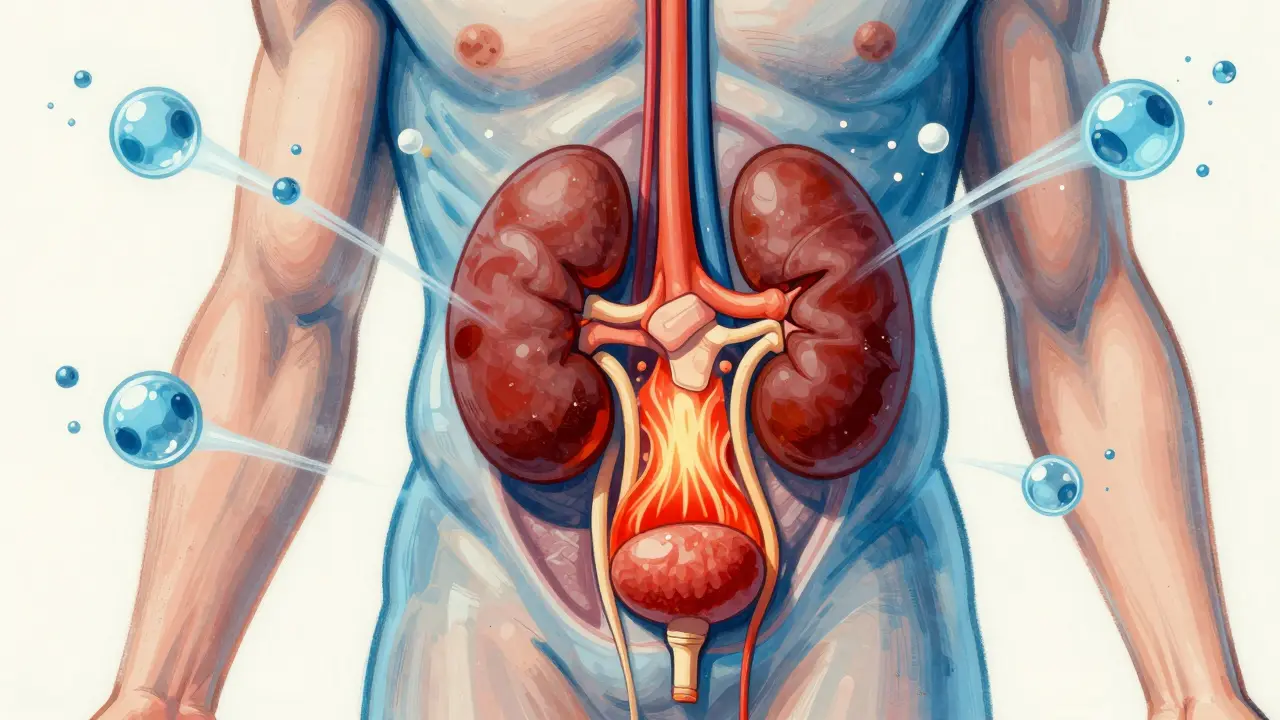
Your bladder is a sophisticated muscle called the detrusor muscle. It stretches as it fills and contracts when you need to go. Medications interfere with this process in three main ways: by making your kidneys produce more urine, by relaxing the bladder muscle so it doesn't signal correctly, or by blocking the nerves that tell your brain when to hold it.
When a drug alters fluid balance in your kidneys, like diuretics, you simply have more liquid to store. When a drug affects nerve signals, like certain antidepressants, your bladder might feel full even when it is half-empty, creating a false sense of urgency. Understanding which mechanism is at play helps you talk to your doctor about solutions.
The Usual Suspects: Diuretics (Water Pills)
If you take medication for high blood pressure or heart failure, you are likely on a diuretic. These drugs are designed to help your body get rid of excess salt and water. Common names include hydrochlorothiazide, furosemide (Lasix), and spironolactone (Aldactone).
These meds work fast. Within two hours of taking them, your urine volume can increase by 20-50%. The Cleveland Clinic notes that about 65% of patients on diuretics experience increased daytime frequency. If you take your pill in the evening, you are basically guaranteeing a sleepless night. A study in the Journal of Urology found that high doses of furosemide led to urgency severe enough to require adult incontinence products for nearly 30% of users.
Pro Tip: Do not stop taking your diuretic. Instead, ask your doctor if you can shift your dose to earlier in the day. Taking it before 2 PM can reduce nighttime trips by up to 60%.
Blood Pressure Meds: Calcium Channel Blockers
Another common class of heart medications, calcium channel blockers, includes drugs like amlodipine, nifedipine, and verapamil. While they don't make you pee more volume, they change how your bladder muscles contract.
Calcium is essential for smooth muscle contraction. By blocking calcium channels, these drugs can weaken the bladder's ability to squeeze out all the urine. This leads to incomplete emptying, which causes you to feel the need to go again soon after. Research published in the Journal of Hypertension showed that patients on nifedipine woke up 1.8 more times per night to urinate compared to those on a placebo. Verapamil has the strongest link to this issue, increasing the risk of nocturia by 42%.
Mental Health Meds: Antidepressants and Mood Stabilizers
Psychiatric medications often have complex effects on the nervous system, including the nerves controlling your bladder. Selective serotonin reuptake inhibitors (SSRIs) and serotonin-norepinephrine reuptake inhibitors (SNRIs) like venlafaxine (Effexor), escitalopram (Lexapro), and fluoxetine (Prozac) can worsen overactive bladder symptoms in about 22% of patients.
Mood stabilizers present a different challenge. Lithium, used for bipolar disorder, can cause a condition called diabetes insipidus in about 1% of long-term users. This is not related to blood sugar; it is a kidney issue where the body cannot concentrate urine. Patients may produce over 3 liters of urine daily, leading to severe dehydration and constant urgency. If you are on lithium and notice extreme thirst and urination, tell your doctor immediately.
Antipsychotics like clozapine and risperidone also carry risks. They often have anticholinergic properties, which relax the bladder muscle too much. This can lead to urinary retention-where you can't empty fully-which then causes overflow incontinence (leaking because the bladder is too full).
Allergy Meds and Cold Remedies
Older generation antihistamines like diphenhydramine (Benadryl) and chlorpheniramine are notorious for causing urinary retention. They block acetylcholine, a chemical that tells your bladder to contract. For men with enlarged prostates, this can be dangerous, potentially leading to acute urinary blockage. Even in women, this relaxation can cause the bladder to hold too much urine, leading to sudden leaks when pressure builds up.

Other Culprits: ACE Inhibitors and Alpha-Blockers
ACE inhibitors, such as captopril, are known for causing a dry cough. This chronic cough increases abdominal pressure, which can stress the pelvic floor and lead to stress incontinence-leaking when you sneeze, laugh, or cough. About 15% of users experience this specific chain reaction.
On the flip side, alpha-blockers like tamsulosin (Flomax) are prescribed to *help* men with prostate issues pee better. However, they relax the muscles around the bladder neck so much that some men experience retrograde ejaculation (semen goes into the bladder instead of out). While not harmful, it can be confusing and distressing if you are unaware it is a side effect.
| Medication Class | Common Examples | Primary Symptom | Mechanism |
|---|---|---|---|
| Diuretics | Furosemide, Hydrochlorothiazide | Frequent urination, Nocturia | Increased urine production by kidneys |
| Calcium Channel Blockers | Amlodipine, Nifedipine | Nocturia, Weak stream | Impaired bladder muscle contraction |
| Antidepressants (SSRIs/SNRIs) | Venlafaxine, Escitalopram | Urgency, Overactive bladder | Neural signaling interference |
| Antihistamines | Diphenhydramine (Benadryl) | Retention, Overflow leakage | Relaxes detrusor muscle too much |
| Mood Stabilizers | Lithium | Polyuria (extreme volume) | Kidney concentrating defect (Diabetes Insipidus) |
What You Can Do About It
Before you assume your bladder is failing, look at your medication list. The International Continence Society recommends a systematic review for anyone with new urinary symptoms. Here is a practical approach:
- Check the Timing: Did symptoms start within 2-8 weeks of starting a new med? If yes, there is a strong link.
- Rule Out Other Causes: Get a simple urinalysis to check for infection or diabetes. Ensure you aren't drinking excessive fluids late in the day.
- Adjust the Schedule: For diuretics, moving the dose to morning or early afternoon is the first line of defense.
- Bladder Retraining: If you must stay on the medication, practice timed voiding. Go to the bathroom every 2-3 hours regardless of urge, gradually extending the time. Combined with pelvic floor exercises, this can reduce episodes by 55%.
- Talk to Your Doctor: Ask if there is an alternative medication with fewer urological side effects. For example, switching from a calcium channel blocker to an ARB might help if blood pressure allows.
Do not stop any medication abruptly. The goal is management, not necessarily elimination of the drug, unless the side effects are unmanageable. Many patients find relief simply by splitting their doses or adjusting timing, turning a disruptive side effect into a manageable routine.
Can stopping my medication fix frequent urination?
In many cases, yes. If a medication is causing the symptom, discontinuing it under medical supervision often resolves the issue within days to weeks. However, never stop heart or mental health medications without consulting your doctor, as withdrawal can be dangerous. Often, switching to a different drug in the same class solves the problem.
Why do I wake up to pee only when I take blood pressure meds?
This is called nocturia. Diuretics increase urine volume, while calcium channel blockers can weaken bladder emptying. If you take these meds in the evening, your body produces more urine at night, or your bladder retains urine that irritates the lining, triggering the urge to go. Moving your dose to the morning usually helps.
Is frequent urination a sign of diabetes from medication?
Some medications, like lithium, can cause diabetes insipidus, which involves excessive urine output but is unrelated to blood sugar. Other meds might raise blood sugar slightly. If you have extreme thirst and urination, see your doctor for blood tests to rule out type 2 diabetes or kidney issues.
Can Benadryl cause urinary retention?
Yes. Diphenhydramine (Benadryl) has anticholinergic effects that relax the bladder muscle. This can prevent complete emptying, leading to retention. This is especially risky for older men with enlarged prostates. Consider non-drowsy alternatives like loratadine or cetirizine if allergies are the issue.
How long does it take for medication-induced urinary symptoms to go away?
If you adjust the timing or switch medications, improvement is often seen within a few days to two weeks. For bladder retraining techniques, it may take 6-8 weeks of consistent practice to see significant reduction in urgency and frequency.