
Why Your Hip Hurts Might Not Be What You Think
It’s not just aging. It’s not just overdoing it at the gym. If you’ve been dealing with persistent hip pain-especially when sitting, standing up, or twisting-you could be dealing with a labral tear, hip arthritis, or both. These aren’t simple injuries you can rest away. They’re structural problems that change how your hip moves, loads, and feels day after day. And the worst part? Many people don’t realize what’s really going on until the pain becomes unbearable.
Think of your hip joint like a ball-and-socket. The ball is the top of your thigh bone (femur), and the socket is the acetabulum in your pelvis. Surrounding that socket is a ring of tough cartilage called the labrum. It’s not just padding-it’s a seal. It holds joint fluid in, keeps the ball snug in the socket, and absorbs shock. When that labrum tears, you lose that seal. The joint starts to grind. Cartilage wears faster. And before you know it, you’re dealing with early arthritis.
Here’s the truth: 70-90% of people with a type of hip impingement called FAI (femoroacetabular impingement) have a labral tear. And 54% of people with hip arthritis also have a torn labrum. They don’t happen one after the other-they feed each other. A tear increases pressure on the cartilage. Worn cartilage makes the labrum more likely to tear. It’s a cycle.
Labral Tears: More Than Just a ‘Popping’ Sensation
Most people think a labral tear means you heard a pop during a workout. But that’s not always true. In fact, 38% of people over 50 have labral tears on MRI-and no pain at all. So if you’re getting an MRI and the report says ‘labral tear,’ don’t panic. The key isn’t just the image. It’s what you feel.
Real symptoms of a labral tear include:
- Deep groin pain, especially when sitting for more than 30 minutes
- A clicking, locking, or catching feeling in the hip
- Pain when getting out of a car or low chair
- Discomfort when rotating your leg inward, like tying your shoes
These aren’t random pains. They’re signs your hip’s mechanics are broken. The most common tear location? The front (anterior) of the labrum-78% of cases. That’s because most tears come from cam-type impingement: extra bone on the ball of your femur that scrapes against the socket during deep hip bends. Think squatting, yoga poses like pigeon, or even leaning forward to tie your shoes.
And here’s the kicker: women are 2.3 times more likely to get labral tears than men. Why? Pelvic anatomy. Women tend to have wider hips and more hip flexion, which increases impingement risk. That’s why you see so many female athletes, dancers, and yoga instructors dealing with this.
Arthritis in the Hip: When the Cartilage Gives Out
Arthritis doesn’t just happen overnight. It’s a slow erosion. The smooth cartilage that cushions your hip joint wears thin. Bone starts to rub on bone. Your body tries to fix it by growing bone spurs-osteophytes-that make the joint stiffer and more painful.
Doctors grade hip arthritis from 0 to 4 using the Kellgren-Lawrence scale:
- Grade 0: No signs
- Grade 1: Minor bone spurs
- Grade 2: Clear spurs, slight joint space narrowing
- Grade 3: Moderate narrowing, cartilage loss, more spurs
- Grade 4: Severe narrowing (<2mm), bone-on-bone contact, large spurs
If you’re over 65, about 30% of you have Grade 3 or 4 hip arthritis. That’s not rare. But here’s what most people don’t realize: once you hit Grade 3, conservative treatments like physical therapy or injections only delay the inevitable. About 45% of patients with advanced arthritis end up needing a total hip replacement within five years-no matter what they do.
That’s why timing matters. If you’re 40 with a labral tear and early cartilage wear (Grade 1-2), you have a real shot at saving your hip. If you’re 70 with bone-on-bone arthritis and a torn labrum, surgery on the labrum won’t fix the root problem. The cartilage is already gone.
Activity Modification: The Most Underused Tool
Doctors often push pills or surgery. But the most powerful, least talked about treatment? Changing how you move.
Activity modification isn’t about stopping everything. It’s about smart adjustments. It’s about protecting your hip so it doesn’t get worse.
Here’s what actually works, backed by clinical studies:
- Don’t bend your hip past 90 degrees. Sitting in low chairs, deep squats, or yoga poses like pigeon pose put dangerous pressure on the front of the hip. Use a higher chair. Sit on a cushion. Raise your car seat with a wedge cushion.
- Avoid twisting your hip while bent. Turning your foot inward while sitting or squatting is a major pain trigger. That’s why crossing your legs hurts. Try keeping your knees parallel.
- Limit continuous weight-bearing. Walking or standing for more than 30 minutes straight can overload the joint. Take breaks. Sit down. Walk in short bursts.
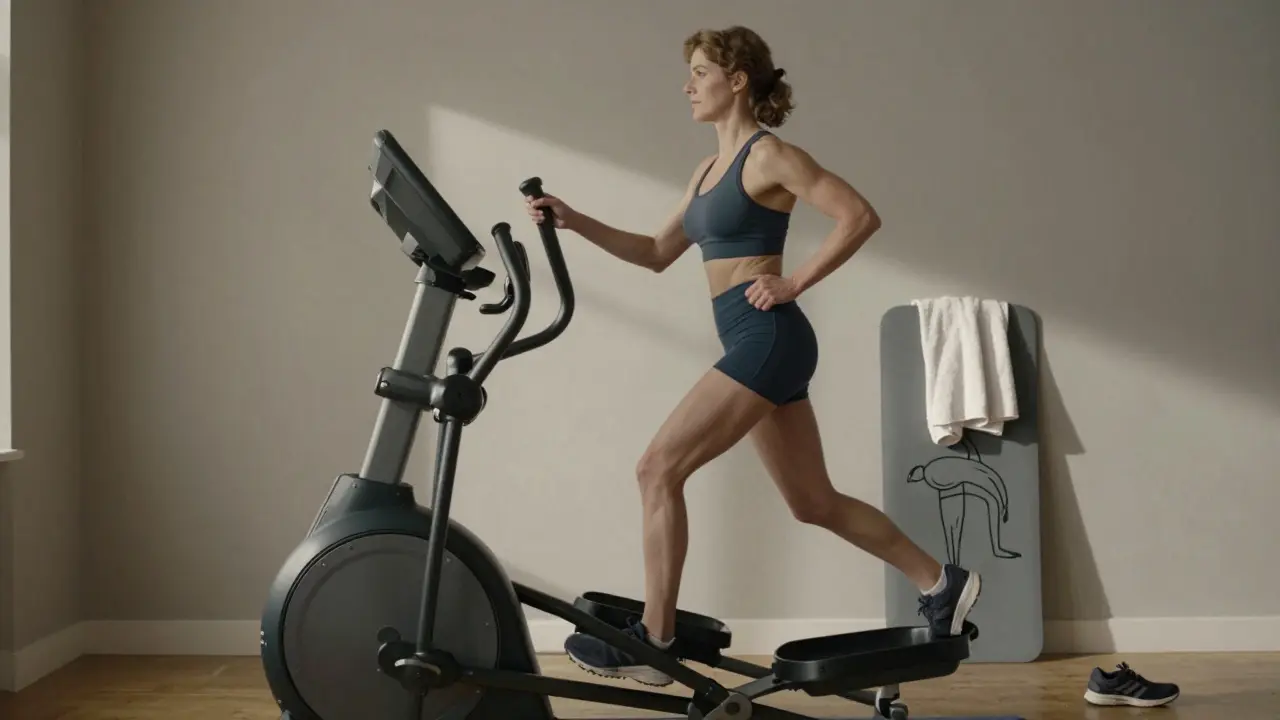
- Replace high-impact activities. Running? It’s out. Swimming? Great. Elliptical? Good. Cycling with the seat high? Perfect. These keep you moving without slamming your hip.
A 45-year-old yoga teacher from Cleveland cut out pigeon pose and reduced hip flexion in her classes. Within three months, her pain dropped 70%. No surgery. No shots. Just smarter movement.
And it’s not just exercise. Daily life changes matter too:
- Use a raised toilet seat-it reduces hip flexion by 15-20 degrees.
- Place a pillow between your knees when sleeping on your side-it keeps your hips aligned.
- Get up every 30 minutes if you sit at a desk. Set a timer.
People who follow these rules consistently report 40-60% pain reduction in mild to moderate cases. That’s better than most medications.
What About Injections and Surgery?
Let’s be clear: injections and surgery aren’t bad. But they’re not magic.
Corticosteroid injections can help for 3-4 months. They reduce swelling and pain. But if you get more than three a year, you risk damaging the cartilage further. That’s not a long-term fix.
Viscosupplementation (like Durolane) is a gel shot that adds lubrication. It helps about 55% of people, but the effect fades after six months. It’s not a cure. It’s a pause button.
Labral surgery comes in two forms: repair and debridement. Repair means sewing the tear back together. Debridement means trimming the frayed part. Repair is better-85-92% patient satisfaction at five years. Debridement? Only 65-75%. Why? Because you’re preserving the seal. Trimming it leaves the joint exposed.
But here’s the catch: surgery only works if you have the right problem. If you have cam-type FAI (alpha angle >55° on MRI), surgery plus rehab gives you a 73% better outcome than just rest and PT. If you’re over 60 with Grade 3-4 arthritis? Surgery on the labrum won’t help much. You’re better off preparing for a hip replacement.
And cost? A labral repair runs $18,000-$25,000. Conservative care? $1,200-$2,500 a year. Insurance often covers surgery for people under 65-but only 52% of claims for those over 65 get approved. Why? Because the data shows limited long-term benefit in older patients with advanced arthritis.

Real People, Real Adjustments
Online communities like the Arthritis Foundation forum and Reddit’s r/HipImpingement are full of stories that prove this isn’t theoretical.
One man, 52, stopped running after his diagnosis. He switched to swimming and elliptical. His pain dropped from 8/10 to 2/10. He’s still active. He didn’t need surgery.
A 38-year-old teacher couldn’t get out of her chair without help. She started using a cushion under her tailbone and raised her desk. She took walking breaks every 25 minutes. Within six weeks, she was climbing stairs without pain.
And then there’s the invisible part-the one no one talks about. Sixty-eight percent of patients say people don’t understand. ‘You look fine,’ they say. ‘Why can’t you just walk normally?’
That’s the hardest part. This pain doesn’t show up on the outside. But it changes everything: how you sit, how you sleep, how you move. And that’s why activity modification isn’t just advice. It’s survival.
When to See a Specialist
You don’t need to wait until you’re in agony. If you’ve had hip pain for more than 6 weeks, and it’s not getting better with rest, ice, and over-the-counter painkillers, it’s time to see someone who specializes in hip preservation.
Ask for:
- A detailed physical exam-especially for impingement signs
- An MRI with a labrum-specific protocol (not just a general hip scan)
- Discussion of your daily activities and movement patterns
- A clear explanation of whether your pain is from the labrum, cartilage, or both
Don’t settle for ‘it’s just arthritis’ if you’re young. Don’t rush into surgery if you’re older. Get the full picture. The goal isn’t to eliminate pain overnight. It’s to keep your hip working for as long as possible.
The Big Picture: Save Your Hip, Don’t Just Mask the Pain
There’s no one-size-fits-all fix. But there is a clear path forward:
- If you’re under 50 with a labral tear and early arthritis: focus on movement correction, physical therapy, and possibly surgery to repair the labrum and fix impingement.
- If you’re over 60 with advanced arthritis: focus on pain control, joint protection, and preparing for replacement if needed.
- If you’re in between: activity modification is your most powerful tool. It buys you time, reduces pain, and delays surgery.
And the most important thing? Don’t stop moving. Deconditioning makes everything worse. The goal isn’t to sit still. It’s to move better.
Every step you take with proper alignment, every time you choose the elliptical over the treadmill, every time you raise your chair-it adds up. Your hip doesn’t need to be perfect. It just needs to last.
Can a labral tear heal on its own?
No. The labrum has very limited blood supply, so it can’t heal like a muscle or ligament. But symptoms can improve with activity modification, physical therapy, and reducing stress on the joint. The goal isn’t to ‘heal’ the tear-it’s to stop it from causing more damage.
Is walking good for hip arthritis?
Yes, but with limits. Short walks (under 30 minutes) at a comfortable pace help maintain joint mobility and muscle strength. Avoid long walks, steep hills, or uneven surfaces. Use a cane or walking pole if needed to reduce load on the hip.
Can I still exercise with a torn labrum?
Absolutely-but not all exercises are safe. Avoid deep squats, lunges, high-impact aerobics, and twisting motions. Focus on swimming, cycling, elliptical, and strength training that targets the glutes and hip abductors without flexing the hip past 90 degrees. Work with a physical therapist to design a safe routine.
Why does my hip hurt more when I sit?
Sitting, especially in low chairs, forces your hip into deep flexion-often beyond 90 degrees. This squeezes the front of the joint, pinching the labrum or worn cartilage. If you have impingement or arthritis, this position increases pressure dramatically. Use a cushion, raise your seat, or stand up every 20-30 minutes.
Does losing weight help hip pain?
Yes-especially if you have arthritis. Every pound of body weight adds 3-4 pounds of pressure on the hip during walking. Losing just 10 pounds can reduce joint load by 30-40 pounds per step. Weight loss combined with activity modification is one of the most effective non-surgical strategies.
How long does it take for activity modification to work?
Most people notice improvement in 4-6 weeks with consistent changes. Full adaptation takes 3-6 months. Success depends on sticking to the rules-even when you feel better. Returning to old habits too soon is the #1 reason symptoms come back.
Can physical therapy fix a labral tear?
No, it can’t repair the tear. But it can fix the muscle imbalances and movement patterns that caused or worsened it. Strengthening the glutes, improving hip control, and learning how to move without pinching the joint reduces pain and prevents further damage. PT is essential-even after surgery.
Should I get an MRI if I have hip pain?
Only if your pain lasts more than 6 weeks, doesn’t improve with rest, or you have signs of impingement (clicking, deep groin pain, pain with rotation). Don’t get one just because you’re curious-many people have labral tears with no symptoms. The MRI should guide treatment, not create anxiety.





Aboobakar Muhammedali
December 19 2025i been dealing with this for years man. just started using a cushion under my tailbone and took walking breaks every 25 mins like the post said. 6 weeks in and i can actually sit through a movie now without wanting to cry. no surgery needed. just stupid simple stuff nobody tells you.
thank you for writing this. i felt so alone until i saw someone else describe exactly what i feel.