
When you pick up a prescription for a generic drug, you probably assume it’s cheap because it’s just a copy of the brand-name version. But behind that low price tag is a complex, expensive, and often frustrating regulatory process that can delay your access to affordable medicine for years. The FDA approval costs for generics aren’t just a line item in a corporate budget-they directly affect how much you pay at the pharmacy, how quickly you get treatment, and whether life-saving drugs even reach the market.
What You’re Really Paying For
The cost to get a generic drug approved by the FDA isn’t just about research or manufacturing. It’s mostly about navigating the agency’s review system. Under the Generic Drug User Fee Amendments (GDUFA), companies must pay fees just to get their application reviewed. For FY 2025, that means $136,485 per product application, plus $238,055 for each manufacturing facility. Add in other administrative costs, and the total per application often hits $375,000-sometimes more. Compare that to a brand-name drug’s New Drug Application (NDA), which costs over $3.6 million. That’s why generics are still cheaper overall. But the gap isn’t just about scale-it’s about how the rules are enforced.The Hidden Cost of ‘Complex Generics’
Not all generics are created equal. Simple pills with one active ingredient? Those are straightforward. But complex drugs-like inhalers, injectables, or topical creams with specific delivery systems-are a different story. Since 2015, the FDA stopped giving manufacturers detailed feedback on why their formulations didn’t match the brand-name version. No specific guidance on ingredient ratios, particle size, or viscosity. Just a “not approved” letter. That single policy change turned approval into a guessing game. One mid-sized generic manufacturer told RAPS in 2024 they spent $8.7 million over three years trying to get a nasal spray approved. They reformulated it three times, each attempt costing over $2 million, because the FDA wouldn’t tell them what exactly was wrong. That’s not efficiency-that’s waste. And it’s passed on to patients.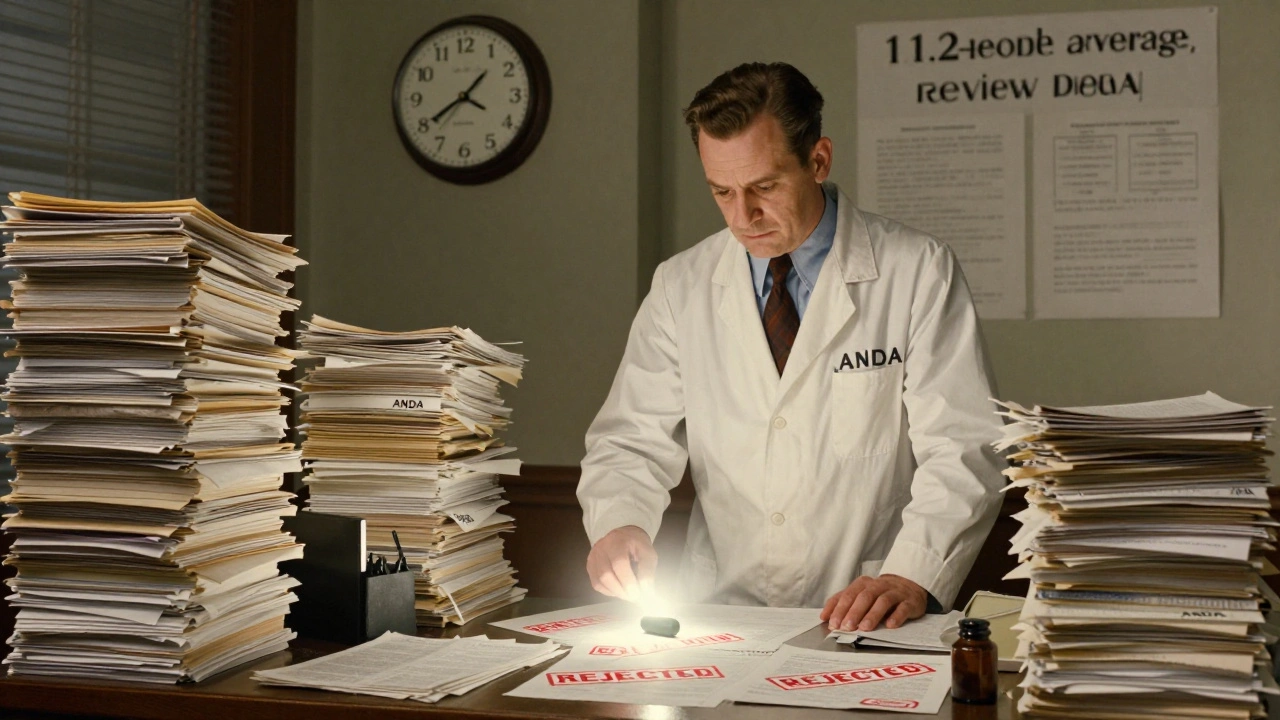
Why Approval Takes So Long
The FDA’s official goal under GDUFA III is to approve 90% of priority generic applications in the first review cycle by 2027. But in 2023, the actual first-cycle approval rate for complex generics was only 42%. For standard generics, it’s 65%. That means nearly half of complex applications get rejected and sent back for revisions. Each rejection adds 8 to 12 months and $2-5 million in extra costs. The average review time? 11.2 months for standard applications-longer than the promised 10 months. And the paperwork? It’s exploded. In 2013, an ANDA submission averaged 50,000-75,000 pages. Today, it’s 150,000-200,000. That’s not because the science got more complicated-it’s because the FDA’s documentation requirements have multiplied. One company estimated preparation costs rose 35% just from paperwork alone.Who Pays the Price?
Patients pay the biggest price. Take testosterone replacement therapy. Between 2016 and 2020, generic versions were delayed by nearly five years. During that time, patients paid up to 300% more for the brand-name drug. The Association for Accessible Medicines (AAM) found that in 2024, 83% of brand-name drugs still had no generic competition five years after patent expiration. That’s not because no one tried to make a generic-it’s because the FDA kept rejecting them without clear reasons. On Reddit’s r/pharmacy thread in September 2025, patients shared stories of paying $1,200 a month for drugs like apixaban and glipizide because generics weren’t available. One person wrote: “I skipped doses because I couldn’t afford the brand. My doctor didn’t know why the generic wasn’t out yet.” Meanwhile, pharmacists defend the system. One New York pharmacist said in October 2025: “The extra scrutiny prevented another valsartan recall that hit 22 million people.” Quality matters. But is the cost worth it?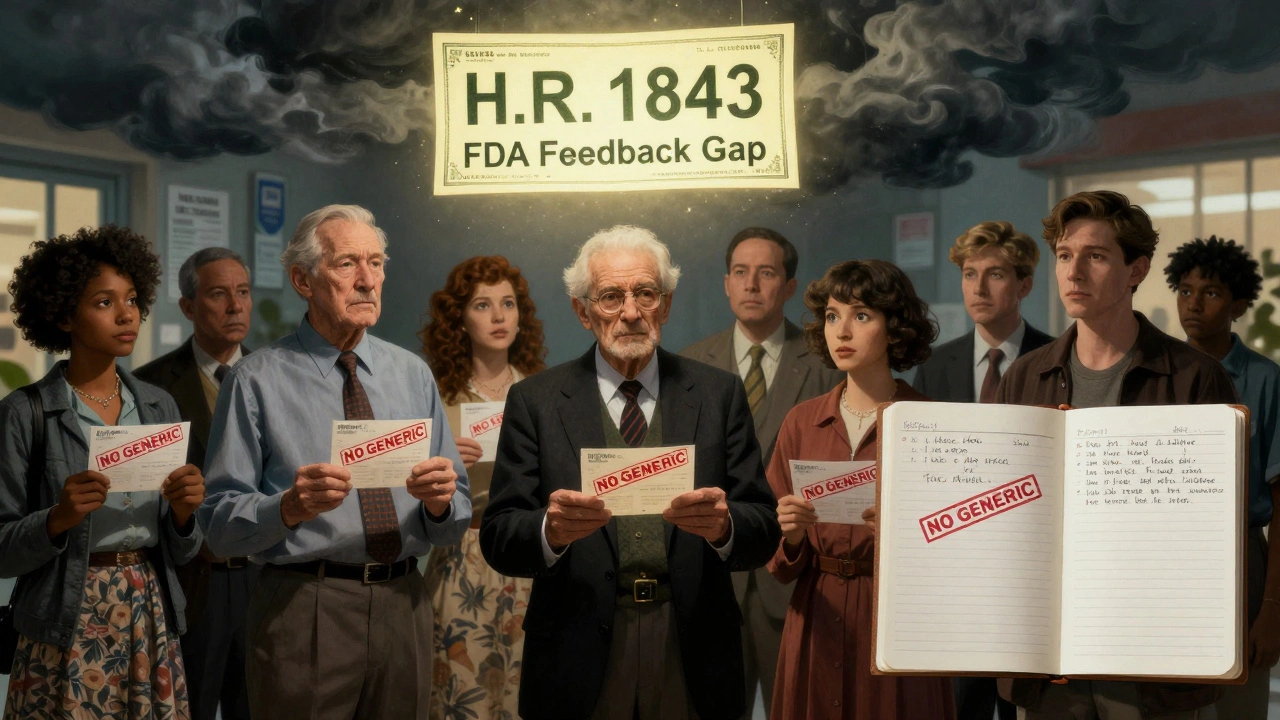
The Push for Change
In September 2025, Congress introduced H.R. 1843, the “Increasing Transparency in Generic Drug Applications Act.” It’s backed by both Republicans and Democrats, with 72 co-sponsors. The bill would force the FDA to return to giving specific feedback on formulation issues for complex generics. The Congressional Budget Office estimates this could cut approval times by 18-24 months for these drugs. That’s not just bureaucratic reform-it’s economic relief. The CBO predicts H.R. 1843 could generate $1.8-2.3 billion in annual savings once fully implemented. Over five years, that’s $18-23 billion in reduced healthcare spending. For Medicare Part D enrollees alone, that could mean an extra $100-$150 saved per person annually. The FDA isn’t opposed to change-but they’re cautious. In July 2025, their Office of Generic Drugs warned that restoring detailed feedback without more staff could hurt review quality. They’re asking for a 3-5% annual fee increase in GDUFA IV (2028-2032) to hire 150+ new reviewers. The question isn’t whether change is needed-it’s whether the system can afford to fix itself without raising fees even higher.What This Means for You
If you rely on generic drugs, you’re already saving money-about 90% of U.S. prescriptions are generics, and they make up just 12% of total drug spending. But delays in approval mean you’re not getting the full benefit. The system works best when generics hit the market quickly after patents expire. When they don’t, brand-name companies keep charging high prices, and patients suffer. The good news? There’s momentum. H.R. 1843 is moving through committee. The FDA has pledged to accelerate 15 complex generics by 2027. And the savings are undeniable: generics saved $467 billion in 2024. That’s more than the entire annual budget of the Department of Education. But savings won’t continue unless the approval process becomes faster and clearer. Until then, the cost of FDA approval isn’t just paid by drug companies-it’s paid by patients waiting, struggling, and paying more than they should.How much does it cost to get a generic drug approved by the FDA?
The total cost for a single generic drug application (ANDA) is around $375,000 on average. This includes a $136,485 product fee, a $238,055 facility fee, and other administrative and preparation costs. For complex generics, additional reformulation attempts can push total costs over $10 million per drug.
Why are generic drug approvals taking longer than before?
Since 2015, the FDA stopped providing detailed feedback on formulation differences between brand-name and generic drugs. This forced manufacturers to guess what changes were needed, leading to multiple failed submissions. For complex generics like inhalers or injectables, this has increased approval times by 2-3 years on average.
Do generic drugs cost less because they’re easier to approve?
No. Generic drugs cost less because they don’t need to repeat expensive clinical trials. But the approval process itself is still costly and time-consuming. The savings come from avoiding R&D costs, not from faster or cheaper regulatory reviews. In fact, the FDA’s current system makes approval harder for complex generics, slowing down cost savings.
What is GDUFA, and how does it affect generic drug prices?
GDUFA stands for the Generic Drug User Fee Amendments. It’s a program that lets the FDA collect fees from generic drug makers to fund the review process. While it’s helped speed up approvals overall, the fees have also increased costs for manufacturers, and the lack of clear feedback on complex drugs has created bottlenecks that delay market entry and keep prices higher than they should be.
Are there any efforts to fix the generic drug approval process?
Yes. In September 2025, Congress introduced H.R. 1843, which would require the FDA to provide detailed feedback on formulation issues for complex generics. This bill has bipartisan support and could reduce approval times by 18-24 months. The FDA is also preparing GDUFA IV, which proposes hiring more staff and increasing fees to improve review speed and quality.
How do generic drug delays affect patients financially?
Delays mean patients pay more. For example, when generic versions of testosterone therapy were delayed for nearly five years, patients paid 300% more for the brand-name version. In 2024, over 140 patients on Reddit reported paying $1,000+ monthly for drugs like apixaban and glipizide because generics weren’t available. These delays directly increase out-of-pocket costs and force people to skip doses or go without treatment.



Ollie Newland
December 4 2025Man, the GDUFA fees are insane. $375k just to get an ANDA reviewed? And for complex generics? You’re looking at millions before you even get a ‘no’ back. It’s not that the science is harder-it’s that the FDA’s feedback is basically a black box now. You throw spaghetti at the wall and hope something sticks. Meanwhile, patients are skipping doses because they can’t afford the brand. This isn’t regulation, it’s financial torture.