
Medication Interaction Checker
Check Medication Interactions
This tool demonstrates common medication interactions. For accurate, personalized advice, consult your pharmacist or healthcare provider.
Added items:
Interaction Results
Every year, over a million people in the U.S. are hurt because of medication errors. A big chunk of those cases? Medication interactions. You might think your doctor covered everything when they wrote your prescription. But here’s the truth: pharmacists are often the last line of defense before you take that pill. They see your full list of meds-prescription, over-the-counter, supplements, even what you eat. And they know the hidden dangers most people never think to ask about.
Why Medication Interactions Matter More Than You Think
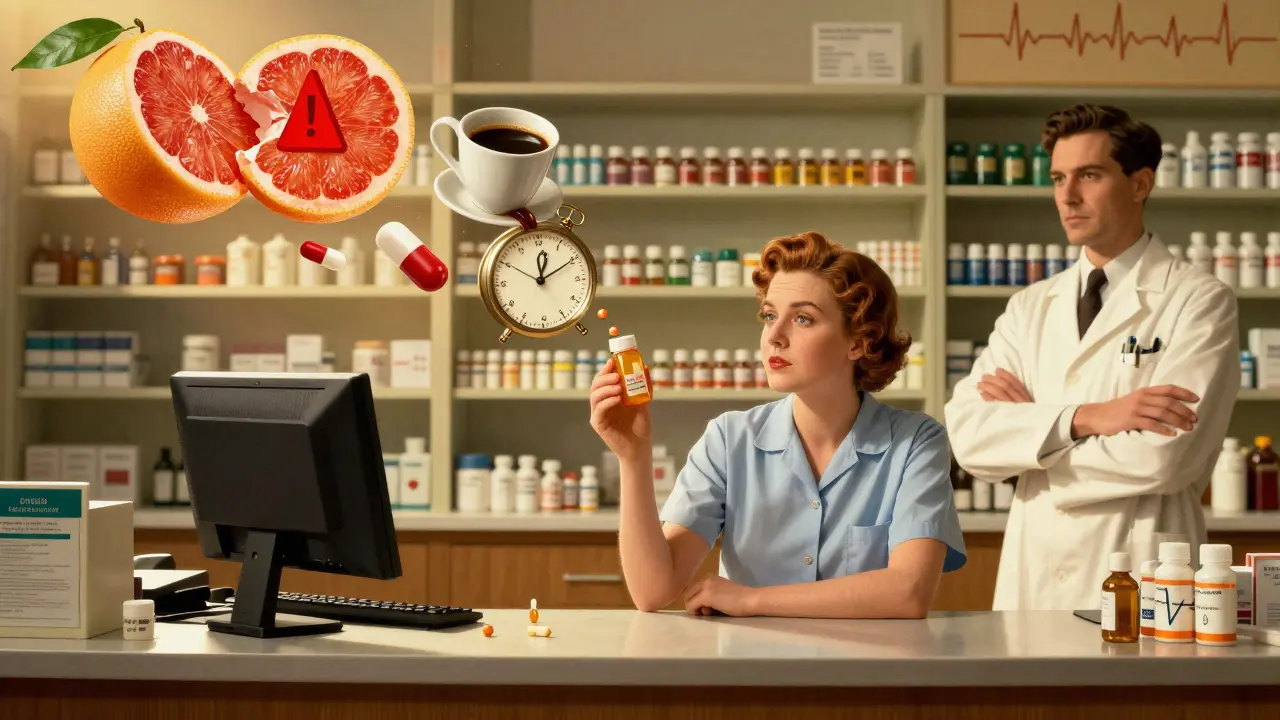
A medication interaction happens when two or more substances affect each other in a way that changes how they work. It could make one drug stronger, weaker, or cause dangerous side effects you didn’t expect. These aren’t rare. The FDA reports that drug interactions make up nearly 7% of all adverse drug events reported in 2022. And many of them are totally preventable-if you ask the right questions.Take grapefruit juice. It sounds harmless, right? But it can spike the level of certain statins like atorvastatin by up to 1,500%. That’s not a typo. That’s enough to cause muscle damage or kidney failure. Or consider calcium supplements taken with levothyroxine. If you take them together, your thyroid medication can lose up to half its effectiveness. That’s why some patients feel tired, gain weight, or get depressed-even when they’re taking their pill every day.
It’s not just pills. Alcohol, herbal teas, antacids, even sunlight can interact with your meds. Metronidazole (an antibiotic) and alcohol? Can trigger vomiting, flushing, and a racing heart. Some blood pressure drugs and sun exposure? Could give you a severe sunburn without ever going to the beach. These aren’t myths. They’re documented risks.
What Your Pharmacist Already Knows (But Might Not Tell You)
Pharmacists spend years training to understand how drugs behave in the body. They hold a Doctor of Pharmacy degree. Their job isn’t just to count pills. It’s to catch what others miss. But here’s the catch: only about 38% of patients get full interaction counseling when they pick up a prescription. Why? Time. Pressure. Assumptions.Most pharmacists assume you know what to ask. But you probably don’t. That’s why you need to speak up. You’re not being difficult. You’re being smart.
Seven Essential Questions to Ask Your Pharmacist
- Does this medication interact with anything else I’m taking-including supplements or OTC drugs?
Don’t just list your prescriptions. Include vitamins, herbal products, pain relievers like ibuprofen, and even sleep aids. Many people don’t realize melatonin can interact with blood thinners or that St. John’s Wort can cancel out birth control. - Are there foods or drinks I should avoid while taking this?
Grapefruit juice is the classic example, but it’s not the only one. Dairy products can block antibiotics like ciprofloxacin. High-fiber meals can slow down absorption of some antidepressants. Even caffeine can boost the effects of certain asthma medications. Ask specifically about your diet. - Can alcohol affect how this medicine works?
Over 42% of adults take at least one medication that reacts badly with alcohol. Mixing alcohol with sedatives, painkillers, or even some antibiotics can lead to dizziness, liver damage, or sudden drops in blood pressure. Don’t assume it’s “just a little.” - Could this interact with any health conditions I have?
For example, if you have kidney disease, some drugs build up in your system. If you have high blood pressure, decongestants can spike it. Your pharmacist knows your meds. They also know your conditions. Connect the dots for them. - Are there signs I should watch for if something goes wrong?
Not all interactions cause immediate symptoms. Some build up slowly. Serotonin syndrome-caused by mixing SSRIs with certain pain meds or supplements-can start with shivering, diarrhea, or confusion. If you don’t know what to look for, you might ignore it until it’s serious. - Do I need to space out doses to avoid interactions?
Timing matters. Taking levothyroxine with calcium or iron? Wait at least four hours. Taking a statin with a proton-pump inhibitor? Some studies suggest separating them by 2 hours. Ask if timing is part of the safety plan. - Will I need any tests or monitoring while on this medication?
Some drugs require blood tests to check liver function, kidney levels, or drug concentration. If you’re on warfarin, you’ll need regular INR checks. If you’re on certain epilepsy drugs, you might need blood levels tested monthly. Don’t assume your doctor will schedule it. Ask your pharmacist what to expect.
What to Bring to Your Pharmacy Visit
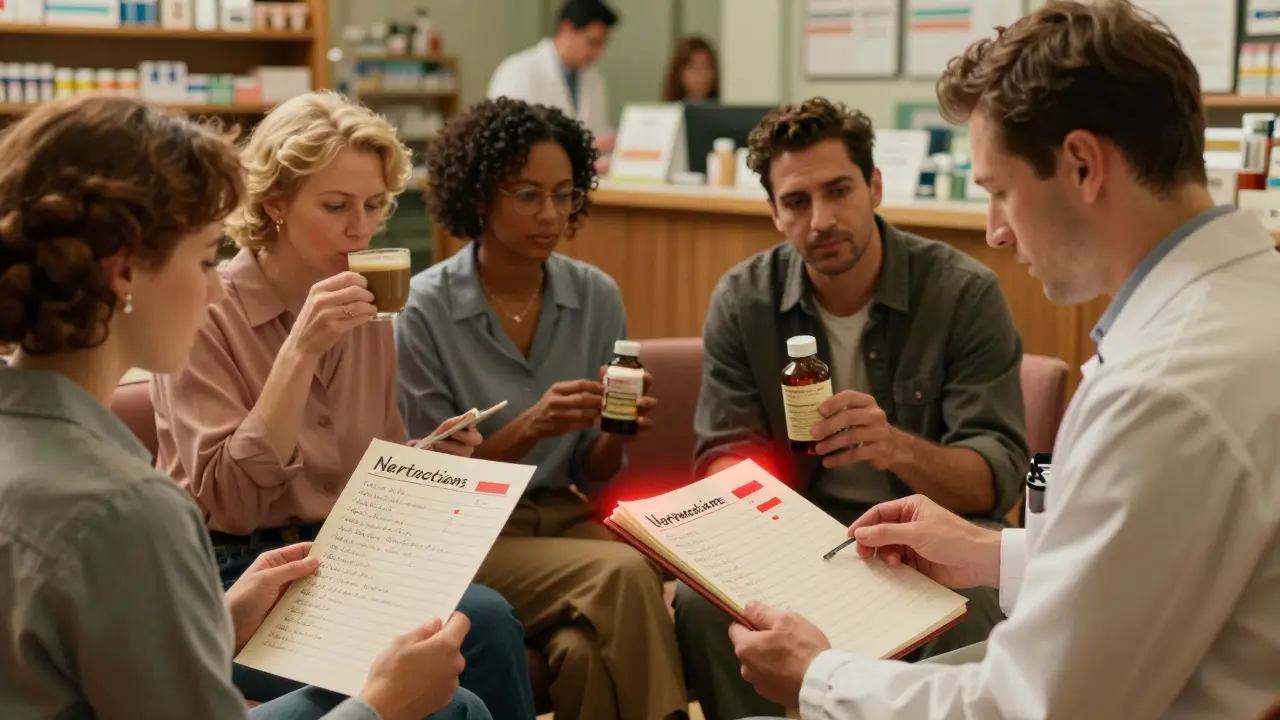
Don’t rely on memory. Bring a written list of everything you take:- All prescription medications (include dosages and how often)
- All over-the-counter drugs (pain relievers, antacids, cold meds)
- All vitamins, minerals, and supplements (even if you take them “just once in a while”)
- All herbal products (green tea extract, turmeric, ashwagandha, etc.)
- Any recreational substances (nicotine, cannabis, alcohol frequency)
Update this list every three months. Add new meds. Remove ones you stopped. If you switch pharmacies, bring it with you. Your pharmacist can’t help if they don’t know the full picture.
Real Stories: What Happens When People Don’t Ask
A 68-year-old man took simvastatin for cholesterol and drank grapefruit juice every morning. He didn’t think it mattered. Within months, he developed severe muscle pain and was hospitalized with rhabdomyolysis. His pharmacist later found the interaction in his profile-but he’d never been warned. Another woman took levothyroxine with her morning coffee and calcium supplement. She felt fine, but her TSH levels kept climbing. Her endocrinologist couldn’t figure it out until she told her pharmacist: “I take them all together.” The fix? Take the thyroid pill on an empty stomach, wait 30 minutes, then have coffee and calcium. Her energy returned in weeks.These aren’t edge cases. They’re common. A 2023 review of patient reviews showed 64% of people who had bad interactions said no one ever asked them about their full medication list.
What’s Changing in 2026
Pharmacists now have better tools. Automated systems flag potential interactions before a prescription is filled. Medicare requires annual medication reviews for millions of beneficiaries. The FDA launched a mobile app for reporting interactions-over 12,000 have been submitted since last year.But technology doesn’t replace conversation. The most advanced system can’t know if you’re drinking cranberry juice daily or taking magnesium for sleep. Only you can tell them that. And only a pharmacist can connect those dots to your meds.
What to Do If You’re Shy or in a Rush
You don’t need a 15-minute consultation. Ask one question: “Is there anything I should avoid with this medicine?” Then hand them your list. Most pharmacists will take five minutes to scan it. If they say “no interactions,” ask: “Are you sure? I take X, Y, and Z.” Push a little. You’re not being rude-you’re protecting your health.And if your pharmacist doesn’t ask you about supplements or food? That’s a red flag. You deserve better. You have the right to clear, complete information.
Final Thought: You’re the Expert on Your Body
Doctors diagnose. Pharmacists understand how drugs behave. But you know your routine. You know what you eat, what you drink, what you forget, what you take on impulse. That’s valuable data. Don’t let it go unused.Medication safety isn’t just about taking your pill. It’s about knowing what else is in your system-and how it all fits together. The pharmacist isn’t there to judge you. They’re there to help you avoid a mistake you didn’t even know you were making.
Can I just check for drug interactions online instead of asking my pharmacist?
Online tools can help, but they’re not enough. Apps and websites miss a lot-like how you take your meds (with food? on an empty stomach?), your exact dosages, or your health conditions. A 2023 study found pharmacy apps only caught 63% of serious interactions. Pharmacists use clinical judgment, not just algorithms. They know if your grapefruit juice is half a glass a week or a full glass daily. That matters.
What if I’m taking herbal supplements? Do I really need to tell my pharmacist?
Yes, absolutely. Herbal products aren’t regulated like drugs, so their strength and ingredients can vary. St. John’s Wort can reduce the effectiveness of birth control, antidepressants, and even heart meds. Turmeric can thin your blood and increase bleeding risk if you’re on warfarin. Garlic supplements can lower blood pressure too much if you’re already on medication for it. These aren’t harmless teas-they’re active substances that interact. Always list them.
I take the same meds every day. Why should I ask again if nothing changed?
Because your body changes. Your kidneys don’t work the same at 65 as they did at 45. New conditions like thyroid issues or liver changes can alter how your body processes drugs. Even adding a new OTC painkiller or starting a new vitamin can create a hidden interaction. Every refill is a chance to check in. Don’t assume safety just because you’ve taken it before.
Can my pharmacist help if I can’t afford my meds?
Yes. Sometimes, switching to a generic version or changing the timing of doses can reduce interaction risks. But cost can also force people to skip doses or split pills-both of which can lead to dangerous imbalances. Your pharmacist can help you find copay cards, patient assistance programs, or alternative brands that are safer and more affordable. Never assume they can’t help with cost-ask.
I’m on multiple meds. How do I know which interaction is most dangerous?
You don’t have to rank them. Your pharmacist will. Focus on the big ones: blood thinners (warfarin), heart meds (digoxin), seizure drugs (phenytoin), and antidepressants (SSRIs). These have narrow safety margins. A small change can cause serious harm. If you’re on any of these, ask: “Is there a high-risk interaction here?” and “What’s the #1 thing I should avoid?”
Next Steps: What to Do Today
- Write down every medication, supplement, and OTC drug you take right now.
- Bring that list to your next pharmacy visit-even if you’re just picking up a refill.
- Ask one question: “Is there anything I should avoid with this medicine?”
- Update your list every 90 days.
- If your pharmacist doesn’t ask you about food, drinks, or supplements, ask them why.
You don’t need to be a medical expert to save your own life. You just need to speak up-and have the right information.




John Haberstroh
February 16 2026Man, I never realized grapefruit juice could turn my statin into a chemical grenade. I’ve been sipping it with my breakfast for years like it’s some kind of health elixir. Turns out, I was basically playing Russian roulette with my kidneys. Thanks for the wake-up call. Going to print this out and tape it to my fridge next to the expired coupons.