Imagine this: You have a prescription for high blood pressure. It’s simple enough-take one pill a day. But life gets busy. You forget a few doses. Then you skip a week because the copay feels too steep or the side effects make you feel weird. Months later, your numbers are back where they started. This isn’t just bad luck; it’s medication non-adherence, and it costs the U.S. healthcare system roughly $300 billion every year.
The problem is massive. About half of all patients with chronic conditions don’t take their medications as prescribed. But there’s a powerful ally in the fight against this crisis who often goes unnoticed: the community pharmacist. Unlike doctors, whom you might see only once or twice a year, pharmacists are accessible, trusted, and deeply knowledgeable about how drugs interact. They are uniquely positioned to bridge the gap between a prescription being written and a patient actually taking it correctly.
Why Pharmacists Are the Key to Better Health Outcomes
To understand why pharmacists matter so much, we need to look at access and expertise. Community pharmacists see patients four to six times more frequently than physicians do. This frequent contact creates natural opportunities for intervention. When a patient picks up a refill, that’s not just a transaction; it’s a chance to check in, ask questions, and identify barriers before they become health crises.
Consider the data from the U.S. Veterans Affairs Medical Centers. In studies involving high-risk cardiac patients, those who received pharmacist-led adherence support showed an adherence rate of 89.3%, compared to just 73.9% in control groups. That’s a significant jump. For specific drug classes like statins and ACE inhibitors, the improvement was even more pronounced. These aren’t small margins; they represent thousands of avoided heart attacks and strokes.
Pharmacists bring specialized knowledge to the table. They understand pharmacokinetics-the way the body absorbs, distributes, metabolizes, and excretes drugs. If a patient complains of fatigue after starting a new beta-blocker, a pharmacist can explain whether this is a common temporary side effect or a sign that the dosage needs adjustment. This level of detail builds trust and empowers patients to stick with their treatment plans.
Evidence-Based Strategies That Actually Work
Improving adherence isn’t about nagging patients to take their pills. It requires structured, evidence-based interventions. The CDC’s Community Preventive Services Task Force formally recommended tailored pharmacy-based interventions in 2022, specifically for cardiovascular disease prevention. Here are some of the most effective strategies pharmacists use:
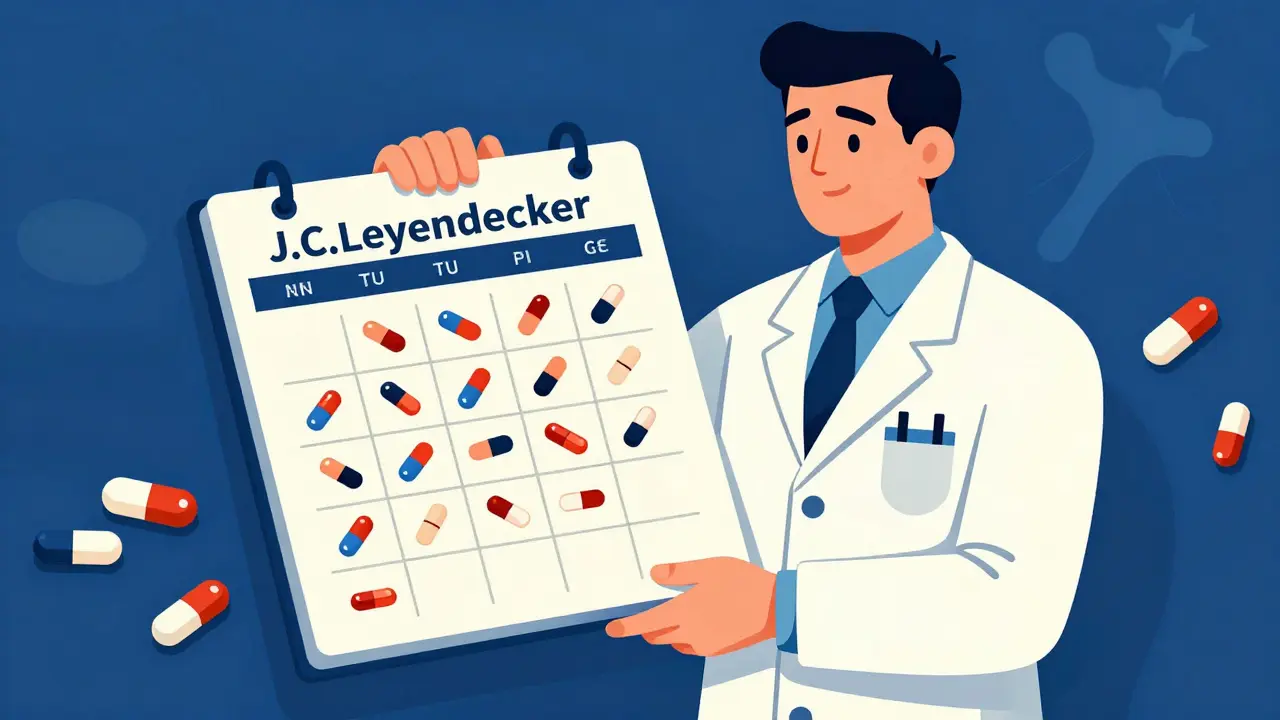
- Medication Synchronization: Instead of having different refill dates for different prescriptions, pharmacists align all refills to occur on the same day each month. This reduces pharmacy visits from five or six down to just one or two, making it easier for patients to manage their care.
- Personalized Counseling: One-on-one sessions where pharmacists discuss the purpose of each medication, potential side effects, and what to do if a dose is missed. These sessions address specific barriers like cost (the issue for 68% of non-adherent patients) or scheduling difficulties (57%).
- Reminder Systems: Automated text messages, phone calls, or app notifications reminding patients when it’s time to refill or take their medication. While digital tools help, blended approaches combining human interaction with technology show 22% higher effectiveness than either method alone.
- Depression Screening: Using tools like the PHQ-2 and PHQ-9 to screen for depression, which is strongly linked to poor adherence. Addressing mental health barriers can significantly improve physical health outcomes.
A landmark 2024 study published in the Journal of Managed Care & Specialty Pharmacy (JMCP) analyzed over 317,000 participants. It found that pharmacist-led interventions led to absolute increases in optimal adherence of 4.0% for diabetes, 6.3% for hypertension, and 6.1% for cholesterol. These improvements were statistically significant and translated directly into better clinical outcomes.
The Financial Impact: Saving Money While Improving Health
Healthcare providers and insurers are increasingly recognizing that preventing complications is cheaper than treating them. Dr. David Cutler, a Harvard health economist, noted in a 2023 analysis that pharmacist interventions generate $7.43 in avoided healthcare costs for every $1 invested. This return on investment makes these programs highly attractive to payers.
| Condition | Total Cost Savings | Savings Per Capita |
|---|---|---|
| Diabetes | $10,329,284 | $109 |
| Hypertension | $31,640,660 | $122 |
| Hyperlipidemia | $21,589,875 | $75 |
These figures come from a study spanning 2020-2022, covering hundreds of thousands of patients. The savings arise from fewer hospitalizations, reduced emergency room visits, and less need for expensive rescue therapies. For example, keeping blood pressure under control prevents strokes and kidney failure, both of which are incredibly costly to treat. By catching adherence issues early, pharmacists help keep patients out of the hospital and their finances intact.
Challenges and Limitations in Implementation
Despite the clear benefits, implementing pharmacist-led adherence programs isn’t without hurdles. Not every intervention works for every patient. A review of 26 studies found that nearly 27% showed no significant results, particularly in populations with low health literacy or severe cognitive impairment. In cases of severe cognitive decline, adherence rates improved by only 4.2% compared to 12.7% in cognitively intact patients.
Resource constraints also play a role. Only 28 states have laws allowing reimbursement parity for Medication Therapy Management (MTM) services. Without adequate payment models, many community pharmacies struggle to offer these services sustainably. Documentation burden is another major challenge; 63% of pharmacists cite excessive charting requirements as a barrier. Integrated Electronic Health Record (EHR) templates can reduce this time by 35%, but adoption varies widely.
Patient engagement remains tricky. On average, only 68% of patients participate in offered adherence services. Some patients feel monitored rather than supported. A 2008 study by Mehuys et al. found that 12% of patients reported feeling judged by electronic monitoring systems. Others simply don’t understand complex schedules despite counseling. Addressing these psychological and logistical barriers requires empathy, patience, and personalized communication styles.

Real-World Experiences: What Patients Say
Behind the statistics are real people whose lives are impacted by these interventions. Many report positive experiences. A patient on Reddit shared how their CVS pharmacist noticed inconsistent refills and spent 20 minutes helping them navigate a patient assistance program. As a result, their blood pressure has been controlled for eight months. Similarly, cardiac patients in VA studies appreciated medication synchronization, which cut their monthly pharmacy trips in half.
However, negative experiences exist too. Some patients feel frustrated when pharmacists focus solely on refilling prescriptions without addressing underlying affordability issues. One reviewer on Trustpilot complained about repeated calls about refills that ignored their financial struggles, making them feel guilty rather than helped. These stories highlight the importance of holistic care that addresses social determinants of health, not just medical ones.
The Future of Pharmacist-Led Adherence Programs
The landscape is evolving rapidly. The Centers for Medicare & Medicaid Services (CMS) expanded reimbursement for pharmacist-provided adherence services in 2023, signaling growing institutional support. The National Pharmacist Adherence Collaborative, launched in 2024, brings together 12 major pharmacy chains and health systems to standardize best practices. Meanwhile, 92 Fortune 500 companies now include pharmacist adherence services in employee health plans.
Digital integration is accelerating. According to a 2024 Pharmacy Times survey, 67% of pharmacist adherence programs now incorporate app-based reminders. Blended models that combine face-to-face counseling with digital tools are proving most effective. Looking ahead, the CDC projects that widespread implementation could prevent 23,000 premature deaths annually from cardiovascular disease alone by 2030.
For long-term sustainability, continued payment reform is essential. Currently, only 38% of programs have stable funding sources. As value-based care becomes the norm, pharmacists will likely play an even larger role in managing chronic diseases. Their ability to provide accessible, affordable, and expert care makes them indispensable partners in improving population health.
What is medication adherence?
Medication adherence refers to the extent to which a patient takes their medications exactly as prescribed by their healthcare provider, including the correct dose, frequency, and timing. Poor adherence can lead to worsening health conditions, increased hospitalizations, and higher healthcare costs.
How do pharmacists help improve medication adherence?
Pharmacists help through various strategies such as personalized counseling, medication synchronization, reminder systems, and addressing barriers like cost or side effects. They leverage their accessibility and expertise to build trust and ensure patients understand and follow their treatment plans.
Are pharmacist-led interventions cost-effective?
Yes, they are highly cost-effective. Studies show that for every $1 invested in pharmacist-led adherence interventions, approximately $7.43 is saved in avoided healthcare costs. Specific savings include $109 per capita for diabetes, $122 for hypertension, and $75 for hyperlipidemia.
Who benefits most from pharmacist adherence programs?
Patients with chronic conditions like diabetes, hypertension, and cardiovascular disease benefit significantly. Those with complex medication regimens (five or more medications) also see substantial improvements. However, individuals with severe cognitive impairment may experience limited benefits.
What challenges do pharmacists face in implementing these programs?
Key challenges include lack of consistent reimbursement, documentation burdens, and varying levels of patient engagement. Additionally, effectiveness can vary based on patient factors like health literacy and cognitive status, requiring tailored approaches for different populations.