
OTC Label Reading Simulator
Challenge: Can you find the critical safety information? Click the labels below to test your knowledge and see why these sections matter.
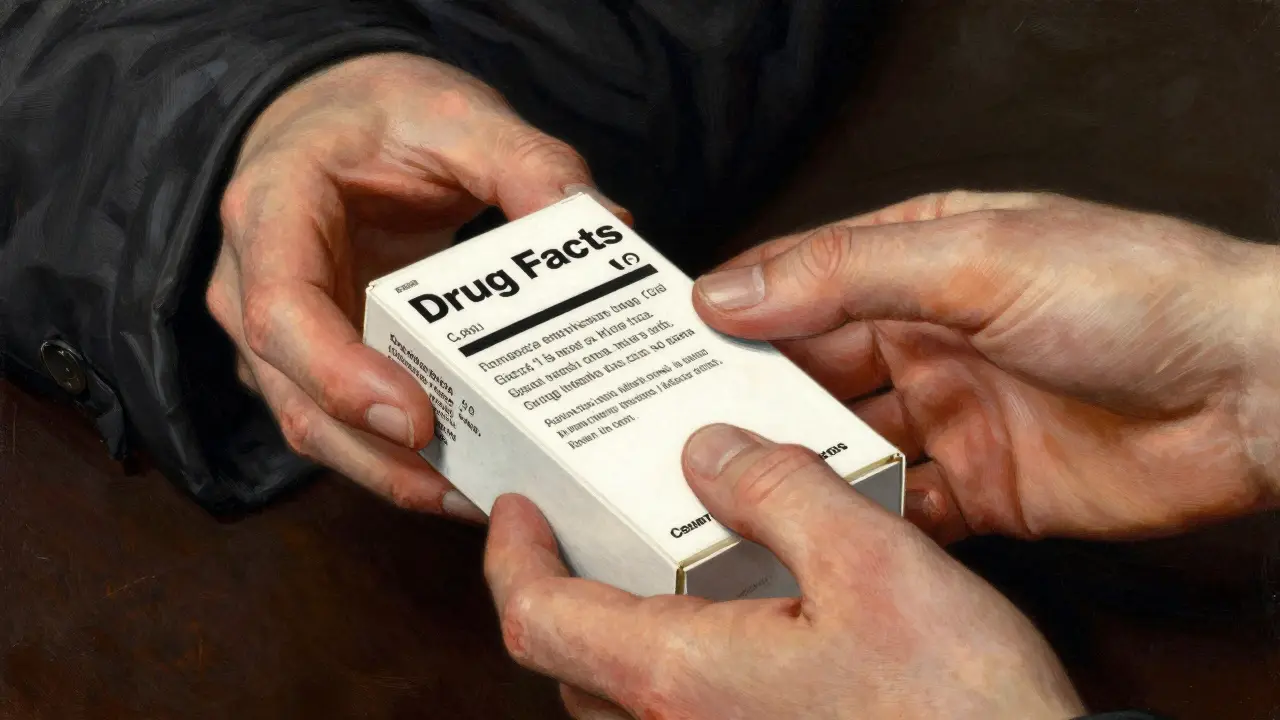
Drug Facts
When using this product: May cause drowsiness.
Stop and ask a doctor if: Symptoms do not improve within 7 days.
Before taking any new OTC medication, always follow this order: Ingredients → Warnings → Use → Dose.
Ever stood in a pharmacy aisle, staring at a wall of colorful boxes, and felt completely overwhelmed? You're not alone. Whether you're grabbing a quick bottle of ibuprofen for a headache or a tube of sunscreen for a beach trip, there's a reason every one of those packages looks remarkably similar. That's not a coincidence-it's a safety system. OTC Drug Facts labels is a standardized labeling system mandated by the FDA to ensure that nonprescription medications provide clear, consistent information to consumers.
When you understand how these labels work, you stop guessing and start knowing exactly what you're putting into your body. The goal isn't to turn you into a pharmacist, but to give you a simple toolkit to avoid dangerous mistakes. In fact, since these standards were put in place, medication errors with over-the-counter products have dropped by 27%. Let's look at how to navigate these labels so you can keep yourself and your family safe.
The Anatomy of a Drug Facts Label
The FDA doesn't just suggest this layout; they require it. By keeping the information in the same order every time, you can find a specific warning or a dose without having to hunt through a wall of text. If a product is too small for one panel, you'll see "Drug Facts (continued)" on the next side of the box.
Here is the exact order you will always find on a compliant label:
- Active ingredient(s): What is actually doing the work in the medicine.
- Purpose(s): The category of the drug (like an "analgesic" for pain).
- Uses: What symptoms the product actually treats.
- Warnings: The "danger zone"-who shouldn't take it and what to watch for.
- Directions: Exactly how much to take and when.
- Other information: Storage tips and things like sodium content.
- Inactive ingredients: The fillers, colors, and flavors.
| Section | What it tells you | Why it matters |
|---|---|---|
| Active Ingredients | The chemical name and amount | Prevents accidental double-dosing of the same drug |
| Warnings | Side effects and risks | Identifies dangerous drug interactions |
| Directions | Dosage and frequency | Ensures the medicine actually works as intended |
| Inactive Ingredients | Non-medicinal components | Crucial for people with specific allergies |
Stop! Read the Active Ingredients First
The biggest mistake people make is buying two different brands of medicine for the same problem, not realizing they both contain the same OTC Drug Facts labels active ingredient. For example, you might take a "multi-symptom" cold medicine and a separate pain reliever, only to realize both contain acetaminophen. This can lead to an accidental overdose, which is particularly dangerous for your liver.
Always check the "Active ingredient" section first. If you see the same name on two different bottles, you are taking the same medicine. This is why healthcare pros suggest a systematic approach: check ingredients, review warnings, verify the use, and then follow the dose. This simple habit makes you 63% less likely to experience an adverse event.
Decoding the Warning Section
The warnings section is the most critical part of the label, but it's often the most ignored. When you're feeling sick, it's tempting to skip straight to the dosage. Don't. The FDA requires specific phrasing here to help you make quick decisions:
- "When using this product:" This lists common side effects. If it says "may cause drowsiness," don't plan on driving after taking it.
- "Stop and ask a doctor if:" These are red flags. If your symptoms get worse or a specific reaction occurs, the medicine is no longer the solution-a doctor is.
- "Stop using if:" This is for immediate danger, such as an allergic reaction (rash or swelling).
Keep an eye out for boxes with red letters. These are high-priority alerts, like liver warnings or asthma alerts, designed to jump out at you because they are potentially life-threatening. Also, always look for the "Keep out of reach of children" statement; it's a standard requirement for a reason.
Getting the Dose Right Every Time
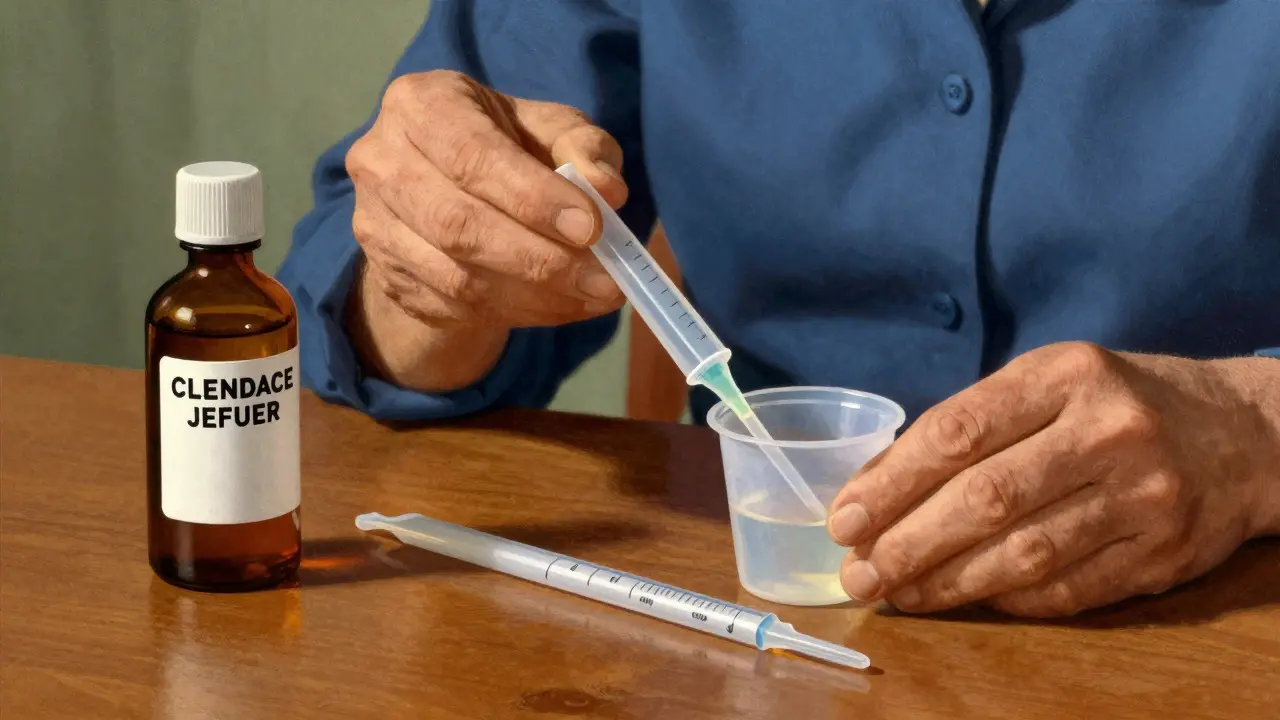
Reading the "Directions" section seems straightforward, but this is where many errors happen. A common pitfall is the confusion between metric measurements (like milliliters) and household spoons. A "teaspoon" isn't always a spoon from your kitchen drawer-those vary in size and can lead to under- or over-dosing.
When reading directions, ask yourself:
- Is this dose correct for the person's age?
- Is it correct for their weight?
- How many hours must I wait before the next dose?
- What is the maximum amount I can take in 24 hours?
If the product is a liquid, only use the measuring cup or dropper that came with that specific bottle. Using a random spoon can result in an incorrect dose about 27% of the time, according to medication error reports.
Beyond the Pills: What Else Uses These Labels?
You might not think of your toothpaste or hand sanitizer as "drugs," but in the eyes of the FDA is the federal agency responsible for protecting public health by ensuring the safety, efficacy, and security of human and veterinary drugs. , they are. Because these products have active ingredients that change how your body functions (like fluoride in toothpaste to prevent cavities or alcohol in sanitizer to kill germs), they must follow the same strict Drug Facts formatting.
Even sunscreens follow these rules. When you check the "Active ingredient" on a sunscreen, you're looking for chemicals like zinc oxide or avobenzone. Knowing this helps you choose between a physical blocker (which sits on top of the skin) or a chemical absorber.
Common Mistakes to Avoid
Even when the information is right there, it's easy to slip up. Based on data from the Institute for Safe Medication Practices, here are the three most frequent errors:
- Ignoring interactions: 41% of errors happen because people don't check if the OTC drug clashes with their prescription meds.
- Over-dosing: 32% of cases involve taking more than the recommended amount, often because the user forgot when their last dose was.
- Wrong tools: Using a kitchen spoon instead of a medical dosing cup.
To avoid these, try writing the time of your last dose directly on the box or using a phone alarm to remind you when the next one is due.
Why is the format the same for every brand?
The FDA mandates a standardized format so that consumers can find critical safety information quickly, regardless of the product or brand. This consistency reduces the mental effort required to find dosages and warnings, which significantly lowers the risk of medication errors.
What is the difference between active and inactive ingredients?
Active ingredients are the chemicals that treat the symptom (e.g., dextromethorphan for a cough). Inactive ingredients are the "fillers"-things like corn starch, food coloring, or flavorings. While they don't treat the illness, inactive ingredients are important to check if you have specific allergies to dyes or preservatives.
Do I need to read the label if I've used the medicine for years?
Yes. Manufacturers occasionally update their formulas or warnings based on new safety data. Additionally, your own health status might change (like starting a new prescription medication), which could make a previously safe OTC drug dangerous for you now.
What should I do if I can't fit the whole label on the box?
If you are a consumer, look for the "Drug Facts (continued)" section on other panels of the packaging. If you are a manufacturer, you must follow specific FDA guidelines for column formats and continuation titles to ensure the consumer doesn't miss any critical warnings.
Where can I find more information if the label is too brief?
Many modern labels now include QR codes that link to digital versions of the information. You can also consult a pharmacist or check the FDA's official monographs for the specific drug class you are using.
What to do next
The next time you're at the store, try a quick exercise: pick up a product you use often and see if you can find the active ingredient and the "Stop using if" warning in under ten seconds. If you can't, spend a moment practicing. For those managing multiple medications, creating a simple list of all your active ingredients-both prescription and OTC-to share with your doctor during your next visit is a great way to ensure there are no hidden conflicts.


john chiong
April 13 2026absolutely reckless how people just swallow pills without reading the fine print it is a total dereliction of personal duty to play Russian Roulette with your liver just because you are too lazy to read a box