
When your MS symptoms suddenly get worse, it’s natural to panic. Did another relapse start? Is your disease getting worse? But what if it’s not a relapse at all - just a pseudorelapse? The difference isn’t just semantics. It changes everything: whether you need steroids, hospital visits, or just a cool shower and some rest.
What’s Really Happening: Relapse vs. Pseudorelapse
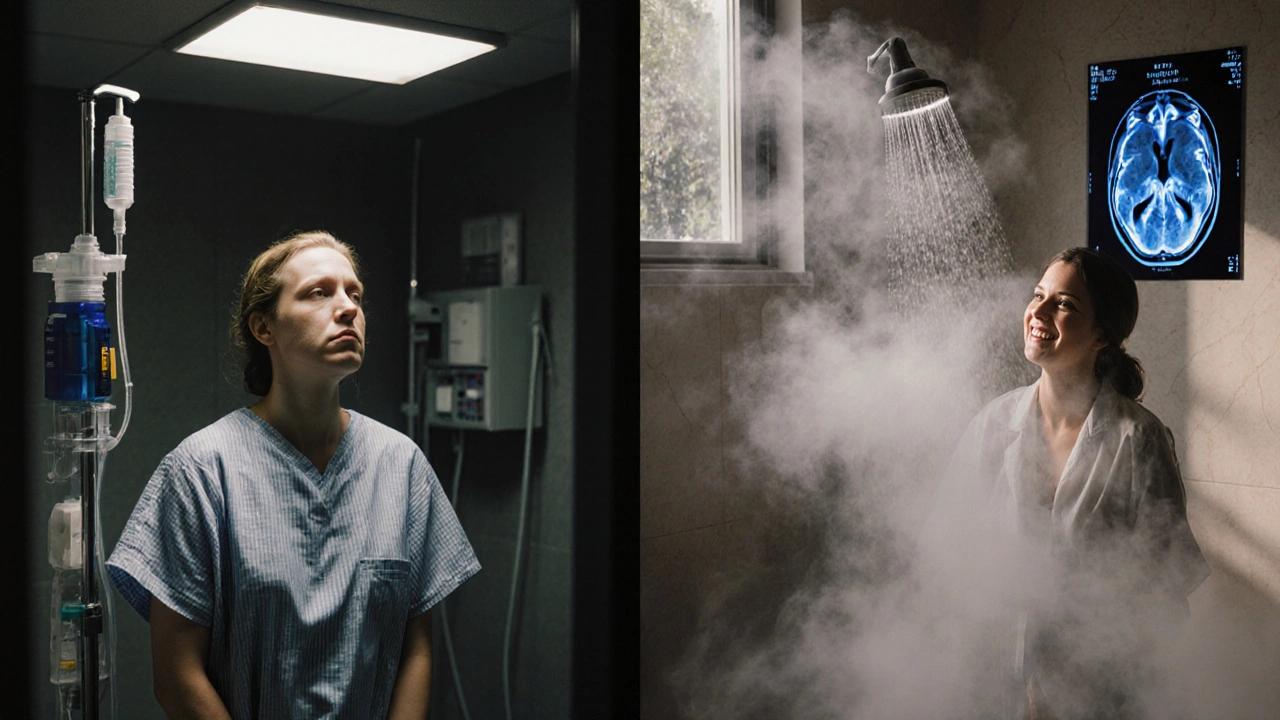
A true MS relapse means new damage in your brain or spinal cord. Inflammation attacks the myelin sheath around your nerves, creating a new lesion. That’s why symptoms like weakness, vision loss, or numbness appear suddenly and stick around for days or weeks. These flare-ups aren’t caused by outside factors - they’re driven by your immune system going rogue. A pseudorelapse is completely different. No new damage. No new lesions on your MRI. Instead, your existing nerve damage is temporarily acting up because something else is stressing your body. Think of it like an old electrical wire that works fine until it gets too hot - then it shorts out. Once the heat goes away, it works again. That’s what happens in a pseudorelapse. The key difference? Duration and cause. A real relapse lasts at least 24 to 48 hours without any clear trigger. A pseudorelapse fades fast - often within hours - once you fix the trigger. And here’s the kicker: steroids won’t help a pseudorelapse because there’s nothing to reduce. They only work on inflammation.Common Triggers of Pseudorelapses
You might be surprised by what sets off a pseudorelapse. It’s rarely something dramatic. Most often, it’s the everyday stuff you overlook:- Heat - Hot showers, summer heat, saunas, even a fever. About 41% of people with MS experience Uhthoff’s phenomenon, where vision blurs or leg weakness returns when body temperature rises. Cooling down fixes it.
- Urinary tract infections (UTIs) - The #1 trigger. Up to 67% of pseudorelapses are linked to UTIs. You might not even feel sick - just notice your legs feel heavier or your bladder control is worse.
- Fever - Even a low-grade fever from a cold or flu can trigger symptoms. Your body temperature doesn’t need to spike high to cause trouble.
- Stress and fatigue - Emotional stress, lack of sleep, or pushing yourself too hard physically can make old symptoms flare.
- Metabolic changes - Low sodium, high blood sugar, or dehydration can mess with nerve signaling.
One patient on MyMSTeam shared: "I thought I was having a relapse after my leg gave out. Turns out, I had a silent UTI. Once I took antibiotics, I was back to normal in 12 hours. No steroids needed."
When Steroids Are Actually Helpful
Steroids - usually high-dose IV methylprednisolone - are only used for true relapses. They reduce inflammation and speed up recovery, but they don’t stop long-term damage. And they come with side effects: insomnia, mood swings, high blood sugar, and increased infection risk. You might need steroids if:- Your symptoms last more than 48 hours with no clear trigger
- They’re new - not just worse versions of old ones
- They affect your ability to walk, use your hands, or control your bladder
- Your MRI shows a new, active lesion
Studies show about 70-80% of true relapses improve with steroids, but only about half of patients fully recover. That’s why doctors don’t give them lightly. And if you’re having a pseudorelapse? Steroids won’t help. In fact, 30-40% of patients get them unnecessarily - putting them at risk for zero benefit.
How Doctors Tell the Difference
There’s no single test. Diagnosis comes down to a careful checklist:- Check the duration - Did symptoms last less than 24 hours? Likely a pseudorelapse. More than 48? Possibly a true relapse.
- Look for triggers - Did you have a fever? A UTI? Did you spend the day in the sun? Rule these out first.
- Do a urine test - Always. UTIs are the most common hidden cause.
- Check your temperature and blood work - Sodium, glucose, kidney function - all can affect nerves.
- Get an MRI if needed - If it’s unclear, an MRI with contrast can show if there’s new inflammation. No new lesions? Probably a pseudorelapse.
Neurologists who specialize in MS get this right 85% of the time. General doctors? Only 45-60%. That’s why it’s so important to see an MS specialist when symptoms change.
What You Can Do: Track Your Symptoms
The best tool you have? A simple symptom diary. Write down:- What symptoms you had
- When they started and ended
- What you were doing before they started (hot shower? stressed? sick?)
- Your temperature
- Any infections or medications
One patient kept a diary for six months and realized every time her legs felt weak, she’d been outside in the sun without cooling down. She started using a cooling vest - and stopped going to the ER.
Apps like MS Selfie and the new MS-Relapse Assessment Tool (MS-RAT) now help patients and doctors rate symptom severity, duration, and trigger likelihood. These tools are getting 90%+ accuracy in early testing.
Why Misdiagnosis Costs More Than Money
Unnecessary steroid use isn’t just risky - it’s expensive. The National MS Society estimates the U.S. spends $12.7 million a year on steroid treatments for pseudorelapses. But the real cost is personal. One nurse with MS posted on Reddit: "I’ve seen five patients get IV steroids for UTIs. One developed steroid psychosis and had to be hospitalized. None of them needed it. They just didn’t know the difference." Pseudorelapses don’t cause permanent damage. But if you’re misdiagnosed, you might be scared into thinking your MS is getting worse. That fear can be worse than the symptoms.
What to Do If You Think You’re Having a Relapse
Don’t panic. Don’t rush to the ER. Don’t demand steroids. Do this:- Check your temperature. If it’s over 37.8°C (100°F), you might have an infection.
- Test your urine. A simple dipstick can catch a UTI.
- Get out of the heat. Cool down with a fan, cold towel, or air-conditioned room.
- Rest. Drink water. Wait 24 hours.
- If symptoms don’t improve or get worse, call your neurologist - not your GP.
Most pseudorelapses resolve within hours. If they don’t? Then it’s time to investigate further.
Long-Term Outlook
True relapses can leave behind permanent damage. Each one adds up. That’s why disease-modifying therapies (DMTs) are so important - they reduce relapse frequency. Pseudorelapses? They don’t add to disability. But if you’re older or have advanced MS, even a short episode can lead to deconditioning. You might feel weaker after a heat-triggered episode not because your nerves got worse - but because you stopped moving for a few days. That’s why staying active, even during flares, matters.Bottom Line
Not every symptom flare is a relapse. In fact, up to 25% of them aren’t. Heat, infections, and stress are the usual suspects. Steroids won’t help - and might hurt. The key is knowing your body, tracking triggers, and asking the right questions before accepting treatment.If you’ve ever been given steroids and felt worse afterward - or if your symptoms vanished after cooling down - you’ve probably had a pseudorelapse. That’s not failure. That’s knowledge. And knowledge is the best medicine you can have.
Can a pseudorelapse turn into a true relapse?
No. A pseudorelapse is not a sign that your MS is worsening. It’s a temporary glitch caused by external stress. However, having a pseudorelapse doesn’t mean you’re protected from a true relapse - they can happen separately. That’s why tracking symptoms and triggers helps you spot real changes.
Do I need an MRI every time my symptoms flare?
Not usually. If your symptoms resolve quickly after cooling down or treating a UTI, an MRI isn’t needed. But if symptoms last more than 48 hours, are new, or don’t respond to trigger removal, your neurologist may order an MRI to check for new lesions. Most clinics follow a "wait and see" approach before imaging.
Are there any blood tests to tell relapse from pseudorelapse?
Not yet in routine practice. But research is looking at neurofilament light chain (NfL) levels in the blood. Higher levels suggest nerve damage from inflammation - which would point to a true relapse. These tests aren’t widely available yet, but they’re coming. For now, the best tools are symptom tracking, temperature checks, and urine tests.
Can stress alone cause a pseudorelapse?
Yes. Stress doesn’t directly damage nerves, but it raises cortisol and body temperature slightly, and can disrupt sleep and immune function. For someone with existing nerve damage, that’s enough to trigger temporary symptoms. Many patients report worsening symptoms during high-stress periods - even without fever or infection.
What should I do if my doctor insists on steroids for a suspected pseudorelapse?
Ask for the reasoning. Request a urine test and temperature check. If those are normal and you’ve had similar episodes before that resolved with cooling or rest, it’s reasonable to push back. You can also ask for a second opinion from an MS specialist. Steroids carry real risks - you have the right to understand why they’re being recommended.
If you’ve been misdiagnosed before, you’re not alone. Many people with MS have been given steroids unnecessarily. But with better awareness, better tools, and better tracking, you can take control. Know your triggers. Know your body. And don’t let fear drive your treatment.





Melania Rubio Moreno
November 27 2025lol steroids for a uti? i had a pseudorelapse last summer and my dr wanted to give me iv methylprednisolone. i said no and drank 3 liters of water and took a cold shower. boom, fixed. why do doctors even have jobs anymore?