
Peripheral artery disease, or PAD, isn’t just about leg cramps after walking. It’s a warning sign your entire cardiovascular system is under stress. If you’re over 50, smoke, have diabetes, or have high blood pressure, ignoring leg pain could cost you more than mobility-it could cost you your life. About 1 in 5 people over 65 have PAD, and most don’t even know it. The good news? Early detection and simple lifestyle changes can stop it in its tracks.
What Does PAD Actually Feel Like?
Most people think PAD means sharp, sudden pain. It doesn’t. The classic sign is claudication-a cramping, tired, or heavy feeling in your calves, thighs, or buttocks that shows up when you walk and disappears after you rest. It’s not random. It happens predictably: after walking the same distance every time, like three blocks or up a hill. Rest for 10 minutes, and it’s gone. Repeat the walk, and it comes back. But not everyone feels this. Up to 40% of people with PAD have no symptoms at all. That’s why it’s so dangerous. Others notice subtle changes: one leg feels colder than the other, your toenails grow slower or thicken, or you lose hair on your shins. Your skin might look shiny or pale, especially when you raise your leg. In men, erectile dysfunction can be an early red flag-up to 75% of men with PAD experience it. The worst-case scenario is critical limb ischemia. This is when pain happens even when you’re lying down. You might have sores on your feet or toes that won’t heal, or your skin turns blue or black. This isn’t just bad circulation-it’s tissue dying. Without urgent treatment, amputation becomes likely.How Do Doctors Confirm PAD?
If your doctor suspects PAD, they won’t just guess. They start with a simple test called the ankle-brachial index (ABI). It takes five minutes. They measure your blood pressure in both arms and both ankles. Then they compare the numbers. If the pressure in your ankle is less than 90% of the pressure in your arm, you have PAD. An ABI of 0.90 or lower confirms it in 95% of cases. For people with diabetes or kidney disease, arteries can become stiff and hard to compress. In those cases, doctors use the toe-brachial index (TBI) instead. A TBI under 0.70 means trouble. Beyond that, they might order an ultrasound to see how blood flows through your legs. It’s painless and shows exactly where blockages are. For more detail, they might use a CT scan or MRI to get a 3D picture of your arteries. These aren’t always needed, but if you’re being considered for surgery or stents, they’re essential. The American Heart Association says everyone over 65 should get screened. So should anyone over 50 with diabetes or a history of smoking. If you’re under 50 but have multiple risk factors-high cholesterol, high blood pressure, obesity-ask for an ABI. Most doctors won’t bring it up unless you do.Stopping PAD Before It Stops You
The best treatment for PAD doesn’t come in a pill. It’s walking. Not just any walking-structured, supervised exercise. Studies show that walking 30 to 45 minutes, three to five times a week, can double your pain-free walking distance in just 12 weeks. You don’t need a gym. You don’t need fancy gear. Just a safe path, a timer, and the discipline to keep going even when your legs burn. Smoking is the biggest enemy. If you keep smoking, your risk of amputation goes up eightfold. Quitting cuts your risk of heart attack and death by 300%. It’s not easy, but it’s the single most effective thing you can do. Nicotine patches, counseling, and medications like varenicline can help. Don’t try to quit alone.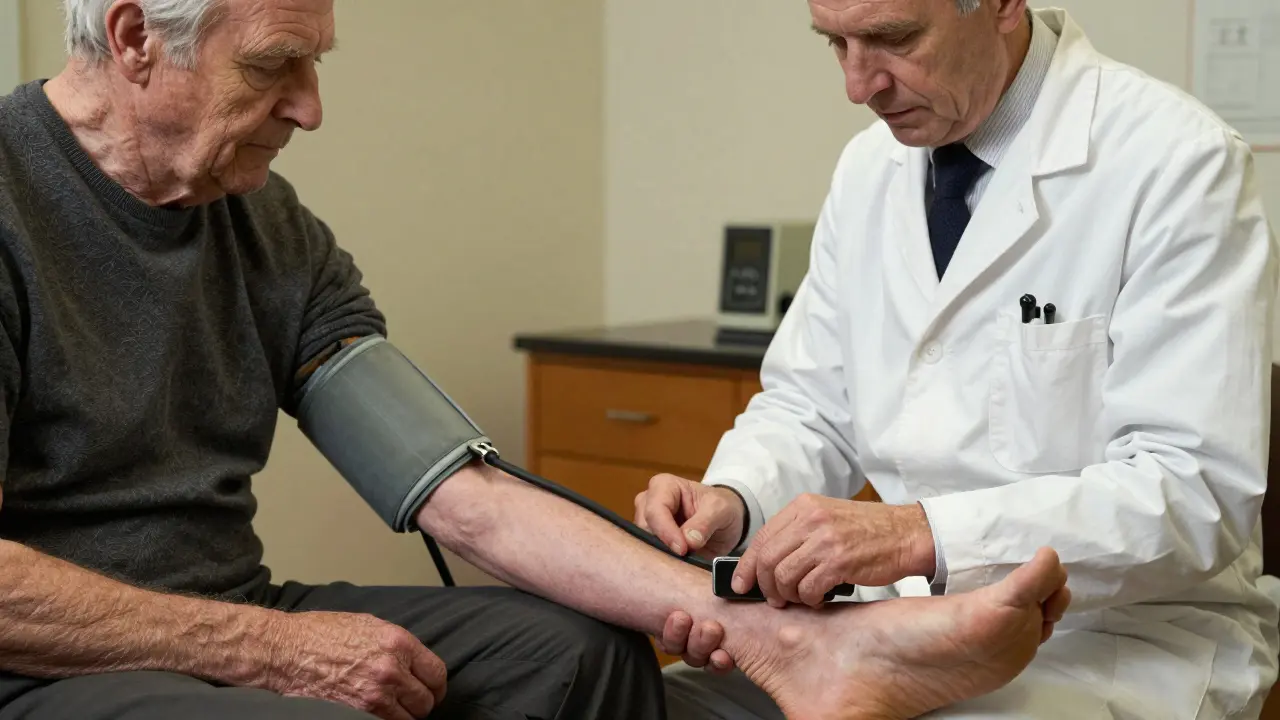
Medications That Actually Work
If you have PAD, you’re at high risk for heart attack and stroke. That’s why doctors push three key drugs:- Antiplatelets-either aspirin (81 mg daily) or clopidogrel (75 mg daily). Clopidogrel is slightly better at preventing heart attacks and strokes in PAD patients.
- Statin-like atorvastatin or rosuvastatin. Even if your cholesterol is normal, you need one. Statins cut cardiovascular events by 25-30% in PAD patients. The goal? Get your LDL below 70 mg/dL.
- Cilostazol-a drug that improves blood flow to your legs. It can increase walking distance by 50-100%. But it’s not for everyone. If you have heart failure, avoid it.
When Procedures Become Necessary
If walking and pills aren’t enough, and your pain is keeping you from daily life, it’s time to consider reopening the blocked arteries. There are three main options:- Balloon angioplasty-a tiny balloon is inflated inside the blocked artery to push the plaque aside. Works well for short blockages, with a 90% success rate.
- Stent placement-a metal mesh tube is left behind to keep the artery open. About 80% stay open after one year.
- Bypass surgery-a vein from your leg or a synthetic tube is used to reroute blood around the blockage. It’s more invasive, but the results last longer-80% still work after five years.
What’s New in PAD Treatment?
Recent studies are changing the game. The VOYAGER PAD trial found that adding a blood thinner called rivaroxaban to aspirin reduces the risk of limb-related complications by 15% in patients who’ve had a procedure. This combo is now recommended for high-risk patients. Stem cell therapy is being tested for people with non-healing wounds. Early results show 65% of patients had better healing compared to 35% in control groups. It’s still experimental, but it’s promising. New imaging tools like optical coherence tomography (OCT) let doctors see plaque in microscopic detail. This helps them choose the best treatment-whether to use a balloon, a stent, or a special tool to grind away hardened plaque.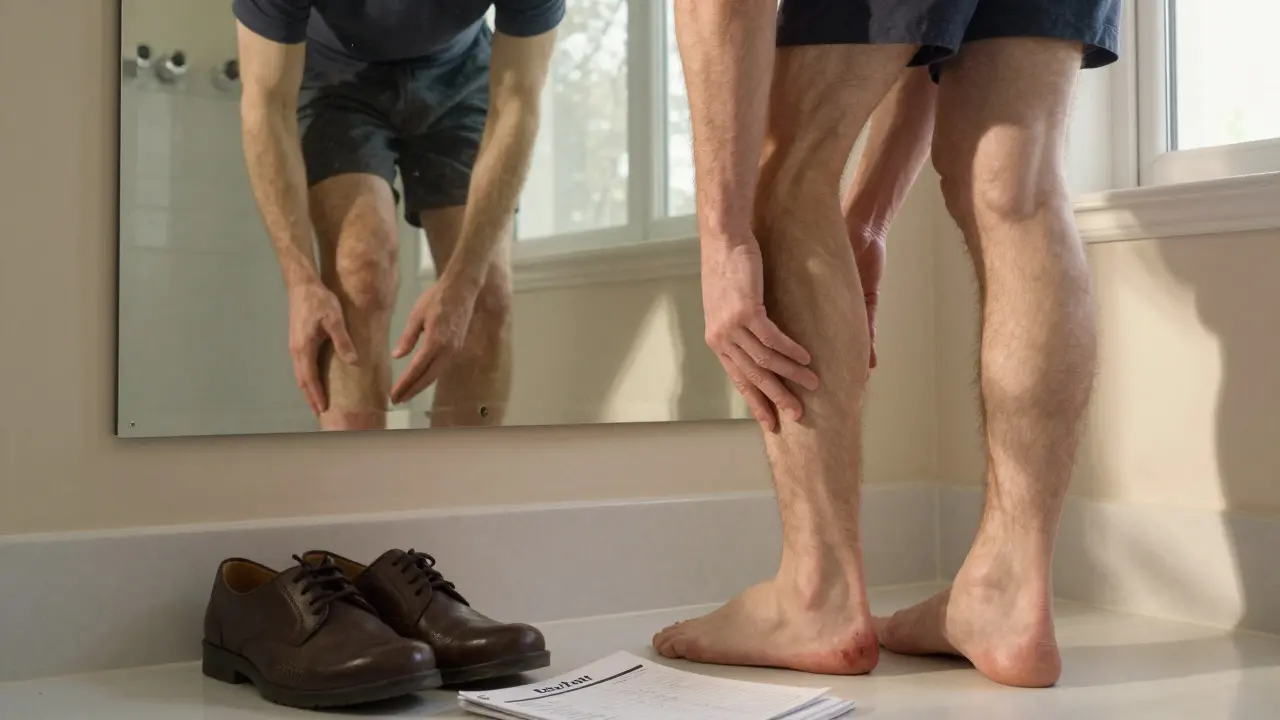
Why So Many People Are Being Left Behind
Here’s the ugly truth: only about 20% of people who should be screened for PAD actually are. Many doctors still think leg pain is just aging. Others don’t know how to order an ABI test. And it’s worse for Black and Hispanic patients. Studies show they’re 30-40% less likely to get revascularization, even when their disease is just as bad. This isn’t about access alone-it’s about bias, awareness, and systemic gaps in care. The 5-year death rate for PAD patients? 30-40%. That’s higher than many types of cancer. But unlike cancer, PAD is preventable. It’s treatable. It’s detectable with a five-minute test.What You Should Do Today
If you’re over 50 and smoke, or have diabetes, or have leg pain when you walk:- Ask your doctor for an ankle-brachial index (ABI) test.
- If you smoke, quit-today. No delay.
- Start walking. Even 10 minutes a day. Build up slowly.
- Ask if you need a statin or antiplatelet. Don’t assume you don’t.
- Check your feet daily. Look for sores, color changes, or cold spots.
Can peripheral artery disease be reversed?
Yes, in many cases. While damaged arteries don’t fully heal, plaque buildup can stabilize and even shrink with aggressive lifestyle changes and medication. Walking regularly, quitting smoking, and taking statins can significantly improve blood flow and reduce symptoms. Some patients regain the ability to walk without pain after months of consistent effort.
Is PAD the same as heart disease?
PAD is not the same as heart disease, but it’s a direct sign of it. Both are caused by atherosclerosis-the buildup of plaque in arteries. If your leg arteries are blocked, your heart and brain arteries likely are too. That’s why PAD patients have a 3-5 times higher risk of heart attack or stroke. Treating PAD means treating your whole cardiovascular system.
Does PAD cause numbness in the feet?
Numbness can happen, but it’s not the main symptom. The classic sign is cramping or fatigue during walking that goes away with rest. Numbness or tingling usually appears in advanced stages, especially if nerves are affected by poor blood flow or if you also have diabetes. If you feel persistent numbness, it’s a sign to get checked immediately.
Can I still walk if I have PAD?
Yes-and you should. Walking is the most effective treatment for PAD. Pain during walking is a signal, not a stop sign. Start slowly, walk until you feel discomfort, rest until it fades, then walk again. Repeat. Over time, your body builds new tiny blood vessels to bypass the blockages. This is called collateral circulation, and it’s how many people regain mobility without surgery.
Why do some people with PAD need amputation?
Amputation becomes necessary when blood flow drops so low that tissue dies-this is called critical limb ischemia. Signs include non-healing ulcers, black or blue skin, or severe pain at rest. Without revascularization (opening the blocked artery), infection spreads and the limb can’t be saved. Early detection and intervention can prevent this in over 80% of cases.
Are there any natural remedies for PAD?
There’s no proven natural cure for PAD. Supplements like ginkgo biloba or omega-3s may help slightly with circulation, but they don’t replace proven treatments. Smoking cessation, daily walking, statins, and blood pressure control are the only approaches backed by strong evidence. Relying on herbs or vitamins alone can delay life-saving care.





Isaac Jules
January 7 2026This article is basically a PSA from a cardiologist who got paid by Big Pharma. 🤡 Walking? Really? You think I’m gonna walk when my legs feel like they’re full of concrete? And don’t even get me started on statins - those things turn people into zombies. I’d rather die than take another pill that ‘might’ help. #StopTheMedicalIndustrialComplex