
When someone is trying to quit drinking, disulfiram, a medication that creates an aversive reaction to alcohol to discourage drinking. Also known as Antabuse, it doesn’t cure alcohol dependence—but it gives people a powerful reason to stay away from alcohol. You take it daily, and if you drink even a small amount of alcohol, your body can’t break it down properly. That leads to a rapid buildup of acetaldehyde, a toxic byproduct. The result? Severe flushing, nausea, vomiting, headache, and sometimes chest pain or trouble breathing. It’s not punishment—it’s a tool. And it only works if you’re committed to not drinking.
Disulfiram is often used alongside counseling and support groups, not as a standalone fix. It’s most effective for people who are highly motivated to stop drinking and have a strong support system. But it’s not for everyone. If you’re on other medications—like metronidazole, certain antidepressants, or even some over-the-counter cough syrups—you could be at risk for dangerous interactions. People with liver disease, thyroid issues, or a history of severe mental health conditions should talk to their doctor before starting it. The side effects aren’t just uncomfortable; they can be life-threatening if alcohol is consumed.
What’s interesting is how disulfiram connects to other areas of medicine. It’s been studied for use in cancer treatment, parasite infections, and even as a potential tool against antibiotic-resistant bacteria. But right now, its main use is clear: helping people stay off alcohol. And that’s why you’ll find posts here about medication adherence, how consistently taking a drug like disulfiram makes the difference between success and relapse, and how drug interactions, especially with common substances like alcohol or even mouthwash, can turn a safe treatment into a danger. You’ll also see content on alcohol use disorder, how it affects the body long-term, and why some people need more than willpower to quit. These aren’t random articles—they’re all tied to the same goal: helping you understand what disulfiram really does, who it helps, and how to use it safely.
If you’re considering disulfiram—or someone you care about is—you need to know the full picture. It’s not a magic pill. It’s a daily choice. And the more you understand how it works, what it blocks, and what it can’t fix, the better your chances of success. Below, you’ll find real-world guides on managing side effects, avoiding hidden alcohol sources, and staying on track when motivation fades. This isn’t theory. It’s what people actually deal with—and how they get through it.
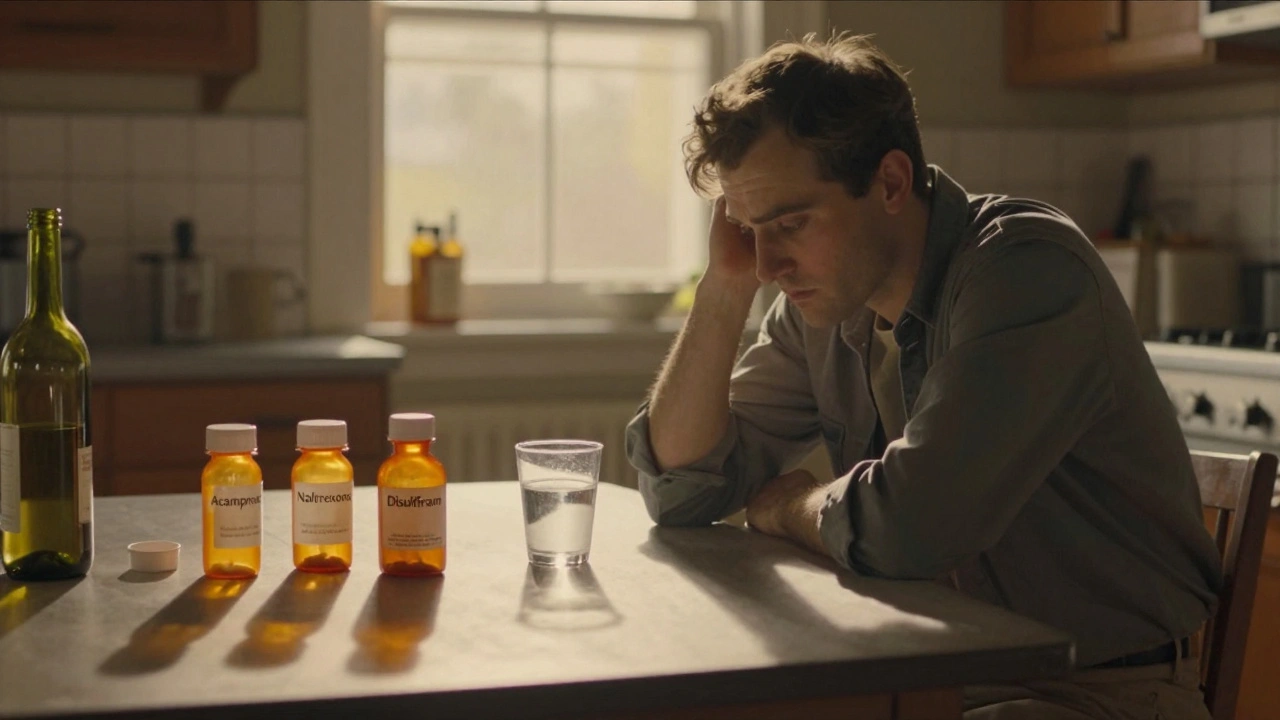
Medications for alcohol use disorder can reduce relapse risk, but only when used correctly. Learn how naltrexone, acamprosate, and disulfiram work - and why so many people stop taking them.