
When you're taking multiple medications, medication timers, devices or apps designed to remind you when to take your pills. Also known as pill reminders, they’re not just handy—they can be life-saving. Missing a dose of blood pressure medicine, antibiotics, or anticoagulants isn’t just inconvenient; it can lead to hospital visits, drug resistance, or even heart attacks. Studies show that nearly half of people don’t take their meds as prescribed. The problem isn’t forgetfulness alone—it’s lack of a system that works with your real life.
That’s where medication adherence, the practice of taking your drugs exactly as your doctor ordered comes in. It’s not about willpower. It’s about design. Simple tools like alarm clocks, smartphone apps, or even smart pill bottles that beep when opened can cut missed doses by up to 70%. And it’s not just about the alarm—it’s about the backup. If your phone dies, do you have a paper schedule taped to your fridge? If your app crashes, do you know your next dose time by heart? The best systems combine digital and physical tools so one failure doesn’t mean total collapse.
People who use pill reminder apps, mobile tools that send alerts, track doses, and sometimes notify caregivers don’t just remember—they feel more in control. Apps like Medisafe or MyTherapy let you log when you took a pill, see patterns over time, and even share reports with your doctor. But here’s the catch: most people stop using them after a few weeks. Why? Too many alerts. Too much setup. Too little personalization. The right timer doesn’t just remind you—it adapts to your routine. If you take your blood thinner at breakfast, it shouldn’t buzz at 3 a.m. because you slept in.
And it’s not just about the timer. It’s about medication schedule, the structured plan that tells you what to take, when, and how. Some drugs need empty stomachs. Others need food. Some must be spaced 12 hours apart. A good timer doesn’t just say "take pill"—it says "take pill with water, 30 minutes before breakfast." That level of detail turns a simple alert into a clinical-grade support tool.
You’ll find real stories below—from people who used alarms to manage diabetes meds after kidney transplant, to caregivers who set up shared reminders for elderly parents on 8 different pills. Some used simple wind-up timers. Others used AI-driven apps that learned their habits. None of them relied on memory. And none of them wanted to be heroes—they just wanted to stay healthy without drowning in confusion.
What follows isn’t a list of gadgets. It’s a collection of proven, real-world strategies that actually work. Whether you’re juggling antibiotics, antidepressants, or blood thinners, you’ll find tools, tricks, and mistakes to avoid that match your life—not the other way around.
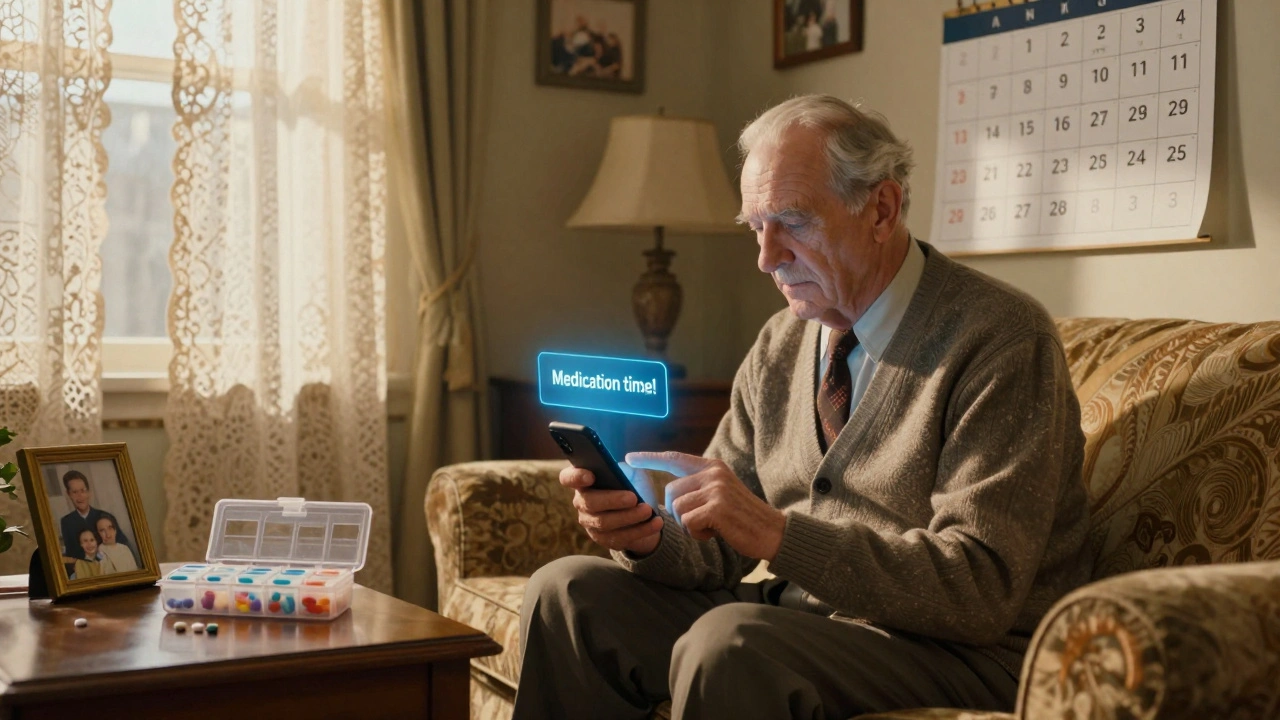
Medication adherence apps use smartphone reminders and tracking to help people take their pills on time. Proven to improve compliance by up to 40%, they're free, easy to use, and work better than pill boxes or SMS alerts.