Imagine you are on vacation in Germany, and your chronic medication runs out. Or perhaps you live near the French border and it is simply easier to pick up your prescription in a nearby town just across the line. For years, this was a logistical nightmare filled with paperwork and uncertainty. Today, the landscape has shifted dramatically. Cross-border pharmacy services are systems allowing EU citizens to access medications and prescriptions across national borders using digital infrastructure. This shift isn't just about convenience; it is a critical response to widespread medicine shortages and an aging population.
The European Union has built a digital backbone called MyHealth@EU (formerly eHDSI), which connects health systems across member states. As of 2026, this network allows for secure electronic transfer of prescriptions and patient summaries. But how does this actually work for you? What are the rules, and where do the gaps still exist?
How MyHealth@EU Connects Your Prescriptions
The core engine behind this mobility is the eHealth Digital Service Infrastructure (eHDSI). Think of it as a secure bridge between national health databases. When you travel or live in a border region, this system enables two primary services that directly impact your ability to get generic drugs.
First, there is ePrescription. This service allows you to obtain medication in a foreign pharmacy by transferring your electronic prescription from your home country. Second, there is the Patient Summary. This provides critical health information-like allergies, current medications, and medical history-in the language of the treating practitioner. This is vital because linguistic barriers often lead to dangerous errors when patients try to explain their needs verbally.
As of late 2025, these services are operational in 27 EU and EEA countries. Iceland completed its integration in August 2025, enabling full bidirectional data exchange. If you are in Iceland, you log into portals like island.is using electronic identification to authorize specific time periods or countries for sharing your health data. This consent protocol is strict. You control who sees what, and for how long.
- ePrescription: Enables pharmacies abroad to dispense meds based on your home country's script.
- Patient Summary: Translates key medical history into the local language for emergency care.
- Consent Control: Users must explicitly authorize data sharing via national ID systems.
The Reality of Regulatory Fragmentation
If the technology exists, why do people still struggle? The answer lies in regulatory disparity. While the EU sets the framework, individual member states implement the rules. This creates a patchwork quilt of compliance standards that can trip up both patients and pharmacists.
Consider Ireland. Prescriptions issued outside the EU/EEA are invalid there. More specifically, prescriptions from UK-based telehealth services are explicitly rejected by Irish pharmacists. You might have a valid consultation record, but if the prescriber is not registered within the recognized framework, the pharmacist must screen it out. They verify contact details and consultation methods rigorously. This protects safety but creates friction for travelers accustomed to seamless digital health.
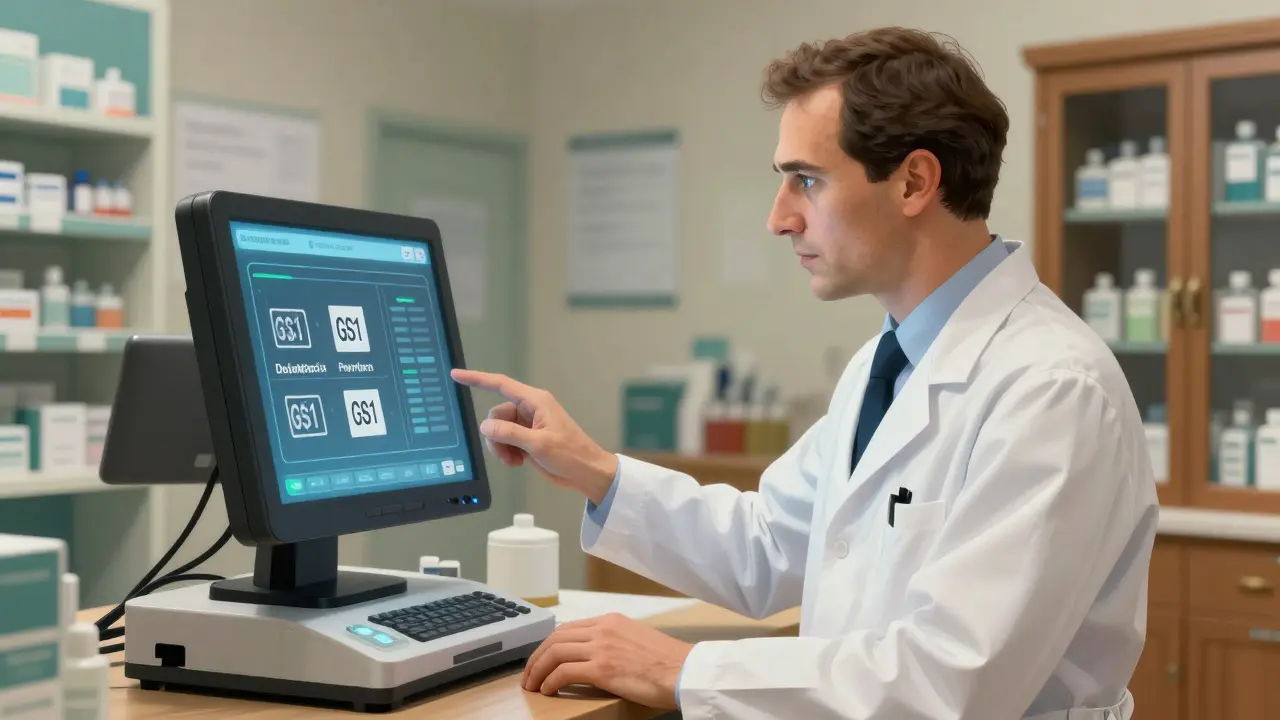
Italy took a different approach in February 2025. They replaced traditional pharmaceutical 'bollino' stickers with GS1 DataMatrix codes on prescriptions. This move aims to streamline verification and reduce fraud, but it requires pharmacies to update their scanning hardware and software. If you are a tourist in Italy, your digital prescription must be compatible with this new coding standard to be processed quickly.
Only eight EU countries have adopted comprehensive rules guiding pharmacists' conduct in e-pharmacies. This lack of harmonization means that while you might successfully use cross-border services in the Netherlands-Germany border region, you could face significant hurdles elsewhere. Studies show that 78% of patients in established border networks report successful fulfillment, compared to just 42% in non-border regions.
Fighting Shortages with Digital Supply Chains
One of the biggest drivers for cross-border mobility is the persistent issue of medicine shortages. Generic drugs, which form the backbone of chronic disease treatment, frequently disappear from shelves due to supply chain disruptions.
The Critical Medicines Act mandates that marketing authorization holders proactively report supply and demand data. This feeds into the European Shortages Medicines Platform (ESMP). The goal is transparency. If a drug is unavailable in France, the system should ideally flag availability in neighboring countries.
The European Association of E-Pharmacies (EAEP) launched an Action Plan in June 2025 to address this. One of their five strategic priorities is addressing medicine shortages through flexible cross-border supply chains. They argue that digital pharmacies can act as agile nodes in the healthcare network, sourcing generics from other member states when local stocks dry up.
This is not just theoretical. Expert analysis from Copenhagen Economics and IQVIA shows that digital pharmacy services can improve healthcare efficiency significantly. We see a 22% reduction in medication errors and a 17% improvement in chronic disease management compliance when these digital tools are used effectively. By bypassing local stockouts, patients maintain their treatment regimens without interruption.
Challenges for Pharmacists and Patients
Behind every smooth transaction is a complex workflow managed by pharmacists. The learning curve is steep. Pharmacists require approximately 40 hours of specialized training to manage cross-border prescription workflows effectively. They must navigate language barriers, differing medication formulations (a tablet strength common in Spain might not exist in Sweden), and inconsistent electronic health record access.
For patients, the experience varies wildly. Reddit discussions in communities like r/EUHealthcare document numerous cases where travelers faced rejection despite having valid ePrescriptions. Often, the issue is that the specialized medication they need is not available in the destination country's formulary. Even if the prescription transfers digitally, the local pharmacy cannot legally dispense a brand or formulation that lacks local marketing authorization.
Common complaints include:
- Inconsistent Implementation: Some countries have robust 'MyHealth@EU' integration; others lag behind.
- Complex Consent: Multiple authentication steps can frustrate users trying to share data quickly.
- Formulation Mismatches: Generics may have different active ingredient concentrations or excipients across borders.

The Future of EU Pharmacy Mobility
Looking ahead to 2027 and beyond, the scope of shared health data will expand. Plans include integrating medical images, lab results, and hospital discharge reports. Eventually, complete electronic health records will follow. This trajectory points toward increased regulatory harmonization, though challenges remain.
The competitive landscape is also shifting. There is growing tension between traditional brick-and-mortar pharmacies and digital e-pharmacy platforms. The EAEP represents about 120 registered e-pharmacies across 15 EU countries. They are pushing for fair reimbursement for digital pharmacy services and expanded telepharmacy access to underserved areas.
Market analysis projects the EU cross-border pharmacy sector to grow at a 14.3% CAGR through 2030. This growth is driven by aging populations and increasing chronic disease prevalence. However, awareness remains low. Only 38% of EU citizens know their rights under Directive 2011/24/EU. In border regions, this jumps to 72%, highlighting the need for better public education.
| Feature | Netherlands-Germany Border | Ireland (UK Prescriptions) | Italy (Post-2025) |
|---|---|---|---|
| ePrescription Acceptance | High (78% success rate) | Restricted (UK telehealth invalid) | High (Requires GS1 DataMatrix) |
| Regulatory Harmonization | Established networks | Strict screening protocols | Digital sticker transition |
| Shortage Mitigation | Active cross-border sourcing | Limited emergency supplies | Centralized shortage reporting |
Practical Steps for Travelers
If you plan to rely on cross-border pharmacy services, preparation is key. First, check if your home country’s health portal supports 'MyHealth@EU' data sharing. Enable your Patient Summary before you travel. This ensures that if you end up in an emergency room abroad, doctors have immediate access to your allergy and medication history.
Second, carry a physical copy of your prescription. Digital systems fail, or local pharmacies may lack the necessary interface. A printed backup can sometimes expedite manual verification processes.
Third, research the specific regulations of your destination. If you are visiting Ireland, ensure your prescription originates from an EU/EEA provider. If you are in Italy, confirm your pharmacy can read GS1 DataMatrix codes. Finally, consider joining a reputable e-pharmacy network if you live in a remote area. These platforms often have better visibility into cross-border stock levels than local brick-and-mortar stores.
Can I use my EU prescription in any pharmacy abroad?
Not necessarily. While ePrescription services are operational in 27 EU/EEA countries, acceptance depends on the specific pharmacy's integration with the MyHealth@EU system and local regulations. Some countries restrict certain types of prescriptions, such as those from UK telehealth services in Ireland. Always verify with your destination pharmacy beforehand.
What is the MyHealth@EU Patient Summary?
The Patient Summary is a digital document that provides critical health information, including allergies, current medications, and previous medical history, translated into the language of the treating practitioner. It helps overcome linguistic barriers and ensures safe treatment during emergencies or routine visits abroad.
How do I handle medicine shortages when traveling?
With the Critical Medicines Act and the European Shortages Medicines Platform (ESMP), supply data is more transparent. However, availability is not guaranteed. It is advisable to carry enough medication for your entire trip plus a buffer. If you run out, consult a local pharmacist who may be able to source generics from neighboring countries via cross-border supply chains.
Are UK prescriptions valid in the EU after Brexit?
Generally, no. Prescriptions issued outside the EU/EEA are often invalid. Specifically, in Ireland, UK-issued prescriptions, especially those from telehealth services, are explicitly rejected. Pharmacists must verify prescriber registration within the EU framework. Always check the specific rules of the country you are visiting.
What is the GS1 DataMatrix code on Italian prescriptions?
Effective February 9, 2025, Italy replaced traditional 'bollino' stickers with GS1 DataMatrix codes on prescriptions. This digital coding enhances verification, reduces fraud, and streamlines the dispensing process. Pharmacies must have updated scanning capabilities to process these prescriptions efficiently.
How secure is my health data when using cross-border services?
Security is strictly regulated under Regulation (EU) 2025/327. The eHDSI infrastructure uses secure communication portals and requires explicit patient consent via national electronic identification systems. You control who accesses your data and for how long. The European Commission monitors compliance and can suspend services for serious breaches.
Why is there a discrepancy in cross-border pharmacy success rates?
Success rates vary due to regulatory fragmentation and implementation maturity. Border regions like the Netherlands-Germany frontier have established networks and higher awareness, leading to a 78% success rate. Non-border regions often lack these connections and face stricter local interpretations of rules, resulting in lower success rates around 42%.