When you pick up a prescription for a generic medication, you expect it to work exactly like the brand-name version. You trust that the pill is safe, pure, and effective. But what if invisible impurities or harmful microbes are hiding inside that tablet? Generic drug contamination is a real threat that compromises patient safety and erodes public trust in healthcare. With 90% of all prescriptions dispensed in the United States being generics (FDA, 2022), understanding these risks isn't just for regulators-it's crucial for every patient, pharmacist, and healthcare provider.
The issue isn't that generic drugs are inherently unsafe. They must meet the same rigorous standards as brand-name drugs. However, the complex global supply chains and tighter profit margins create unique vulnerabilities. This article breaks down where contamination comes from, how manufacturers prevent it, and what happens when things go wrong. We’ll look at the data, the regulations, and the practical steps you can take to stay informed and safe.
Understanding the Scope of Generic Drug Contamination
To grasp the risk, we first need to define what we mean by contamination. The U.S. Food and Drug Administration (FDA) defines cross-contamination in pharmaceuticals as 'the undesired introduction of impurities of a chemical or microbiological nature, or of foreign matter, into or onto a drug product from the environment, other products, or from within the process itself' (21 CFR 211.42). In simpler terms, it means unwanted substances get into your medicine during manufacturing, packaging, or storage.
The scale of this problem is significant. According to FDA data, contamination-related issues accounted for 22% of all drug recalls in 2022. Even more concerning, 37% of those recalls specifically affected generic drugs. Why are generics disproportionately affected? Part of the answer lies in the economics and logistics of production. The modern generic industry emerged after the 1984 Hatch-Waxman Act, which created the Abbreviated New Drug Application (ANDA) pathway. Today, the generic market is worth over $110 billion, but manufacturers operate on much narrower profit margins-averaging 20-25% compared to 60-70% for brand-name innovators (Commonwealth Fund, 2017).
This financial pressure can impact quality control investments. Additionally, the supply chain is incredibly globalized. Approximately 80% of active pharmaceutical ingredients (APIs) for U.S. drugs are manufactured overseas, primarily in India and China (FDA, 2023 transparency report). This geographic distance makes oversight harder. For instance, FDA inspection data from 2022 revealed that Indian generic manufacturers had a 12.7% rate of contamination-related observations, compared to 6.4% for U.S.-based facilities. While many international facilities maintain high standards, the sheer volume and complexity of imports increase the statistical probability of lapses slipping through.
Primary Sources of Contamination in Manufacturing
Contamination doesn't happen randomly; it follows specific pathways. Understanding these sources helps in designing better prevention strategies. The main culprits are personnel, facility design flaws, and cross-contamination between products.
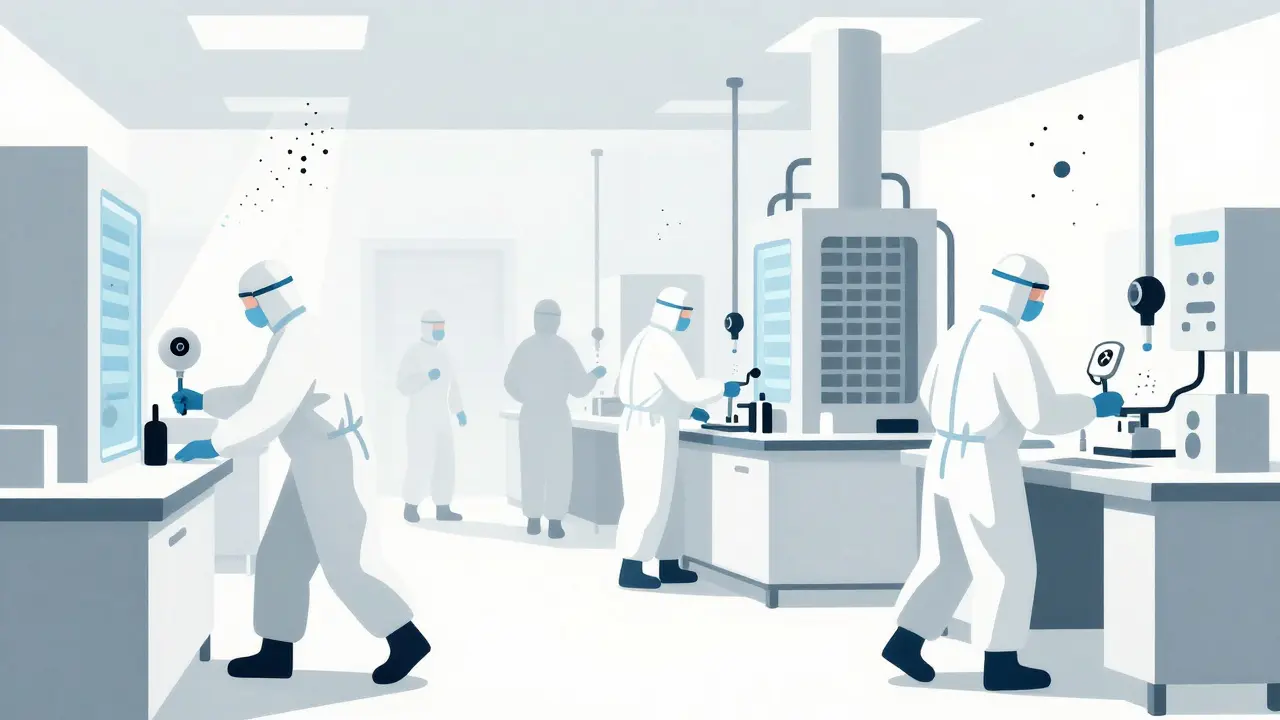
Personnel are the biggest variable. Humans are not sterile. A study by Lighthouse Worldwide Solutions (2022) found that personnel contribute 75-80% of particles in pharmaceutical cleanrooms. An average person sheds about 40,000 skin cells per minute and generates 100,000 particles of 0.3 microns or larger even when standing still. These particles can carry bacteria or viruses into the manufacturing environment. That’s why gowning procedures are so strict, yet human error remains a leading cause of breaches.
Cross-contamination between products is another major risk. If a facility manufactures multiple drugs on the same line, residual amounts of one drug can transfer to the next. This is particularly dangerous with potent medications. The FDA identifies three critical risk levels based on therapeutic index (ICH Q9). For example, if a machine used to make a powerful chemotherapy drug isn’t cleaned thoroughly before making a common painkiller, trace amounts of the chemo agent could end up in the painkiller, causing severe harm to patients.
Facility design and maintenance also play a huge role. Older facilities built before 2000 show a 34% higher contamination risk due to outdated ventilation systems and poor segregation of areas. Modern standards require minimum ISO Class 8 (Class 100,000) environments for non-sterile manufacturing, with ISO Class 5 (Class 100) required for sterile products. If air filtration systems fail or positive pressure drops, contaminants from outside can drift in.
| Risk Factor | Description | Mitigation Strategy |
|---|---|---|
| Personnel | Skin cells, hair, clothing fibers shed by workers | Strict gowning protocols, annual training, HEPA-filtered airlocks |
| Cross-Contamination | Residue from previous batches transferring to new ones | Closed manufacturing systems, validated cleaning cycles (10 ppm limit) |
| Environmental | Dust, microbes, pests entering from outside | ISO-compliant cleanrooms, pest control, HVAC maintenance |
| Supply Chain | Impure APIs or excipients from overseas suppliers | Supplier audits, incoming material testing, PREDICT system screening |
Prevention Strategies: How Manufacturers Keep Drugs Safe
Preventing contamination requires a multi-layered approach known as Good Manufacturing Practices (GMP). These aren't just suggestions; they are legal requirements enforced by the FDA and other global regulatory bodies. Here’s how top manufacturers implement these safeguards.
Cleaning Validation Protocols are the backbone of preventing cross-contamination. Manufacturers must prove that their cleaning processes remove residue down to acceptable limits. The standard benchmark is often 10 parts per million (ppm) of previous product residue, verified through swab testing with 95% confidence intervals (FDA Guidance for Industry, 2018). However, experts like Dr. Michael Kopcha argue that for highly potent drugs, even 10 ppm might be too high, advocating for product-specific acceptance criteria based on toxicological evaluations.
Facility Design Optimization involves building spaces that minimize human contact with the product. Closed isolator systems, which cost between $500,000 and $2 million per production line, physically separate the drug from the operator. Teva Pharmaceuticals’ Bologna, Italy facility, for example, reduced cross-contamination incidents by 78% between 2018 and 2022 by implementing such closed systems. Mylan’s Morgantown facility saw an 82% reduction in contamination incidents by using real-time particle monitoring and enhanced gowning procedures.
Microbiological Controls are essential for preventing bacterial and fungal growth. The United States Pharmacopeia (USP) sets strict limits. For non-sterile oral dosage forms, USP <61> specifies that total aerobic microbial counts should not exceed 10^3 colony-forming units (CFU) per gram, and yeast and mold should not exceed 10^2 CFU per gram. To meet these, manufacturers use sporicidal disinfectants at defined intervals, as mandated by the revised USP General Chapter <1072> (2022).
Personnel Training is equally critical. GMP Standard Operating Procedures (SOPs) require 8-12 hours of initial contamination prevention training per employee, with documented annual refreshers. Workers must understand not just *how* to gown, but *why* loose threads or jewelry pose a risk. Despite this, inadequate environmental monitoring was cited in 34% of FDA Form 483 observations (inspection reports citing deficiencies), highlighting the gap between policy and practice.
Response Mechanisms: What Happens When Contamination Occurs
Even with the best prevention, mistakes happen. When contamination is detected, a structured response protocol kicks in to protect patients. This involves detection, reporting, recall, and investigation.
Detection and Reporting often starts with routine quality control tests or adverse event reports. The FDA’s MedWatch database is a key tool here. Between 2020 and 2022, 1,247 reports of potential generic drug contamination were filed, with 387 mentioning specific adverse events. Patients and pharmacists play a vital role. For instance, a Reddit user (u/PharmTech99) reported metronidazole tablets with unusual blue specks that tested positive for copper contamination. Such community vigilance can trigger official investigations.
Mandatory Recalls are governed by 21 CFR Part 7. If a manufacturer finds a defect, they must notify the FDA. The FDA then classifies the recall based on health hazard severity:
- Class I: Dangerous or defective products that could cause serious health problems or death.
- Class II: Products that might cause temporary or medically reversible health problems.
- Class III: Products unlikely to cause adverse health reactions but violate labeling or manufacturing laws.
Investigation and Corrective Action follow every recall. Inspectors visit the facility to determine the root cause. Was it a failure in cleaning validation? A breach in gowning? A faulty HVAC filter? The manufacturer must submit a Corrective and Preventive Action (CAPA) plan to ensure the issue doesn’t recur. Failure to comply can lead to warning letters, fines, or even seizure of products.
Real-World Examples and Case Studies
Looking at past incidents helps illustrate the stakes. The most famous recent case is the valsartan contamination crisis of 2018-2019. Nitrosamine impurities (NDMA and NDEA) were found in valsartan, a blood pressure medication. These carcinogenic compounds originated from the chemical synthesis process of the API. The contamination affected 22 generic manufacturers across 8 countries, resulting in 2,317 product recalls and $1.2 billion in economic losses (FDA Commissioner Statement, December 5, 2019).
This crisis exposed the fragility of global supply chains. It led to significant regulatory changes, including the FDA’s mandatory nitrosamine testing for all sartan-class drugs starting January 1, 2023. Another example involves hazardous drug handling in pharmacies. OSHA’s 2022 Hazardous Drug Advisory criticized inadequate engineering controls in 63% of surveyed compounding pharmacies. Dr. David Michaels noted that cyclophosphamide contamination was found on 85% of pharmacists' work surfaces, despite existing guidelines. This shows that contamination risks extend beyond manufacturing to the point of dispensing.
User experiences further highlight the reality. A survey by the American Society of Health-System Pharmacists (ASHP) in 2022 revealed that 28% of hospital pharmacists encountered potentially contaminated generics, with 14% of those cases resulting in patient harm. One documented case involved a patient developing severe dermatitis from a contaminated generic hydrocortisone cream (FDA MedWatch Report #123456, July 18, 2021). These stories underscore that while rare, the consequences are very real for individuals.
Future Trends and Regulatory Advancements
The landscape of drug safety is evolving rapidly. Regulators and manufacturers are adopting new technologies to stay ahead of contamination risks. The FDA’s 2023 Drug Competition Action Plan includes enhanced screening for high-risk generics. Their Predictive Risk-based Evaluation for Dynamic Import Compliance Targeting (PREDICT) system now flags 37% more potentially contaminated imports than its predecessor, with 8.2% of screened shipments requiring additional testing (FDA Import Refusal Report, 2023 Q1).
Technological Innovations are game-changers. Rapid microbiological methods can reduce contamination detection time from 7 days to just 4 hours. By 2022, 63% of top generic manufacturers had implemented some form of rapid testing. Looking ahead, the FDA plans to launch AI-powered environmental monitoring systems in 2024. These systems will analyze over 15,000 data points per facility to predict contamination risks with 89% accuracy (FDA Digital Transformation Initiative, 2023). Imagine sensors detecting a slight drop in air pressure or a spike in particle count before any product is compromised.
Industry Projections are cautiously optimistic. McKinsey & Company’s 2023 Pharmaceutical Quality Outlook suggests that contamination-related recalls could decrease by 40% by 2027 due to these technological and regulatory advances. However, supply chain complexity will maintain baseline risk levels. As long as APIs are sourced globally, vigilance must remain high.
What Can Patients and Pharmacists Do?
You don’t need to be a regulator to play a part in drug safety. Here are practical steps for stakeholders:
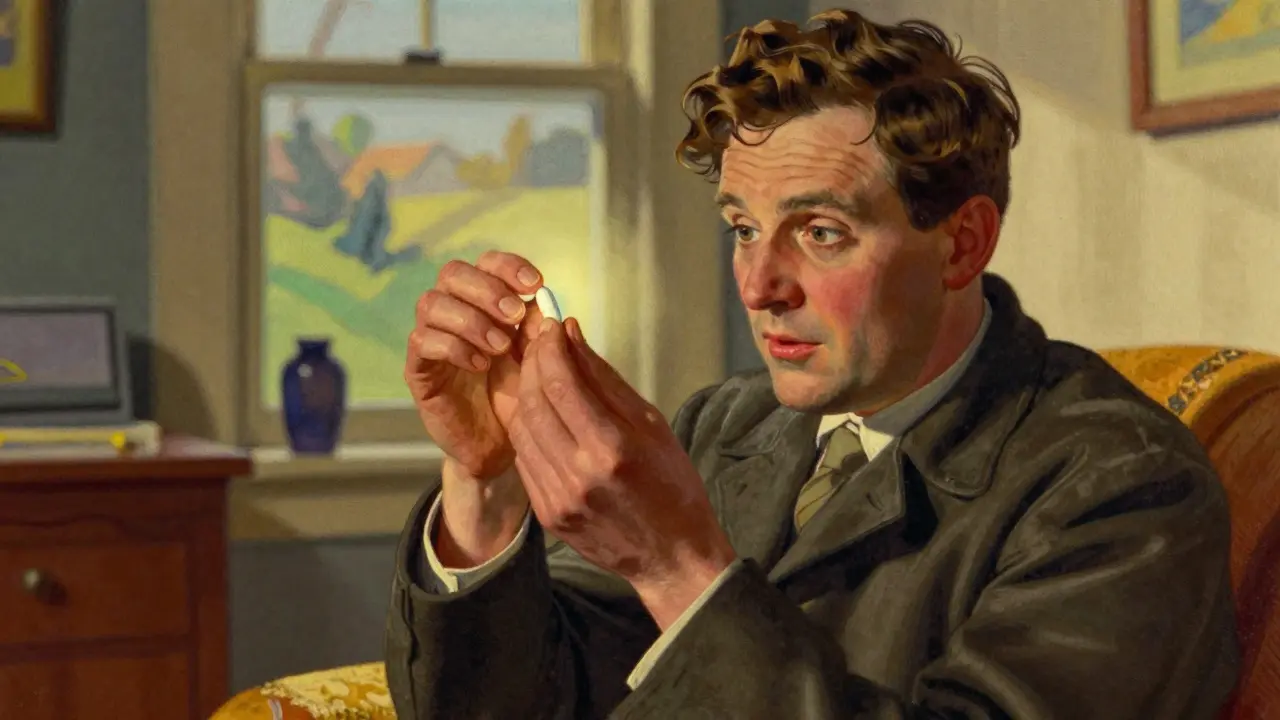
- For Patients: Always inspect your medication. Look for unusual discoloration, odors, or texture changes. If a pill looks different from usual, don’t assume it’s just a different manufacturer. Contact your pharmacist immediately. Report any adverse effects via the FDA’s MedWatch program.
- For Pharmacists: Stay updated on FDA recalls and safety alerts. Verify the authenticity of generics, especially those from less familiar manufacturers. Advocate for resources to conduct independent testing if suspicious batches appear. Educate patients on what to look for.
- For Healthcare Providers: Consider prescribing brand-name drugs in cases where therapeutic index is narrow or contamination history is problematic, if insurance allows. Maintain open communication with pharmacists about any observed side effects.
Knowledge is power. By understanding the risks and the systems in place to mitigate them, we can collectively ensure that generic drugs remain a safe, affordable, and reliable cornerstone of healthcare.
Are generic drugs less safe than brand-name drugs?
No, generic drugs are required to be therapeutically equivalent to brand-name drugs in terms of safety, efficacy, and quality. However, they may face higher contamination risks due to global supply chains and lower profit margins impacting quality control investments. Regulatory agencies enforce strict standards for both, but the complexity of generic sourcing introduces unique challenges.
How can I tell if my generic medication is contaminated?
Visible signs include unusual color, spots, odor, or texture changes. However, many contaminants are invisible. If you experience unexpected side effects or notice physical anomalies, stop taking the medication and consult your pharmacist. You can also check the FDA’s recall website for your specific drug name and lot number.
What is the FDA doing to prevent generic drug contamination?
The FDA enforces Good Manufacturing Practices (GMP), conducts inspections of domestic and foreign facilities, and uses advanced systems like PREDICT to screen imports. They also mandate specific testing for high-risk drugs, such as nitrosamine testing for sartans, and collaborate with organizations like USP to update safety standards.
Why are so many drug ingredients made overseas?
Approximately 80% of APIs are manufactured overseas, primarily in India and China, due to lower production costs and established industrial infrastructure. This globalization creates efficiency and affordability but complicates oversight and increases supply chain vulnerability to contamination.
What should I do if I suspect my medication is contaminated?
Do not take another dose. Contact your pharmacist or doctor immediately. Save the remaining medication and packaging. Report the issue to the FDA via the MedWatch program. Your pharmacist can verify if there is a known recall and help you obtain a replacement from a different batch or manufacturer.